Africa urged to embrace equitable resource-based industrialisation



As a continent endowed with a vast number of natural resources and high renewable-energy potential, Africa’s natural resources can be a platform for industrialisation if linkages with the rest of the economy are deliberately built.
This is the central thesis of the argument for equitable resource-based industrialisation (ERBI), as presented by economist Richard Goode during the African Green Resources, Energy and Economy conference, held on June 26 at the University of the Witwatersrand, in Johannesburg, Gauteng.
During his presentation, Goode noted that Africa’s comparative advantage spanned minerals, energy, agriculture, livestock, forestry, biomass, water, fisheries, aquaculture and tourism.
He noted that agriculture and forestry had unrealised processing and supply chain potential, adding that fisheries and aquaculture remained underdeveloped.
Goode explained that Africa remained under-surveyed geologically, adding that stronger geodata could reveal substantially greater resources. Hence, he argued that ERBI should link mineral corridors to agriculture, forestry, tourism and manufacturing, adding that mining should not be isolated from the wider economy.
Additionally, while Africa had a rich platform of natural resources which coukd be harnessed for resource-based industrialisation, Goode said the focus should not be on critical minerals as defined by mineral-importing countries outside of the continent, but rather on critical mineral feedstocks that were key for what Africa required, such as steel and iron.
“A key message is [to] focus on critical raw materials, but use it strategically to advance Africa's industrialisation,” he said, emphasising the need for resilience against geopolitical instability.
Despite the continent’s mineral endowment, Goode said Africa had not successfully industrialised, highlighting various obstacles to industrialisation and the resource curse.
“The resource curse is not destiny, but it is a real obstacle that needs to be taken very seriously.”
Goode explained that the African Union’s African Green Minerals Strategy applied African Mining Vision principles to critical energy transition minerals.
He said this was a moment to harness three linked assets – Africa’s critical energy transition minerals, the continent’s renewable-energy resources and about 600-million people still without access to electricity.
He said the strategic opportunity is to build indigenous mining, deepen mineral value chains, develop renewable energy value chains and energise the continent.
He noted, however, that the strategic risk was a new scramble in which green minerals were exported raw, while rents and technology accumulated elsewhere.
Hence, Goode argued that shared futures required using green mineral demand to expand African electricity access, manufacturing, firms and skills.
He highlighted the importance of moving beyond beneficiation into real manufacturing and downstream processing. On the upstream side, Goode also highlighted the importance of developing human resources.
“The linkages are available, but they have to be consciously developed.”
Moreover, Goode explained that there were eight stages to an ERBI strategy, including governance of the national mineral system and reforming mineral licensing, building the upstream supply chain, developing human capabilities and finding solutions to the shortage of capital.
Goode noted that many African national markets were too small to support world-scale plants or competitive mineral value chain clusters.
He thus argued that common regional and continental markets could increase economies of scale, competition and investment viability.
Goode said regional power pools could make energy-intensive processing more feasible, especially where hydropower, solar and wind could be traded across borders.
Additionally, regional development finance institutions and venture funds could finance bankable mineral value chain projects beyond the limits of national balance sheets.
He also said customs union revenue-sharing formulas could support development funds and reduce industrial polarisation.
He argued that ERBI should, therefore, be designed through renewable-energy certificates and the African Continental Free Trade Area, and not only through isolated national strategies.
Goode thus emphasised the importance of using the extraction of green minerals to build a more diversified, capable and equitable African economy.
“None of the solutions that are being proposed to make ERBI an effective strategy are going to be easy, but we know what we should be doing, we know what the problems are, we really need to roll up our sleeves and get busy,” he said.
Article Enquiry
Email Article
Save Article
Feedback
To advertise email advertising@creamermedia.co.za or click here

Projects

Latest Multimedia
Latest News

Showroom
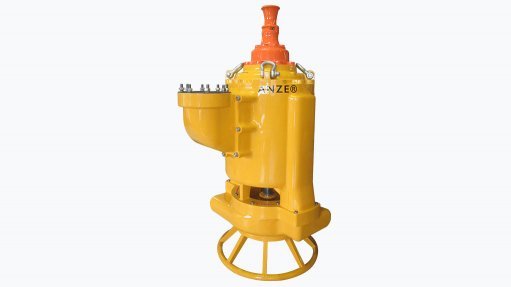
Goodwin Submersible Pumps Africa is sole distributors for Goodwin electrically driven, submersible, abrasion resistance slurry pumps.
VISIT SHOWROOM
ESAB South Arica, the leading supplier of high-end welding and cutting products to the Southern African industrial market is based in...
VISIT SHOWROOM
Press Office
Announcements
What's On
Subscribe to improve your user experience...
Option 1 (equivalent of R125 a month):
Receive a weekly copy of Creamer Media's Engineering News & Mining Weekly magazine
(print copy for those in South Africa and e-magazine for those outside of South Africa)
Receive daily email newsletters
Access to full search results
Access archive of magazine back copies
Access to Projects in Progress
Access to ONE Research Report of your choice in PDF format
Option 2 (equivalent of R375 a month):
All benefits from Option 1
PLUS
Access to Creamer Media's Research Channel Africa for ALL Research Reports, in PDF format, on various industrial and mining sectors
including Electricity; Water; Energy Transition; Hydrogen; Roads, Rail and Ports; Coal; Gold; Platinum; Battery Metals; etc.
Already a subscriber?
Forgotten your password?
Receive weekly copy of Creamer Media's Engineering News & Mining Weekly magazine (print copy for those in South Africa and e-magazine for those outside of South Africa)
➕
Recieve daily email newsletters
➕
Access to full search results
➕
Access archive of magazine back copies
➕
Access to Projects in Progress
➕
Access to ONE Research Report of your choice in PDF format
RESEARCH CHANNEL AFRICA
R4500 (equivalent of R375 a month)
SUBSCRIBEAll benefits from Option 1
➕
Access to Creamer Media's Research Channel Africa for ALL Research Reports on various industrial and mining sectors, in PDF format, including on:
Electricity
➕
Water
➕
Energy Transition
➕
Hydrogen
➕
Roads, Rail and Ports
➕
Coal
➕
Gold
➕
Platinum
➕
Battery Metals
➕
etc.
Receive all benefits from Option 1 or Option 2 delivered to numerous people at your company
➕
Multiple User names and Passwords for simultaneous log-ins
➕
Intranet integration access to all in your organisation