Cape Town space hardware specialist on expansionary flight path



Not many people know that South Africa is a rather heavyweight exporter of specialised spacecraft components and subsystems.
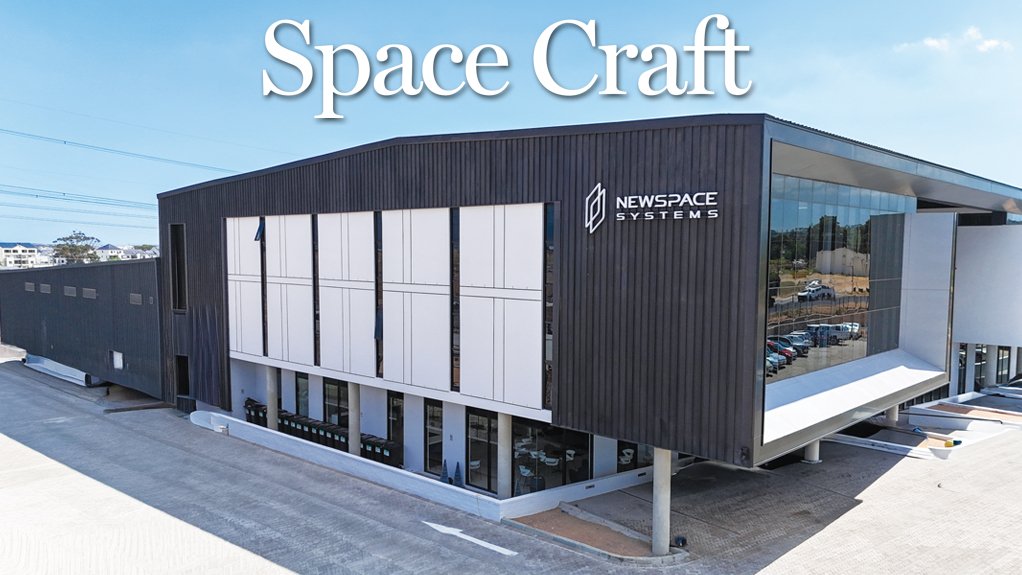
Situated in Somerset West, Cape Town, 13-year-old NewSpace Systems (NSS) earlier this year expanded its operations by opening Africa’s largest commercial spacecraft hardware manufacturing facility.
Since opening its doors in 2013, the company has sold more than 13 000 spacecraft hardware units, with its products flying on more than 3 000 spacecraft supporting missions, ranging from broadband communications and Earth observation, to scientific research, navigation and in-orbit servicing.
NSS was founded by the then 49-year-old James Barrington-Brown, a British electronics engineer with more than 35 years of experience in the international space industry.
After a successful career in the UK, he saw the opportunity to build a globally competitive spacecraft hardware manufacturing company based in South Africa, says NSS marketing head Ané Verwoerd.
But, rather than building complete satellites, NSS opted to focus on spacecraft components and subsystems – in other works, on becoming a world-class Tier 2 supplier.
According to Barrington-Brown, he arrived in South Africa with nothing more than “an idea and a few suitcases”, but he also brought with him decades of industry experience, intellectual property, and an understanding of what satellite manufacturers required from trusted suppliers.
Like many pioneering businesses, the early years presented a number of challenges, notes Verwoerd.
At the time, there was limited awareness in South Africa of the commercial space sector, making it difficult to secure investment.
“However, through strategic international partnerships, a relentless commitment to quality and products that consistently perform in orbit, NSS managed to establish itself as a trusted supplier to the global space industry,” says Verwoerd.
With the company now well established, Barrington-Brown in 2024 moved from the CEO position, taking on the title of NSS board chairperson.
Alongside his continued strategic role at NSS, he co-founded two ventures independent of NSS that are dedicated to expanding South Africa’s commercial space ecosystem.
Tanya Lerm succeeded Barrington-Brown as CEO after serving as COO for more than five years. Under her leadership, the company is focused on its next phase of international growth – hence the expanded manufacturing site.
Today, NSS serves more than 130 customers in 38 countries, and, despite its international growth, the company remains headquartered in South Africa, where it continues to invest in local engineering talent and advanced manufacturing.
Made in SA
NSS specialises in guidance, navigation and control (GN&C) technologies, as well as communications hardware.
“Our products can be thought of as the senses, muscles and voice of a spacecraft. Each performs a critical function – whether determining a satellite’s orientation using the sun or Earth’s magnetic field, establishing its position through global navigation satellite system (GNSS), controlling its movement with exceptional precision, or enabling reliable communication with Earth,” explains Lerm.
“Together, these systems ensure a spacecraft can successfully perform its mission throughout its operational life.
“Our portfolio includes modular reaction wheels, a wide range of magnetorquer rods, high-precision and radiation-hardened sun sensors and magnetometers, advanced GNSS receivers and antennas, and radio-frequency communications products.”
Lerm says reaction wheels, magnetorquer rods and sun sensors remain the company’s highest-volume products and are used widely by commercial satellite constellation operators.
“However, demand continues to grow across our entire product range as customers increasingly look for integrated, flight-proven solutions from a single supplier.”
Cape Town is the centre of NSS’s engineering and manufacturing operations. Here the company’s engineering teams design, industrialise, assemble, integrate, test and qualify its spacecraft hardware.
The company employs around 200 staff globally, with the vast majority based in South Africa.
NSS’s offices in the US, the UK and The Netherlands focus primarily on customer support, business development and selected manufacturing and engineering activities.
“Maintaining a presence in these regions allows us to work closely with customers and to provide local support, while it also strengthens our strategic partnerships in key international markets,” says Lerm.
“Our long-term strategy is to continue expanding South Africa as our global manufacturing hub, while growing our international engineering, customer support and research capabilities,” she adds.
“This is why, earlier this year, we upgraded our operations and opened Africa’s largest commercial spacecraft hardware manufacturing facility, covering roughly 5 200 m2, including a purpose-built 1 260 m2 ISO-certified cleanroom complex designed specifically for the production, assembly and testing of spacecraft hardware.”
By comparison, NSS’s previous facility featured a 600 m2 ISO-compliant cleanroom.
“The new facility has more than doubled our cleanroom manufacturing space, providing us with the capacity to expand our team, invest in additional precision manufacturing and environmental testing equipment, and introduce greater levels of automation as production scales,” notes Lerm.
The new facility also incorporates a number of advanced manufacturing and environmental testing capabilities.
These include high-precision production lines for repeatable, high-quality manufacturing; thermal and vibration testing facilities that simulate the extreme conditions of launch and space; Helmholtz coil calibration systems for magnetically sensitive hardware; optical dark rooms for precision sensor testing and calibration; and top-tier cleanroom environments with tightly controlled temperature, humidity and particulate levels.
A thermal vacuum testing facility is currently under development, and will further expand the company’s in-house qualification capabilities.
Every NSS product is manufactured in accordance with IPC and/or European Cooperation for Space Standardisation standards within a LEAN and 6S production environment, ensuring traceability, repeatability and quality control throughout the manufacturing process, says Verwoerd.
“The new facility enables the company to support spacecraft ranging from 50 kg to platforms weighing up to 6 t, while significantly increasing production capacity to meet the growing global demand for reliable, flight-proven spacecraft hardware.
“‘Flight-proven’ means our parts have been to space, with success,” notes Verwoerd. “In our world, that means everything.”
Supplier Base
Manufacturing spacecraft hardware requires specialised materials and electronic components that meet space qualification standards.
NSS source these through a network of suppliers in South Africa, Europe, North America and Asia, depending on the specific mission requirements and customer needs.
Wherever possible, the company prioritises local suppliers and actively works with them to develop the capabilities needed to support the global space industry, says Verwoerd.
“Building a stronger South African supply chain remains an important part of our long-term strategy.”
Local companies provide precision machining, specialised mechanical components, cable assemblies, coatings, tooling and other advanced manufacturing services, for example.
To mitigate supply chain risks, NSS has strengthened its procurement strategy through long-term supplier partnerships, strategic inventory management, supplier development and dual sourcing, where practical.
As many space-qualified electronic components require extensive qualification and are not easily interchangeable, replacing them is rarely straightforward, says Lerm.
As a result, proactive planning, long-term forecasting and close collaboration with suppliers are essential to maintaining reliable production schedules and ensuring continuity of supply, she explains.
“The primary components we continue to source internationally are electronic components used in our products.
Localising these components remains challenging, as local suppliers are generally unable to compete with the scale, pricing and availability offered by large international manufacturers.
That said, we believe there is significant potential to increase localisation over time.
“Continued investment in supplier development, advanced manufacturing technologies and engineering skills would strengthen South Africa’s high-tech industrial base, reduce the reliance on imported components where feasible, and create new opportunities for local industry,” notes Lerm.
To the Moon and Back
NSS’s customers are based across six continents, with the largest markets being North America, Europe and the Asia-Pacific region.
South Africa’s own domestic satellite manufacturing market remains relatively small. As a result, more than 95% of the spacecraft hardware produced at the NSS facility is shipped to international customers.
“NSS has positioned itself as the largest exporter of space-utilised hardware in Africa, and one of the largest globally,” says Verwoerd.
“Although the local market is comparatively small, we continue to support South African space initiatives wherever possible and remain committed to helping grow the country’s commercial space sector.”
NSS’s customers include commercial satellite manufacturers, constellation operators, spacecraft system integrators, prime contractors, research institutions and government organisations that design, build and operate satellites.
In turn, their missions support a range of applications, including broadband communications, Earth observation, navigation, climate monitoring, weather forecasting, scientific research, technology demonstrations and in-orbit servicing.
“The services these satellites provide underpin much of modern life, enabling everything from precision agriculture and environmental monitoring to disaster response and global communications,” says Verwoerd.
“One example of our work is OneWeb, where we supplied the hardware for this Airbus-built constellation of more than 600 satellites. In doing so, we helped deliver global broadband connectivity from low-Earth orbit.”
While many customer relationships remain confidential, NSS can admit to partnering with organisations ranging from the new kids on the block to established aerospace leaders.
“Our products also support missions for more than 17 international space agencies, including the US National Aeronautics and Space Administration (NASA), and commercial operators,” says Verwoerd.
“Although most of our hardware is destined for low-Earth orbit, our flight heritage extends far beyond it.
NSS components have supported missions to the Moon and deep space, demonstrating the reliability required for some of the world’s most demanding space exploration programmes.”
Competitive Advantage
“Perhaps our greatest competitive advantage is our flight heritage,” explains Verwoerd.
Here, the term ‘heritage’ refers to the use of components, designs, or subsystems that have proven, successful track records in spaceflight. Reusing these flight-qualified systems mitigates mission risk, reduces development time, and lowers costs compared with starting from scratch.
“Space is an unforgiving environment, and our customers need complete confidence that every component will perform exactly as intended throughout a mission,” says Verwoerd.
“We have invested heavily in engineering capability, advanced manufacturing and rigorous testing. Every product is designed, manufactured and qualified to meet the demanding standards of the global space industry, ensuring consistent quality and reliability from prototype through to volume production.”
South Africa offers a compelling competitive advantage, says Lerm.
“The country has exceptional engineering talent, internationally respected universities and a growing advanced manufacturing ecosystem, all supported by a competitive cost base.
This enables us to deliver world-class spacecraft hardware, while remaining agile and cost-effective.
“Just as importantly, we see ourselves as long-term partners to our customers. We work closely with them throughout the mission lifecycle, from concept, through qualification and production,” she says.
“That collaborative approach has helped us build lasting relationships with many of the world’s leading satellite manufacturers and operators.”
“As we continue to grow, developing people remains one of our highest priorities,” adds Lerm.
“We are investing in graduate programmes, internships, apprenticeships and continuous professional development to help build the next generation of engineers, technicians and manufacturing specialists.
“Supporting local talent is not only important for our business, it also strengthens South Africa’s broader high-technology sector.”
Governmental Boost?
Since NSS’s inception, the company has worked closely with organisations such as the South African National Space Agency and the Department of Trade, Industry and Competition, particularly in areas such as export compliance, international trade promotion, and supporting South African participation at global space exhibitions.
“At a provincial level, we also work closely with Wesgro, whose support has helped showcase the Western Cape’s growing capabilities in advanced manufacturing and space technology,” says Lerm.
However, commercial space companies operate in a highly competitive global market and must respond rapidly to customer demand, while government programmes and funding mechanisms typically operate on longer planning and procurement cycles, she notes.
“But continued public-private collaboration and mutual understanding can help bridge these different operating models, while also creating opportunities to develop specialised infrastructure and capabilities that benefit both industry and the broader national space ecosystem.”
Looking ahead, continued investment in advanced manufacturing, supplier development, research and development, export promotion, engineering skills development, and shared testing infrastructure would further strengthen South Africa’s competitiveness and accelerate localisation across the space sector, says Lerm.
“We believe the commercial space sector has significant potential to generate high-value exports, create highly skilled employment, attract international investment, and position South Africa as a globally recognised centre of excellence for spacecraft manufacturing and advanced space technologies.”
Lerm believes that the outlook for the global space industry has never been stronger.
There is growing demand for satellite constellations, Earth observation, communications, navigation, strategic and scientific missions, and these demands continue to create significant opportunities for companies that can deliver reliable, high-quality spacecraft hardware at scale.
“Over the next five years, our focus is on sustainable growth while maintaining the quality and customer service that have defined NSS from the beginning,” she says.
“Our strategic priorities include expanding our global customer base while strengthening relationships with existing customers; increasing our manufacturing capacity and operational efficiency to meet growing international demand; launching next-generation product families that address the evolving needs of modern spacecraft and satellite constellations; investing even more in research and development; expanding our international presence while keeping South Africa at the centre of our manufacturing operations; and developing the next generation of engineers, technicians and suppliers through graduate programmes, industry partnerships and supplier development initiatives.”
“Our vision remains clear,” says Lerm. “This is to be the world’s most trusted supplier of heritage-driven spacecraft hardware, demonstrating that advanced space technology can be designed, manufactured and exported from South Africa to customers around the globe.”
Article Enquiry
Email Article
Save Article
Feedback
To advertise email advertising@creamermedia.co.za or click here
Projects
Latest Multimedia

Latest News


Showroom

For over 15 years, Lilak Aluminium, a trusted leader in architectural extrusion supply, has delivered excellence to businesses like yours.
VISIT SHOWROOM
ECG provides specialised electrical engineering services to the Mining, Utilities, Materials Handling and Industrial industries, with extensive and...
VISIT SHOWROOM


Announcements
What's On
Subscribe to improve your user experience...
Option 1 (equivalent of R125 a month):
Receive a weekly copy of Creamer Media's Engineering News & Mining Weekly magazine
(print copy for those in South Africa and e-magazine for those outside of South Africa)
Receive daily email newsletters
Access to full search results
Access archive of magazine back copies
Access to Projects in Progress
Access to ONE Research Report of your choice in PDF format
Option 2 (equivalent of R375 a month):
All benefits from Option 1
PLUS
Access to Creamer Media's Research Channel Africa for ALL Research Reports, in PDF format, on various industrial and mining sectors
including Electricity; Water; Energy Transition; Hydrogen; Roads, Rail and Ports; Coal; Gold; Platinum; Battery Metals; etc.
Already a subscriber?
Forgotten your password?
Receive weekly copy of Creamer Media's Engineering News & Mining Weekly magazine (print copy for those in South Africa and e-magazine for those outside of South Africa)
➕
Recieve daily email newsletters
➕
Access to full search results
➕
Access archive of magazine back copies
➕
Access to Projects in Progress
➕
Access to ONE Research Report of your choice in PDF format
RESEARCH CHANNEL AFRICA
R4500 (equivalent of R375 a month)
SUBSCRIBEAll benefits from Option 1
➕
Access to Creamer Media's Research Channel Africa for ALL Research Reports on various industrial and mining sectors, in PDF format, including on:
Electricity
➕
Water
➕
Energy Transition
➕
Hydrogen
➕
Roads, Rail and Ports
➕
Coal
➕
Gold
➕
Platinum
➕
Battery Metals
➕
etc.
Receive all benefits from Option 1 or Option 2 delivered to numerous people at your company
➕
Multiple User names and Passwords for simultaneous log-ins
➕
Intranet integration access to all in your organisation