
South Africa faces addressable infrastructure crisis, says Awsisa chair at summit

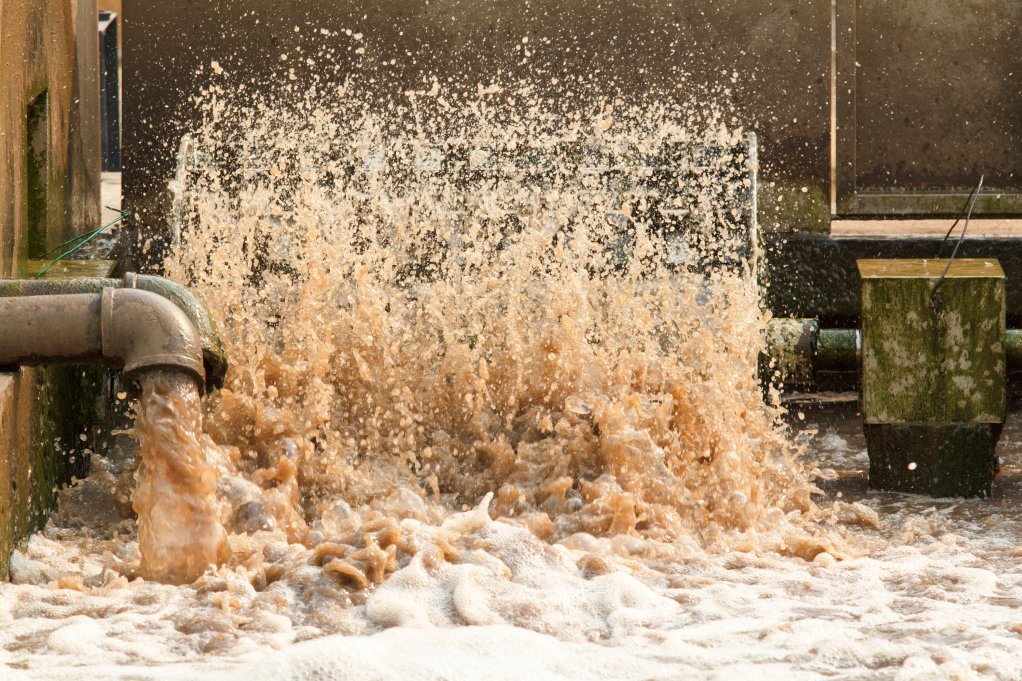


The Association for Water and Sanitation Institutions of South Africa (Awsisa) and Vuka Group on Wednesday signed a memorandum of understanding (MoU) to drive water security in South Africa.
The MoU, signed at the C&I Energy + Storage Summit Johannesburg by Awsisa chairperson Ramateu Monyokolo and Vuka Group CFO Murad Ebrahim, formalises a relationship built around a shared priority: advancing water security and strengthening the water and sanitation sector.
The summit was held alongside the Energy Intensive Users Group Conference, Data Centre Summit and Water Security Africa on October 28 to 29, signalling the increasing interconnectedness of the challenges facing South Africa’s various industries.
“The interconnected nature of the challenges facing our sector does not allow us to address these issues alone,” said Vuka Group power, energy and water director Chanelle Hingston.
While water security has become one of the most significant threats to economic growth, industrial competitiveness, public health, environmental sustainability and human dignity, there is a need to recognise the water energy nexus.
“You cannot have water without electricity. You cannot have electricity without water. That nexus is important to recognise,” said Monyokolo.
He pointed out that water treatment plants, pumping and distribution were energy-intensive activities.
Water utility Rand Water, which Monyokolo also chairs, has responded by investing in about nine megawatts of solar PV capacity, and is advancing hydropower initiatives. He added that 300 MW is needed, which Rand Water is moving towards.
“Therefore, attendees of this conference who come from the energy sector need to partner with the water sector. As Awsisa, we bring together institutions and stakeholders with expertise in water resource management, infrastructure development, governance policy and sector transformation.
“Together, we can strengthen knowledge exchange, mobilise investment, facilitate innovation and accelerate implementation.
An industry is not merely a consumer of water, with sectors such as mining, manufacturing, agriculture and energy, besides others, heavily dependent on reliable water services for productivity, competitiveness and employment.
Commercial industrial users must also contribute to water conservation and demand management, responsible abstraction, pollution prevention and wastewater reuse as well as adopt water-efficient technologies.
“We must move beyond narrow water supply assurance towards comprehensive water stewardship. A factory cannot be considered water secure if the surrounding community lacks reliable access to safe water. A mining operation cannot claim sustainability if its activities compromise local water resources. An industrial development cannot be considered resilient if it depends on infrastructure that financially or personally is unsustainable. This is where collective action becomes essential for us.”
The opportunity lies in combining these capabilities rather than allowing them to operate in isolation.
“As we look ahead, we propose five practical priorities for this collaboration: structured industry engagement, a pipeline of priority projects, investment mobilisation and project cooperation, institutional development and innovation and measurable implementation and accountability.”
Monyokolo pointed out that, while there was currently excess energy, following years of loadshedding and electricity shortages, the water sector did not experience that excess energy as the infrastructure providing energy for water treatment and wastewater treatment plants had deteriorated, leading to significant outages that left water pumping stations and plants inoperable until power was restored.
“We need to deal with the issue of infrastructure. We do not have a water crisis in this country, but we have an infrastructure crisis.”
Water security is about infrastructure performance, institutional capability, financial sustainability, environmental integrity and governance.
In addition to the ageing electricity infrastructure, water security faces threats from ageing water infrastructure.
“There is enough water in the system to supply us, but there is a lack of infrastructure to distribute that water from point A to point B because half of the water that we produce is swallowed by the ground.”
National nonrevenue water is estimated at 47%. Effectively, for every 100 litres of water that is produced, 50 litres is lost.
“We cannot continue constructing new infrastructure while allowing existing infrastructure to deteriorate. We must invest in leak detection, pressure management, smart metering, digital monitoring, and preventive maintenance,” Monyokolo said.
“If we continue to lose water, we pay more to build infrastructure. It does not matter how much water we put in the system. If all that water is lost, it will not help us.”
Infrastructure development must extend beyond constructing new dams, reservoirs, pipelines and treatment plants.
“We require a comprehensive lifecycle approach encompassing planning, financing, construction, operation, maintenance, relocation and renewal. The infrastructure we build today must serve a future shaped by climate uncertainty, technological change and increasing demand.”
Further, technical solutions alone are also insufficient. There is a need to confront the financial crisis affecting municipalities and water institutions. A dangerous cycle of financial distress for the sector is that municipalities struggle to collect revenue and struggle to pay water boards.
“We must recognise the fundamental truth: water security cannot be delivered by government alone. It requires collective leadership, capable institutions, and strategic investment, including the energy sector coming on board and partnerships that deliver measurable outcomes.”
“As Awsisa, we are ready to partner.”
These partnerships should actively promote investment, innovation and water reclamation reuse and resource recovery.
It is also important to partner with municipalities.
“We cannot blame municipalities forever. We want to partner with them,” he said.
The interventions by Awsisa members include decentralised water supply systems, sanitation programmes, infrastructure expansion and wastewater rehabilitation, all of which can contribute directly to the objective of the National Water Action Plan (NWAP).
“We therefore stand ready to collaborate with government, municipalities, water boards and other partners to support implementation within appropriate mandates and governance arrangement. The NWAP must become a programme for visible results, not merely another policy document.”
“At Vuka Group, we look forward to working with Awsisa to ensure meaningful collaboration through shared purpose. Through the signing of this MoU, we want to show the value of what we can do together through the conversations that we enable, the people and perspectives we bring together and the progress we help make possible,” Hingston concluded.
Article Enquiry
Email Article
Save Article
Feedback
To advertise email advertising@creamermedia.co.za or click here
Projects
Latest Multimedia
Latest News
Showroom
We supply customers with practical affordable solutions for their testing needs. Our products include benchtop, portable, in-line process control...
VISIT SHOWROOM
Complete range of security sealing solutions including security seals bags and labels.
VISIT SHOWROOM
Press Office
Announcements
What's On
Subscribe to improve your user experience...
Option 1 (equivalent of R125 a month):
Receive a weekly copy of Creamer Media's Engineering News & Mining Weekly magazine
(print copy for those in South Africa and e-magazine for those outside of South Africa)
Receive daily email newsletters
Access to full search results
Access archive of magazine back copies
Access to Projects in Progress
Access to ONE Research Report of your choice in PDF format
Option 2 (equivalent of R375 a month):
All benefits from Option 1
PLUS
Access to Creamer Media's Research Channel Africa for ALL Research Reports, in PDF format, on various industrial and mining sectors
including Electricity; Water; Energy Transition; Hydrogen; Roads, Rail and Ports; Coal; Gold; Platinum; Battery Metals; etc.
Already a subscriber?
Forgotten your password?
Receive weekly copy of Creamer Media's Engineering News & Mining Weekly magazine (print copy for those in South Africa and e-magazine for those outside of South Africa)
➕
Recieve daily email newsletters
➕
Access to full search results
➕
Access archive of magazine back copies
➕
Access to Projects in Progress
➕
Access to ONE Research Report of your choice in PDF format
RESEARCH CHANNEL AFRICA
R4500 (equivalent of R375 a month)
SUBSCRIBEAll benefits from Option 1
➕
Access to Creamer Media's Research Channel Africa for ALL Research Reports on various industrial and mining sectors, in PDF format, including on:
Electricity
➕
Water
➕
Energy Transition
➕
Hydrogen
➕
Roads, Rail and Ports
➕
Coal
➕
Gold
➕
Platinum
➕
Battery Metals
➕
etc.
Receive all benefits from Option 1 or Option 2 delivered to numerous people at your company
➕
Multiple User names and Passwords for simultaneous log-ins
➕
Intranet integration access to all in your organisation