33 columns, one conversation


If space were not a concern, the title would have been ‘Trade@Work+AI: 33 columns, one conversation,’ subtly acknowledging both my 33 columns of 2026 and my conversation with an AI assistant.
A week after losing my faithful assistant, I decided to ask an AI assistant a simple question: “What is the one lesson that could be learnt from the 2026 Trade@Work columns?”
The AI assistant dutifully responded that: “If there is one lesson from the 2026 Trade@Work columns, it is that trade policy is no longer a niche discipline reserved for customs officials, tariff specialists and trade lawyers. It has become a frontline economic issue, influencing investment decisions, industrial strategy, supply chains and regional integration across Southern Africa.
“Throughout the year, the columns repeatedly returned to a central theme: the growing tension between facilitating trade and protecting domestic industries. Whether discussing safeguard investigations, antidumping measures, tariff administration or customs reform, the author highlighted how governments are increasingly turning to trade remedies as economic pressure intensifies.
“One of the most prominent subjects was the rise in safeguard investigations. In several columns, the author examined how countries are seeking temporary protection from import surges, reflecting a broader shift towards defensive trade policymaking. The author’s discussion of South Africa’s participation in safeguard actions illustrated how trade measures once considered exceptional are becoming an increasingly common feature of the global trading environment.
“The Southern African Customs Union (Sacu) also featured prominently. The author explored both the practical and political dimensions of regional trade governance, including the long-running trade negotiations between Sacu and India. These discussions demonstrated that trade agreements are rarely straightforward commercial arrangements. Instead, they are complex exercises in balancing national interests, regional priorities and economic realities.
“Another recurring topic was the importance of customs administration. Through references to the World Customs Organisation and developments in customs procedures, the author reminded readers that effective trade policy depends not only on regulations but also on implementation. Rules matter, but they achieve little when administrative systems are inefficient, outdated, or poorly coordinated. The efficiency of border management remains a critical factor in determining whether businesses can compete successfully in international markets.
“The author also reflected growing concern about the institutional foundations of trade governance. Discussions around the Sacu Tariff Board and other policy structures highlighted the need for transparent and predictable decision-making. Investors, manufacturers and importers require certainty. When institutions function effectively, trade policy can support growth and industrial development. When they do not, uncertainty becomes a cost in itself.
“A particularly noteworthy feature of the year’s commentary was how it connected complex technical subjects to broader economic and social issues. Topics such as nationality, documentation systems and tariff classification were not treated as isolated regulatory matters. Instead, they were presented as part of a larger conversation about economic participation, governance and competitiveness in an increasingly interconnected world.
“The author also demonstrated that forces beyond traditional economics increasingly shape trade policy. Technology, data management and digitalisation appeared as recurring influences. As trade processes become more electronic and supply chains more data-driven, customs authorities and businesses alike face growing pressure to modernise. The transition from paper-based systems to digital platforms is no longer a future aspiration; it is a present necessity.
“What ultimately emerges from the 2026 columns is a picture of a trading system in transition. Globalisation has not disappeared, but it is evolving. Governments remain committed to trade, yet they are simultaneously deploying more instruments to shield vulnerable sectors, support industrial objectives and respond to geopolitical uncertainty. Businesses can no longer assume that market access will remain unchanged or that trade policy will stay in the background.
“The overarching message from Trade@Work in 2026 is therefore clear. Trade is no longer merely about moving goods across borders; it is about institutions, strategy, compliance, technology, regional cooperation and economic resilience. In an era marked by uncertainty and rapid change, understanding trade policy has become essential not only for specialists but for everyone involved in business and economic development. That reality, more than any individual tariff adjustment or investigation, may be the most important trade story of the year.”
Any thoughts?
Article Enquiry
Email Article
Save Article
Feedback
To advertise email advertising@creamermedia.co.za or click here

Projects

Latest Multimedia


Latest News

Showroom
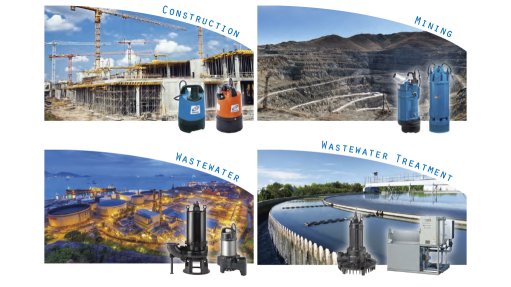
Tsurumi Pumps Africa is a specialist supplier of Japanese-engineered submersible pumping solutions, serving customers across the African continent.
VISIT SHOWROOM
We at Hawk High Pressure Pumps specialise in industrial pumps and pumping systems. Our high pressure washing equipment is locally manufactured and...
VISIT SHOWROOM



Announcements
What's On
Subscribe to improve your user experience...
Option 1 (equivalent of R125 a month):
Receive a weekly copy of Creamer Media's Engineering News & Mining Weekly magazine
(print copy for those in South Africa and e-magazine for those outside of South Africa)
Receive daily email newsletters
Access to full search results
Access archive of magazine back copies
Access to Projects in Progress
Access to ONE Research Report of your choice in PDF format
Option 2 (equivalent of R375 a month):
All benefits from Option 1
PLUS
Access to Creamer Media's Research Channel Africa for ALL Research Reports, in PDF format, on various industrial and mining sectors
including Electricity; Water; Energy Transition; Hydrogen; Roads, Rail and Ports; Coal; Gold; Platinum; Battery Metals; etc.
Already a subscriber?
Forgotten your password?
Receive weekly copy of Creamer Media's Engineering News & Mining Weekly magazine (print copy for those in South Africa and e-magazine for those outside of South Africa)
➕
Recieve daily email newsletters
➕
Access to full search results
➕
Access archive of magazine back copies
➕
Access to Projects in Progress
➕
Access to ONE Research Report of your choice in PDF format
RESEARCH CHANNEL AFRICA
R4500 (equivalent of R375 a month)
SUBSCRIBEAll benefits from Option 1
➕
Access to Creamer Media's Research Channel Africa for ALL Research Reports on various industrial and mining sectors, in PDF format, including on:
Electricity
➕
Water
➕
Energy Transition
➕
Hydrogen
➕
Roads, Rail and Ports
➕
Coal
➕
Gold
➕
Platinum
➕
Battery Metals
➕
etc.
Receive all benefits from Option 1 or Option 2 delivered to numerous people at your company
➕
Multiple User names and Passwords for simultaneous log-ins
➕
Intranet integration access to all in your organisation