AAD calls for South Africa to underpin nascent regional defence cooperation

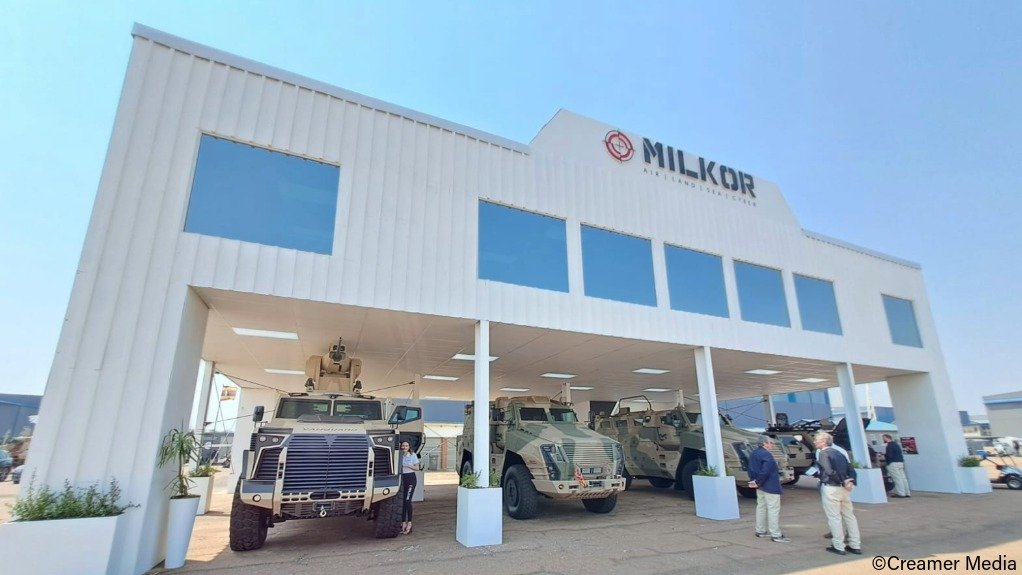
Milkor at AAD 2026
Photo by Creamer Media's Donna Slater
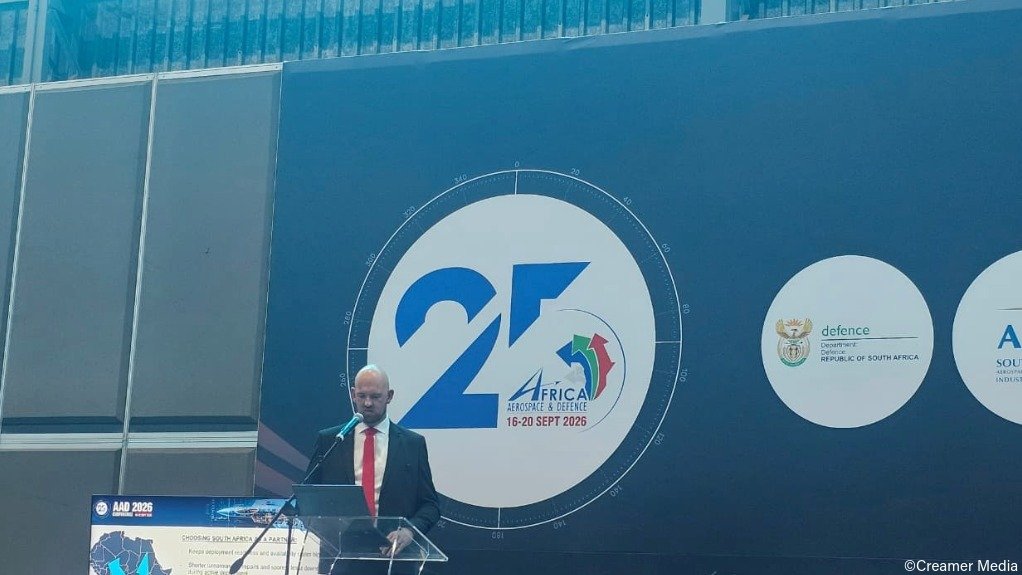
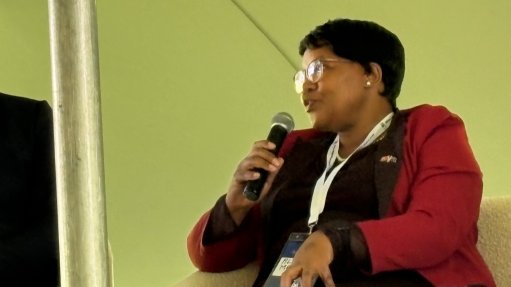
Milkor Africa VP Daniel du Plessis
Photo by Creamer Media's Tasneem Bulbulia



While South Africa’s defence industry does face challenges and has been struggling, it stills hosts considerable capabilities and capacity that can be leveraged, and the country should be the lynchpin of regional cooperation to enhance the continent’s defence and security.
This was highlighted by Milkor Africa VP Daniel du Plessis, speaking on the first day of the Africa Aerospace and Defence (AAD) conference, being held this week at the Waterkloof Air Force Base, in Tshwane.
Du Plessis advocated for an innovative industry to underpin the required defence industry growth.
Council for Scientific and Industrial Research head of technology for special operations Dr Mphahlela James Thaba, meanwhile, pointed out that the right ecosystem was needed to build industrial capacity.
He stressed that this started in laboratories, universities, research institutions and innovative companies, as well as among the engineers, scientists, technologies and military professionals who transformed ideas into capabilities.
Du Plessis advocated for South Africa to be the base of partnership for the continent, highlighting that this would keep deployment readiness and availability rates high; engender a shorter turnaround on repairs and spares, meaning less downtime during active deployment; reduce the dependence on foreign original-equipment manufacturers and volatile export licensing; provide lower lifecycle costs compared with foreign depot level repair; build host nation technical skills and jobs; and turn the country from a vendor into a long-term partner.
He highlighted that despite issues, the country’s defence industry still had considerable capabilities, with several defence-focused companies and suppliers in the value chain; capability spanning air, land, sea, space and cyber, from the components level right up to the full system integration level; over R10-billion in yearly defence exports recorded last year with this projected to increase this year; and South Africa being a “world leader” in armoured vehicles, unmanned aerial vehicles, applied electronics, radar and communication systems, and command, control, communications, computers, intelligence, surveillance, reconnaissance - or C4ISR - weapon systems.
Du Plessis outlined the scale of the problem facing the continent and the need to therefore pursue regional partnerships, with defence challenges in Africa including ageing equipment with increased obsolescence; reliance on foreign country support for maintenance and operational support; equipment from abroad not being suited to the region’s hard conditions; and high-end technologies from outside the area coming with considerable operational and maintenance costs.
He said given that no single State could secure shared maritime or land corridors alone, combined capability regional cooperation was the only credible deterrent.
Du Plessis emphasised that national capability worked best when it was nested inside a shared regional framework.
He stressed that by having capability nested into a regional peacekeeping force, having equipment that was interoperable, and having the necessary communication, spares parts and supplier support, the continent would have a significant advantage in boosting success rates when undertaking peacekeeping operations.
He underlined the urgency of this, given that the continent was facing four concurrent interconnected conflict zones namely in the Sahel, the Lake Chad basin, Mozambique and Somalia.
Du Plessis also said that, despite accounting for one-fifth of the global population, Africa’s share of global GDP was only about 3%, meaning it was not capitalising on its resources.
He pointed out that countries turned to international cooperation outside of the continent when it came defence issues, essentially building a reliance on other countries and leveraging the region’s resources.
Du Plessis called for funding and resources to be used wisely and distributed back into enabling economic growth for the continent.
He also pointed out that South Africa was not a one-stop shop and would not be able to provide all solutions, but would rather underpin regional cooperation. He stressed the need to collaborate with neighbours on addressing challenges, as defence issues in one country impacted on another.
He also called on the country’s defence industry to come up with innovative ways to reduce costs and ensure equipment could be sustainability used, as these were being inflated by reliance on outside partners.
Du Plessis stated that there was “hope and a solution”.
He averred that Africa is no stranger to innovative companies, incentives, and method to address security challenges; for example, he highlighted Egypt's quality defence industry, and Nigeria building up its base.
However, he concluded that no other country on the continent has the industrial base that South Africa had, with the country still boasting considerable defence capability and lots of skills despite many qualified people having left the country over the years.
Du Plessis also pointed out that South Africa was exporting its products to well-established countries, which showcased that it had “world leading capabilities” in-continent, and there was no need to seek these elsewhere.
Meanwhile, a panel discussion exploring the role of public-private partnerships (PPPs) in bolstering the defence industry called for several considerations to underpin such an undertaking, including the value-add of the partnerships sought, including job and innovation creation.
Moreover, partnerships that reduce costs and increase efficiencies, without reducing defence sovereignty, should be pursued.
The unique strengths of the region should be considered before seeking out partnerships overseas, to ensure the correct one is implemented.
It was posited that PPPs could support getting the country’s defence capability back on track, and expeditiously; however, the need for government will and support was underscored, with this indicated to be lagging.
There is also a need to balance pursuing PPPs with maintaining sovereignty. PPPs can often be a complex undertaking and there is a need to adapt for this.
Article Enquiry
Email Article
Save Article
Feedback
To advertise email advertising@creamermedia.co.za or click here
Projects

Latest Multimedia
Latest News

Showroom
Multotec, recognised industry leaders in metallurgy and process engineering help mining houses across the world process minerals more efficiently,...
VISIT SHOWROOM
The Beneficiation Academy is a certified training institution that follows all compliance legislation and is accredited with various Sector...
VISIT SHOWROOM
Press Office
Announcements
What's On
Subscribe to improve your user experience...
Option 1 (equivalent of R125 a month):
Receive a weekly copy of Creamer Media's Engineering News & Mining Weekly magazine
(print copy for those in South Africa and e-magazine for those outside of South Africa)
Receive daily email newsletters
Access to full search results
Access archive of magazine back copies
Access to Projects in Progress
Access to ONE Research Report of your choice in PDF format
Option 2 (equivalent of R375 a month):
All benefits from Option 1
PLUS
Access to Creamer Media's Research Channel Africa for ALL Research Reports, in PDF format, on various industrial and mining sectors
including Electricity; Water; Energy Transition; Hydrogen; Roads, Rail and Ports; Coal; Gold; Platinum; Battery Metals; etc.
Already a subscriber?
Forgotten your password?
Receive weekly copy of Creamer Media's Engineering News & Mining Weekly magazine (print copy for those in South Africa and e-magazine for those outside of South Africa)
➕
Recieve daily email newsletters
➕
Access to full search results
➕
Access archive of magazine back copies
➕
Access to Projects in Progress
➕
Access to ONE Research Report of your choice in PDF format
RESEARCH CHANNEL AFRICA
R4500 (equivalent of R375 a month)
SUBSCRIBEAll benefits from Option 1
➕
Access to Creamer Media's Research Channel Africa for ALL Research Reports on various industrial and mining sectors, in PDF format, including on:
Electricity
➕
Water
➕
Energy Transition
➕
Hydrogen
➕
Roads, Rail and Ports
➕
Coal
➕
Gold
➕
Platinum
➕
Battery Metals
➕
etc.
Receive all benefits from Option 1 or Option 2 delivered to numerous people at your company
➕
Multiple User names and Passwords for simultaneous log-ins
➕
Intranet integration access to all in your organisation