African wind power sector has crossed a threshold

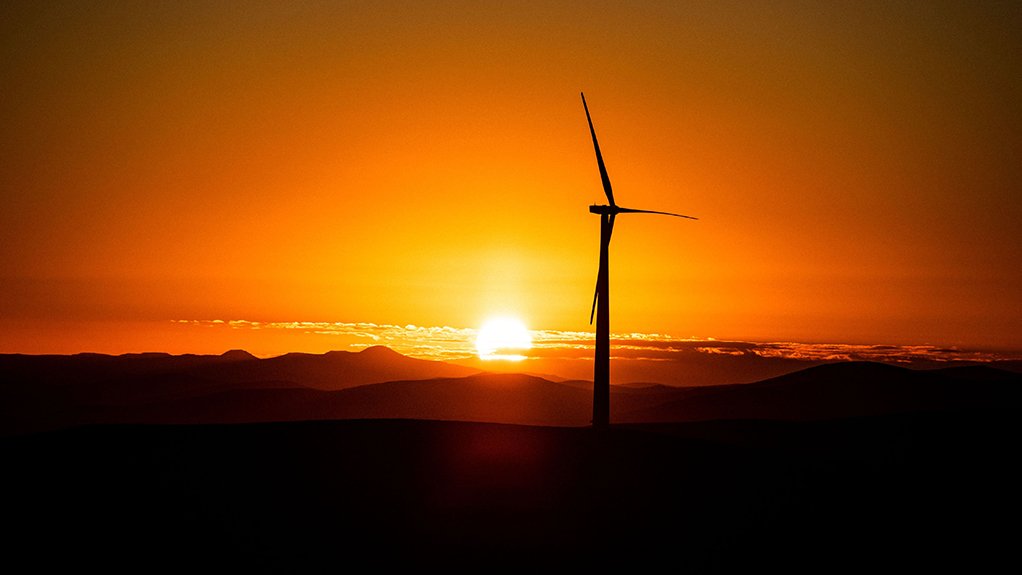



The continent of Africa has huge technical onshore wind power potential of 58 400 GW, highlighted Global Wind Energy Council (GWEC) director Africa Windpower Juliana Kainga, in her keynote address on the second day of the Windaba 2026 conference, at the Cape Town International Conference Centre, on Wednesday. As of the end of last year, the total installed African wind power capacity is 11.1 GW, which comes to a mere 0.02% of the total potential.
Nevertheless, that 11.1 GW figure signalled that the continent had crossed an industrial threshold, she affirmed. Africa's first 1 GW wind farm was under construction (in, although she did not mention it, South Africa's Western Cape province). There was now a pipeline of 259 planned wind power projects spread across Africa, with a total capacity of 186 GW.
Currently, however, 85% of all projects were in just three countries - South Africa, Egypt, and Morocco. And these three countries, together, accounted for less than 10% of Africa's wind power potential.
The countries with the largest wind power potential were actually Algeria, Libya and Sudan. But combined they had a total installed capacity of less than 200 MW. However, there were obviously major political and security issues when it came to investing in these countries.
In terms of regions, North Africa had the greatest onshore wind potential, followed by West Africa.
What had revolutionised wind power in Africa had been the introduction of power purchase agreements (PPAs). More than 3.3 GW of corporate PPA wind projects had reached financial close in South Africa alone in less than three years.
"We are moving away from the single offtake market," she pointed out. Across the continent, industrial demand for energy was widening the offtaker base for wind power. Examples included mining in Zambia and in South Africa, iron-ore export in Mauritania, and phosphates in Morocco.
"The physical infrastructure remains a limiting constraint," she cautioned. South Africa was a good example of this, with grid constraints hampering development in the wind-rich Western Cape. A way to overcome this issue was through independent transmission projects (ITPs). Kenya and Uganda had adopted this approach and their respective first ITP projects had both reached financial close. South Africa was considering this approach.
The grid was, in fact, the "next frontier". Investment in the grid was now more important than building wind turbines.
Regarding financing of African wind power projects, "we're seeing a lot more interest from local capital", she reported. The bankability issue was being solved by corporate PPAs, and, in the established markets (notably South Africa and Morocco) local capital was indeed taking a larger role in financing projects.
The GWEC forecast for wind power capacity in 2035 was 15+ GW for South Africa, 8 GW to 10 GW for Egypt, and 5 GW to 8 GW for Morocco. Other, unspecified, African countries (described as emerging markets) would achieve between 0.5 GW and 3 GW each. It all depended on regulatory frameworks, infrastructural developments, and so on, but these forecasts, Kainga assured, were credible.
Article Enquiry
Email Article
Save Article
Feedback
To advertise email advertising@creamermedia.co.za or click here
Projects
Latest Multimedia

Latest News


Showroom
Rio Carb is an OEM (Original Equipment Manufacturer) of R-C700 Chromium Carbide (CrC) alloy clad wear plates and pipes used for heavy materials...
VISIT SHOWROOM
ECG provides specialised electrical engineering services to the Mining, Utilities, Materials Handling and Industrial industries, with extensive and...
VISIT SHOWROOM

Press Office
Announcements
What's On
Subscribe to improve your user experience...
Option 1 (equivalent of R125 a month):
Receive a weekly copy of Creamer Media's Engineering News & Mining Weekly magazine
(print copy for those in South Africa and e-magazine for those outside of South Africa)
Receive daily email newsletters
Access to full search results
Access archive of magazine back copies
Access to Projects in Progress
Access to ONE Research Report of your choice in PDF format
Option 2 (equivalent of R375 a month):
All benefits from Option 1
PLUS
Access to Creamer Media's Research Channel Africa for ALL Research Reports, in PDF format, on various industrial and mining sectors
including Electricity; Water; Energy Transition; Hydrogen; Roads, Rail and Ports; Coal; Gold; Platinum; Battery Metals; etc.
Already a subscriber?
Forgotten your password?
Receive weekly copy of Creamer Media's Engineering News & Mining Weekly magazine (print copy for those in South Africa and e-magazine for those outside of South Africa)
➕
Recieve daily email newsletters
➕
Access to full search results
➕
Access archive of magazine back copies
➕
Access to Projects in Progress
➕
Access to ONE Research Report of your choice in PDF format
RESEARCH CHANNEL AFRICA
R4500 (equivalent of R375 a month)
SUBSCRIBEAll benefits from Option 1
➕
Access to Creamer Media's Research Channel Africa for ALL Research Reports on various industrial and mining sectors, in PDF format, including on:
Electricity
➕
Water
➕
Energy Transition
➕
Hydrogen
➕
Roads, Rail and Ports
➕
Coal
➕
Gold
➕
Platinum
➕
Battery Metals
➕
etc.
Receive all benefits from Option 1 or Option 2 delivered to numerous people at your company
➕
Multiple User names and Passwords for simultaneous log-ins
➕
Intranet integration access to all in your organisation