Connected digital ecosystems key to unlocking construction productivity

Digitalisation is transforming the global construction industry, but fragmented systems and underused data continue to hinder productivity. RIB Software global product sales director John Gilbert discusses the trends shaping construction and explains why connected digital ecosystems will be critical to improving project delivery.



The global construction industry is undergoing a significant digital transformation, but technology alone will not solve the longstanding productivity challenges that continue to hamper project delivery.
According to RIB Software global product sales director John Gilbert, the industry is moving beyond simply digitising documents towards using data as a strategic asset, with technologies such as Building Information Modelling (BIM), AI and digital twins reshaping how projects are planned, delivered and managed.
"There is definitely a shift from documents towards data. BIM is becoming a baseline, AI is being used to consistently do analysis, and digital twins are providing intelligence beyond the completion of a project," Gilbert notes.
He says these technologies are helping construction companies become more proactive in managing projects. However, despite generating vast quantities of information, the industry continues to underutilise one of its most valuable resources.
"There is a race on to make sure that we don't generate more data, but that we actually start to really utilise the data that we're generating," he says.
Gilbert defines BIM as the process of bringing together the extensive documentation and information generated during construction into a digitised, usable and actionable environment that enables better decision-making throughout the project lifecycle.
Alongside digitalisation, he identifies the global shortage of skilled labour as one of the industry's most pressing challenges. From North America to Australia, contractors are struggling to find experienced personnel, further reinforcing the need for digital transformation that delivers measurable productivity improvements.
Despite widespread technology adoption, cost overruns and schedule delays remain common across the sector. Gilbert attributes much of the problem to fragmented software environments.
Construction projects typically involve numerous contractors, consultants and suppliers, each using their own specialised software and processes.
"You've got a host of different technologies that are very much pointed solutions used at specific stages throughout a construction lifecycle," he explains.
The result is that project teams spend considerable time searching for information, reconciling different document versions and duplicating work.
"We're losing up to a third of the working week with people trying to find the right information, get the latest version and bring it all together in one environment," Gilbert says. "There is a huge amount of rework going on."
He notes that these inefficiencies contribute directly to the industry's poor delivery performance, with the overwhelming majority of megaprojects exceeding both budgets and schedules.
Construction priorities also differ significantly between mature and emerging markets.
Gilbert explains that mature markets such as North America and Western Europe are increasingly focused on protecting margins and managing risk amid slowing demand and higher borrowing costs.
By contrast, emerging markets are grappling with strong demand driven by rapid urbanisation, population growth and smart city developments.
"They need to build more than they physically have people to do," he says. "For them, it's really about speed, scalability and leapfrogging some of the legacy technology challenges that more mature markets are wrestling with."
The Asia-Pacific region has now become the world's largest construction market, reflecting the shift in global growth towards emerging economies.
Gilbert believes AI is already demonstrating tangible benefits during the preconstruction phase, particularly through automated clash detection and design analysis.
According to industry statistics, AI can identify substantially more design conflicts before construction begins, reducing costly rework later in the project lifecycle.
However, he emphasises that the real opportunity lies in connecting information throughout every phase of a project.
"The challenge is how you federate that data throughout the entire lifecycle of a construction project," he says. "Technology as a standalone is not the solution."
Instead, digital tools must be combined with effective collaboration, standardised processes and skilled people to deliver meaningful productivity gains.
Gilbert notes that the industry's greatest challenge is no longer collecting data but converting it into trusted, accessible insights that support better decisions.
"Today we are creating absolute oceans of data, yet we are completely parched for insights," he says, adding that the vast majority of construction data remains unused.
Looking ahead, Gilbert believes the future of construction lies in connected software ecosystems that enable seamless collaboration between all project participants.
Research shows that the overwhelming majority of general contractors now want integrated digital platforms capable of sharing information across the entire project team.
"When you get this right, this is no longer a technology discussion," he says. "This is about addressing three decades of low productivity, project overruns, rework and many of the sustainability challenges the industry faces."
Although numerous construction technology start-ups continue to enter the market with specialised applications, Gilbert cautions against adding yet more standalone software.
He believes connected digital ecosystems will ultimately enable the construction industry to unlock significant productivity improvements while improving collaboration, reducing project risk and delivering greater value across the entire project lifecycle.
Article Enquiry
Email Article
Save Article
Feedback
To advertise email advertising@creamermedia.co.za or click here
Projects


Latest Multimedia


Latest News

Showroom
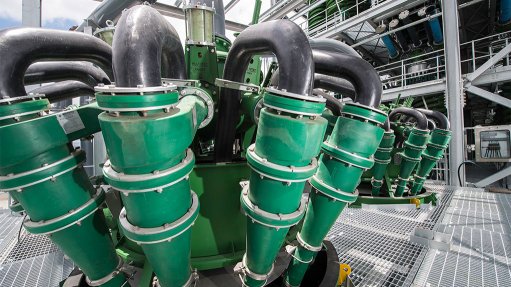
Multotec, recognised industry leaders in metallurgy and process engineering help mining houses across the world process minerals more efficiently,...
VISIT SHOWROOM
ZF Aftermarket is the after-sales division of the world-renowned German ZF group, a global leader in mobility technology.
VISIT SHOWROOM



Announcements
What's On
Subscribe to improve your user experience...
Option 1 (equivalent of R125 a month):
Receive a weekly copy of Creamer Media's Engineering News & Mining Weekly magazine
(print copy for those in South Africa and e-magazine for those outside of South Africa)
Receive daily email newsletters
Access to full search results
Access archive of magazine back copies
Access to Projects in Progress
Access to ONE Research Report of your choice in PDF format
Option 2 (equivalent of R375 a month):
All benefits from Option 1
PLUS
Access to Creamer Media's Research Channel Africa for ALL Research Reports, in PDF format, on various industrial and mining sectors
including Electricity; Water; Energy Transition; Hydrogen; Roads, Rail and Ports; Coal; Gold; Platinum; Battery Metals; etc.
Already a subscriber?
Forgotten your password?
Receive weekly copy of Creamer Media's Engineering News & Mining Weekly magazine (print copy for those in South Africa and e-magazine for those outside of South Africa)
➕
Recieve daily email newsletters
➕
Access to full search results
➕
Access archive of magazine back copies
➕
Access to Projects in Progress
➕
Access to ONE Research Report of your choice in PDF format
RESEARCH CHANNEL AFRICA
R4500 (equivalent of R375 a month)
SUBSCRIBEAll benefits from Option 1
➕
Access to Creamer Media's Research Channel Africa for ALL Research Reports on various industrial and mining sectors, in PDF format, including on:
Electricity
➕
Water
➕
Energy Transition
➕
Hydrogen
➕
Roads, Rail and Ports
➕
Coal
➕
Gold
➕
Platinum
➕
Battery Metals
➕
etc.
Receive all benefits from Option 1 or Option 2 delivered to numerous people at your company
➕
Multiple User names and Passwords for simultaneous log-ins
➕
Intranet integration access to all in your organisation