'Delocalisation' looms over SA auto sector as policy lags market dynamics

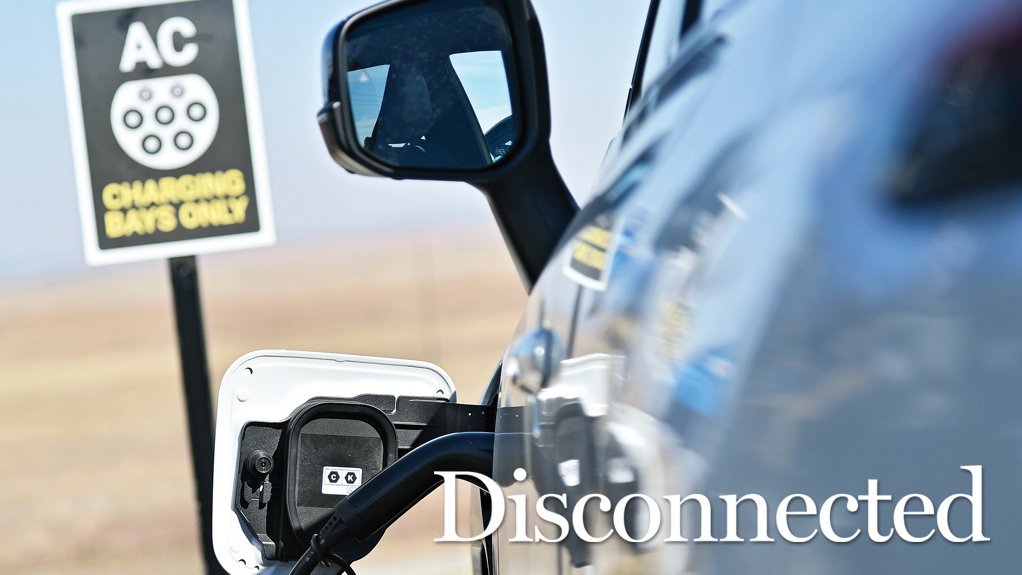



Despite South Africa’s automotive sector recording all-time-high exports of R291-billion and R137-billion in local value-addition in 2025, imported vehicles accounted for 69% of new-vehicle sales in an increasingly eroding domestic market in which local content remains at about 40%, which is significantly lower than a targeted 60%.
Considering passenger vehicles alone, imports accounted for 80% of new-vehicle sales last year.
Specialised business school Toyota Wessels Institute for Manufacturing Studies executive director Professor Justin Barnes identifies an operating environment that constrains manufacturers’ ability to make vehicles and components cost-competitively as the biggest hurdle.
“The challenge we have is the rising cost base to produce in-country and the types of products becoming unsuitable or mismatched with the market. While the country still has the same demand profile of 10.5-million adults being able to afford a new vehicle, the middle class has become distressed and [is] buying cheaper vehicles.
“South Africa’s automotive policy is built for a balanced domestic production and export model. However, the market has changed, and the incentive structure does not provide effective support for domestic production anymore. Outside of pickup trucks, there is not a meaningful domestic market,” Barnes states.
Reflecting the views of various other automotive industry experts, Barnes believes that South Africa’s automotive policy should be tweaked and adjusted to create a market for what is being produced locally. He also highlights how the automotive policy encourages exports by allowing exporters to earn duty rebates on imports, which, he says, is positive.
However, manufacturers are allowed to sell the rebates on to independent importers with no investments in South Africa, who benefit by acquiring those rebates, thereby reducing exposure to South Africa’s ad valorem regime.
Barnes also believes that if more African countries banned the importation of second- hand vehicles, a yearly six-million new-vehicle market would be created on the continent.
Meanwhile, automotive components manufacturer Metair Investments CEO Paul O’Flaherty says that orders for South African component manufacturers have not grown meaningfully since 2019, partly because of multiple one-off events, such as the Covid-19 lockdown in 2020 and the KwaZulu-Natal floods in 2022, while overall localisation opportunities are not advancing.
“Any manufacturer needs scale; there has to be a business case. We need to support the current vehicle manufacturers to build vehicles more competitively. If a plant is built to produce 160 000 vehicles a year and it scales down to produce only 80 000, this puts extreme pressure on the business case for contracted component manufacturers,” he notes.
He sees a significant opportunity in the automotive industry relating to localisation support for aftermarket manufacturing, arguing that this part of the automotive economy is currently not sufficiently incentivised and should receive greater protection, including for components such as tyres, brakes and batteries.
O’Flaherty says component manufacturers are currently trying to extract greater efficiencies from their plants and labour but lack the certainty of scale needed to justify new investments.
Definition and Intention
National Association of Automotive Component and Allied Manufacturers (Naacam) CEO Renai Moothilal says localisation in the automotive sector has not made the expected progress, with the highest level recorded at 42% in the last 15 years. He explains that in 2013 there were fewer vehicles assembled, but at higher levels of local content than today, indicating that while vehicle assembly volumes have remained stable, the level of localisation has declined.
“Our competitiveness levels are being affected. There is an ill-calibrated policy that looks at how localisation is rewarded. Localisation and local content levels have not been significant beneficiaries under the current policy framework,” he explains, drawing a contrast with other countries cross the world where industrial policy is becoming increasingly intentional in supporting domestic industries.
Moothilal points to the EU as an example of how more defined and conditional localisation requirements can be developed for automotive vehicle and component manufacturing.
As the South African government continues to review two key automotive policies guiding the industry – the Automotive Production and Development Programme and the South African Automotive Masterplan – Moothilal says it should be more direct and ambitious in terms of what it wants to achieve through localisation.
“We should continue supporting the sector from an industrial policy toolkit perspective, but the opportunities are not just about assembling vehicles of the future, but the value chain and what kind of localisation can be unlocked,” Moothilal emphasises.
He mentions the example of Chinese automaker Chery, which has invested in South Africa through its acquisition of Nissan’s plant in Tshwane, Gauteng, to establish completely knockdown production, which uses much larger volumes of locally made components.
Chery has committed to achieving 40% localisation by 2028.
“These manufacturers come with technology and product that has not been done in South Africa. This presents an opportunity to on-shore a lot of the high-value components that are not being made in South Africa – including those that are new-energy vehicle (NEV) specific.
“We do not want to see these manufacturers default to importing containerised components. For a long time, automotive policy has not addressed packages for new entrants in the country and now is an opportune time for that,” Moothilal states.
He highlights a key challenge facing the country: original-equipment manufacturers (OEMs) opting to import components at cheaper rates to remain competitive. He says Naacam consistently advocates for well- defined localisation, with incentives for raw materials structured from the bottom up.
He cites Thailand, Indonesia and China as examples of countries with intentional policies and incentives for promoting component localisation. “Introducing defined requirements for local assembly processes and duty policies can address some of the shortcomings we see.”
Moothilal is confident that South African automotive component manufacturers already have strong local and international partnerships, as well as a strong industrial base and skills needed to produce more NEV-specific components, including e-axles, thermal management components and high-voltage wire harnesses.
He recommends a more tailored policy that responds to particular technologies, rather than the largely technology-agnostic policy that has been pursued historically. “The quicker we see announcements in the NEV space, the better – the component sector is well primed to respond.”
New-Energy Spark
Meanwhile, electric-vehicle charging network operator GridCars CEO Winstone Jordaan argues that increasing NEV sales, particularly battery-electric vehicle (BEV) sales, to 10% of South Africa’s new-vehicle sales from the current 1% could aggressively spark demand for manufacturers to build both vehicles and components locally.
Increased NEV sales will also make charging infrastructure more profitable and could attract more investors. GridCars has been investing in charging infrastructure since 2012, and Jordaan confirms that there are, in fact, more chargers installed than the market currently demands.
“BEV sales could triple and there would still be enough infrastructure,” Jordaan says, adding that charging infrastructure suppliers, such as GridCars itself, have committed to localisation – particularly to have aluminium chassis procured locally.
He is confident that the South African NEV market could see tenfold sales growth in the coming years as plug-in hybrids, which experienced 432% sales growth to 5 851 units between January and July, are often a stepping stone to becoming fully electric once consumers are satisfied about the electric charging technology and network availability.
Jordaan says producing and selling 20 000 NEVs a year would shift the needle and be a game-changer for localisation and market demand in South Africa.
Regional Approach
Moothilal and Barnes concur that local demand for locally produced vehicles must be stimulated, arguing that a more effective means of stimulating the South African automotive industry would be regional vehicle assembly and production across more African countries.
“Not every country can have production plants; we need regional value chains. The quicker we can partner with other governments to get that commitment to an industrialisation outlook for the region, the better it would be for the South African automotive industry.
“Between dealing with grey imports and institutional changes, including more enforcement to deal with aftermarket counterfeit situations, South Africa can strengthen its regional approach to automotive value chain building,” Moothilal points out.
Barnes cites Côte d’Ivoire as an example of a country that has recognised the importance of a comprehensive automotive and sustainable transport policy focused on electric mobility adoption, local manufacturing and stricter vehicle import controls. The West African country is targeting NEVs comprising 10% of the public administration fleet by 2030.
The Côte d’Ivoire government is also actively urging consumers to favour locally assembled vehicles to stimulate job creation, alongside efforts to make the country a West African mobility hub, driven by regional trade integration. Côte d’Ivoire has aftermarket trade ties with Nigeria, which has improved access to genuine locally produced parts for both countries.
Like South Africa, Nigeria is constrained by high logistics costs, which strengthens the case for regional collaboration that enhances global competitiveness.
O’Flaherty says the opportunity to supply Africa’s 30-million-passenger-vehicle market is significant, but getting agreements such as the African Continental Free Trade Area Agreement going will require South African policymakers to be decisive on regulations and incentives.
Jordaan says it is likely that BEVs will be manufactured elsewhere in Africa earlier than in South Africa, considering the legislation that countries such as Ethiopia, Rwanda, Ghana, Kenya and Mauritius are advancing to drive electrification, which empowers OEMs to build better business cases for localisation.
Moothilal summarises the overall sentiment of the experts by saying that no more component plants or jobs should be lost in the South African supplier base. “We need to see an actual response to that increasing trend over the last three years. In the medium term, South Africa does have the capability to remain a relevant automotive investment destination, but it has to deal with the competitiveness and localisation constraints.
“There are governments across the world that can quickly mop up what South Africa loses in its industrial base. A continuing supportive industrial policy environment is absolutely crucial,” he concludes.
•The automotive experts quoted were part of a webinar panel hosted by Creamer Media on September 1.
Article Enquiry
Email Article
Save Article
Feedback
To advertise email advertising@creamermedia.co.za or click here

Projects

Latest Multimedia


Latest News

Showroom
Multotec, recognised industry leaders in metallurgy and process engineering help mining houses across the world process minerals more efficiently,...
VISIT SHOWROOM
The Beneficiation Academy is a certified training institution that follows all compliance legislation and is accredited with various Sector...
VISIT SHOWROOM


Press Office
Announcements
What's On
Subscribe to improve your user experience...
Option 1 (equivalent of R125 a month):
Receive a weekly copy of Creamer Media's Engineering News & Mining Weekly magazine
(print copy for those in South Africa and e-magazine for those outside of South Africa)
Receive daily email newsletters
Access to full search results
Access archive of magazine back copies
Access to Projects in Progress
Access to ONE Research Report of your choice in PDF format
Option 2 (equivalent of R375 a month):
All benefits from Option 1
PLUS
Access to Creamer Media's Research Channel Africa for ALL Research Reports, in PDF format, on various industrial and mining sectors
including Electricity; Water; Energy Transition; Hydrogen; Roads, Rail and Ports; Coal; Gold; Platinum; Battery Metals; etc.
Already a subscriber?
Forgotten your password?
Receive weekly copy of Creamer Media's Engineering News & Mining Weekly magazine (print copy for those in South Africa and e-magazine for those outside of South Africa)
➕
Recieve daily email newsletters
➕
Access to full search results
➕
Access archive of magazine back copies
➕
Access to Projects in Progress
➕
Access to ONE Research Report of your choice in PDF format
RESEARCH CHANNEL AFRICA
R4500 (equivalent of R375 a month)
SUBSCRIBEAll benefits from Option 1
➕
Access to Creamer Media's Research Channel Africa for ALL Research Reports on various industrial and mining sectors, in PDF format, including on:
Electricity
➕
Water
➕
Energy Transition
➕
Hydrogen
➕
Roads, Rail and Ports
➕
Coal
➕
Gold
➕
Platinum
➕
Battery Metals
➕
etc.
Receive all benefits from Option 1 or Option 2 delivered to numerous people at your company
➕
Multiple User names and Passwords for simultaneous log-ins
➕
Intranet integration access to all in your organisation