Diversity and digitalisation reshape opportunities for women in construction

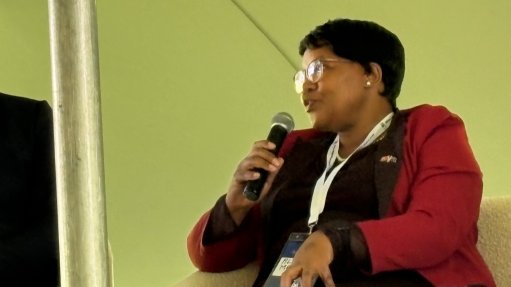
Global technology company RIB Software global marketing VP Kim Immelman speaks about how women are increasingly shaping the future of construction and the opportunities ahead.



Women are playing an increasingly visible role across the construction industry, with greater representation in project delivery, leadership, technology and engineering helping to broaden the sector’s talent pool and strengthen its ability to respond to emerging challenges.
Global technology company RIB Software global marketing VP Kim Immelman says the industry has made encouraging progress in creating opportunities for women, although continued efforts to improve diversity and inclusion remain important.
Immelman, who has gained extensive insight into the sector through engagements with customers across the global construction industry, says there is now a more deliberate focus on broadening access to opportunities and building more diverse teams.
“Women have a far more visible place in all parts of the industry, whether that’s in project delivery, leadership, technology or engineering,” she says.
She believes that recognising the contribution of women, particularly during Women’s Month, provides an opportunity not only to celebrate the progress already made, but also to encourage the next generation to consider construction as a sector in which they can build meaningful careers.
The need to attract a broader range of talent is particularly significant as the industry confronts skills shortages, productivity pressures and sustainability challenges.
“I think attracting diverse talent is going to be a key way to addressing those challenges,” Immelman says.
Beyond improving representation, greater diversity can contribute directly to project outcomes, particularly in an industry where problem-solving and collaboration are fundamental to successful delivery.
According to Immelman, the organisations achieving the strongest results are often those that bring together people with different backgrounds, experiences and perspectives.
“Construction is ultimately a problem-solving industry,” she says, noting that whether teams are delivering major infrastructure, managing risk, driving sustainability or adopting new technology, diverse perspectives can help challenge established thinking.
Teams that approach problems from multiple angles are more likely to identify alternative solutions and adapt to changing project requirements, she says.
Women are consequently playing an increasingly important role in leading projects, driving innovation and helping organisations navigate change.
“Diversity isn’t simply good for representation; it genuinely makes teams stronger, more resilient, and often more innovative,” Immelman says.
She identifies resilience, collaboration, curiosity and adaptability as qualities she has consistently encountered among women working in the sector.
Construction is a demanding and fast-moving environment, and Immelman says many of the women she has encountered demonstrate an ability to navigate complexity while bringing stakeholders together around a common objective.
She also highlights their ability to build consensus and maintain momentum on projects, as well as their willingness to embrace technological change and help others adapt to it.
Leadership and Representation
For Immelman, increasing the visibility of women in construction is critical to changing perceptions about who can build a career in the industry.
“When young women see others succeeding in the construction industry, whether that’s on site, in leadership roles, technology or innovation, it helps them believe that those opportunities are available to them as well,” she says.
Leadership therefore has an important role to play in creating an environment in which women can progress.
While policies and programmes have a role, Immelman believes effective leadership goes further by providing mentorship, visibility and access to opportunities.
“Great leaders don’t just create that seat at the table; they help those folks at that table confidently contribute while sat there,” she says.
Creating opportunities for women is consequently not simply about bringing more women into the industry, but ensuring that they have the support and confidence to participate meaningfully and progress in their careers.
Role of Technology
The rapid digitalisation of construction is also changing perceptions of what a career in the industry can entail.
Technology is transforming how projects are planned, delivered and managed, while creating new career pathways in areas such as data, digital engineering, building information modelling, sustainability and AI.
This evolution has the potential to broaden the industry's appeal to people who may not previously have considered construction as a career option.
Immelman says conversations with customers indicate a growing positivity around this broader understanding of the sector.
“I think this evolution is absolutely creating exciting opportunities for women and a more diverse workforce,” she says.
As construction becomes increasingly technology-driven, the sector's workforce is expected to require a combination of traditional technical expertise and new digital capabilities. This creates opportunities for people with interests extending beyond conventional perceptions of construction.
Challenging Outdated Perceptions
For young women considering entering the sector, Immelman believes outdated perceptions should not be allowed to define their view of construction.
The industry, she says, is much broader than many people realise and offers opportunities across technology, design, sustainability, engineering and business leadership.
“Construction is one of the most impactful industries in the world. It shapes the buildings, the infrastructure, and the communities we rely on every day,” she says.
Her advice to prospective entrants is to remain curious, ask questions, seek mentors and trust their abilities.
“What the industry needs now more than ever is fresh thinking and absolute diverse perspectives,” she says.
Ultimately, Immelman believes the future of construction will depend not only on technological advancement, productivity and innovation, but on the people behind these developments.
“At the end of the day, behind all of these projects are individuals trying to solve problems. They’re trying to create opportunities and build something that lasts,” she says.
Bringing diverse voices into those conversations will therefore remain important as the sector evolves.
“The future of construction will be shaped by those who are willing to challenge traditional thinking, embrace innovation, and help create a diverse industry for generations to come,” Immelman concludes.
Article Enquiry
Email Article
Save Article
Feedback
To advertise email advertising@creamermedia.co.za or click here
Projects

Latest Multimedia
Latest News


Showroom
Established in 1933, EKATO is the world leader in agitation technology, supplying agitators for processes and applications such as chemicals and...
VISIT SHOWROOM
Stewarts & Lloyds is a leading steel, tube, and engineering product supplier in South Africa.
VISIT SHOWROOM


Announcements
What's On
Subscribe to improve your user experience...
Option 1 (equivalent of R125 a month):
Receive a weekly copy of Creamer Media's Engineering News & Mining Weekly magazine
(print copy for those in South Africa and e-magazine for those outside of South Africa)
Receive daily email newsletters
Access to full search results
Access archive of magazine back copies
Access to Projects in Progress
Access to ONE Research Report of your choice in PDF format
Option 2 (equivalent of R375 a month):
All benefits from Option 1
PLUS
Access to Creamer Media's Research Channel Africa for ALL Research Reports, in PDF format, on various industrial and mining sectors
including Electricity; Water; Energy Transition; Hydrogen; Roads, Rail and Ports; Coal; Gold; Platinum; Battery Metals; etc.
Already a subscriber?
Forgotten your password?
Receive weekly copy of Creamer Media's Engineering News & Mining Weekly magazine (print copy for those in South Africa and e-magazine for those outside of South Africa)
➕
Recieve daily email newsletters
➕
Access to full search results
➕
Access archive of magazine back copies
➕
Access to Projects in Progress
➕
Access to ONE Research Report of your choice in PDF format
RESEARCH CHANNEL AFRICA
R4500 (equivalent of R375 a month)
SUBSCRIBEAll benefits from Option 1
➕
Access to Creamer Media's Research Channel Africa for ALL Research Reports on various industrial and mining sectors, in PDF format, including on:
Electricity
➕
Water
➕
Energy Transition
➕
Hydrogen
➕
Roads, Rail and Ports
➕
Coal
➕
Gold
➕
Platinum
➕
Battery Metals
➕
etc.
Receive all benefits from Option 1 or Option 2 delivered to numerous people at your company
➕
Multiple User names and Passwords for simultaneous log-ins
➕
Intranet integration access to all in your organisation