Duke University, UCT make tangible investment recommendations ahead of lithium, rare earths boom

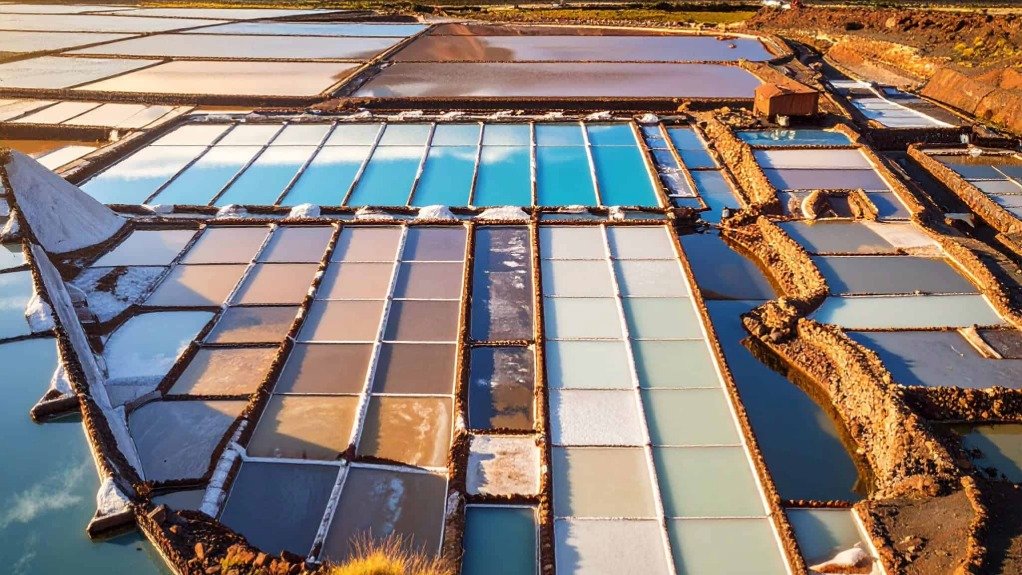


A first-of-its-kind report from researchers at Duke University and the University of Cape Town (UCT) has mapped the most credible research and development opportunities for lithium and rare earth processing, with the researchers offering recommendations to countries and companies in the Global South that are trying to go beyond mining to expand their processing capability.
The report helps to inform the global collaborative platform that is the Council for Critical Minerals Development in the Global South that was created in response to the anticipated rises in commodity demands for lithium and rare earths, among others.
The International Energy Agency (IEA) predicts that meeting climate targets requires an eight-fold rise in lithium demand and a doubling of magnet rare earth demand by 2040 but says the binding constraint is not getting the resources out of the ground, but the midstream processing stages - where China currently controls between 60% and 70% of lithium conversion and more than 85% of rare earths seperation.
Many Global South countries and companies within them are trying to expand their processing capability of these elements, yet many of the actors lack the understanding of the latest research, development and innovation in critical mineral processing, Duke and UCT finds.
The organisations recommend that companies making strategic decisions on where to invest in critical mineral processing should concentrate on five priorities: capturing value at the processing chokepoint, targeting the pilot-to-demonstration stage, investing in new technologies beyond tradition evaporation ponds in lithium's case, prioritising the energy and carbon cost of conversion, also in lithium's case, and treating seperation and recycling as important priorities in the case of rare earths.
Duke and UCT expand on these points by explaining that mining a lithium deposit or rare earth resource without securing downstream conversion, separation, or refining capacity leaves most of the margin and strategic leverage with whoever controls the midstream.
"Because these value chains are concentrated rather than truly global, chokepoint participation is best treated as an entry point toward broader integration across adjacent stages of the chain, not as an end state. This requires identifying and committing to specific processing partnerships or in-country conversion investments at the project development stage, well before financial close," the report states.
Additionally, the most commercially credible innovations across the lithium and rare earth chains - direct lithium extraction (DLE), lower-temperature spodumene roasting, and continuous rare earth ion exchange - currently sit at technology readiness levels of 5 to 7, which are the stages where capital availability, not technical uncertainty, is the main constraint.
UCT and Duke say financing instruments differ by stage, with pilot plants needing equity and grant capital, while demonstration and first commercial units need offtake commitments and debt guarantees.
"Companies able to invest in equity, offtake commitments, or co-development partnerships at this stage will secure better technology access and pricing than those that wait for technology readiness levels 8 to 9," the organisations note.
Moreover, in terms of lithium through brine ponds investment, UCT and Duke suggest that conventional brine evaporation recovers only 30% to 50% of lithium over a 12- to 24-month cycle and is exposed to regulatory and water-use constraints. DLE technologies, on the other hand, particularly those in China, Argentina and at pilot stage elsewhere, can recover more than 90% of lithium in hours.
However, DLE performance is strongly brine-chemistry dependent and most flowsheets still require downstream concentration. UCT and Duke say many recent projects are adopting hybrid DLE-plus-pond configurations. New entrants should evaluate DLE against site-specific brine chemistry and water constraints rather than building pond-only infrastructure by default.
With the lithium through hard-rock spodumene production route, UCT and Duke find that calcination at 1 000°C to 1 100°C is both the largest cost driver and the most energy-intensive step in hard-rock processing. The kiln accounts for roughly half of refinery process energy and is the dominant source of Scope 1 emissions, while lower-temperature sulphate and chloride roasting routes operate at markedly lower temperatures and credibly offer lower energy and reagent intensity. Sulphide and chloride roasting also accepts lower-grade feeds and tailings that conventional acid roasting cannot process.
Mangrove Lithium’s membrane electrolysis for direct lithium chloride–to–lithium hydroxide conversion, for example, is a complementary step that reduces soda ash and lime consumption at the back end of the chain. These lower-temperature routes sit at technology readiness levels 6 to 7 and represent among the most actionable decarbonization levers available to companies.
In rare earths, UCT and Duke find that seperation remains the most concentrated and technically demanding stage of the rare earths chain. Companies should evaluate solvent-free seperation processes, such as that of Norweigan company REEtec, which avoids the organic solvents used in conventional solvent extraction, as the most credible near-term alternative for new seperation capacity outside of China.
In parallel, neodymium-iron-boron magnet recycling through hydrogen processing, as it done by HyProMag in the UK and Cyclic Materials in Canada, is becoming a commercially-relevant feedstock source. UCT and Duke warn, however, that recycling is a medium-term rather than near-term supply level, since feedstock remains constrained until first-generation electric vehicle and wind turbine magnets reach end-of-life volume around 2030.
In governments' case, UCT and Duke recommend that they fund the commercialisation valley, not only laboratory experiments. Government programmes in the US, EU, Australia and Canada have already directed significant funding toward both early-stage research grants and supporting mature facilities. Governments can offer loans, pilot plant subsidies and government-backed offtake agreements to catalyse creation of critical mineral value chains.
Moreover, UCT and Duke say governments ought to band together to build an international evaluation framework for critical mineral processing research and development. There are no publicly available technology readiness level definitions, shared registries or coordinated mechanisms for directing capital towards the most advanced technologies, with the result of this being a significant duplication of effort.
With support by governments, bodies such as IEA's Critical Minerals Council can, for example, create a public registry of critical mineral processing research and development technologies covering technology status, technology readiness level evidence and pilot results rather than proprietary process knowledge - so that participating countries gain coordination benefits without surrendering competitive or strategic advantages.
UCT and Duke further find that governments can pair supply-side funding with demand-side commitments, saying that the most effective recent interventions have been demand instruments rather than grants. The organisations cite guaranteed price floors, as is the case with a 2025 US Department of Defence arrangement with MP Materials, strategic stockpiles and magnet or content requirements in electric vehicle of defence-related procurement. UCT and Duke emphasise that supply-side grants without a demand signal are precisely what leaves technology readiness level 6 to 7 firms stranded in the commercialisation valley.
For emerging economies, UCT and Duke recommend that governments support deliberate technology transfer, explaining that several of the most commercially promising technologies such as DLE, sulphate roasting, magnet recycling and sensor-based ore sorting could lower the capital and skill barriers compared to conventional processing plants.
"Governments in resource-rich emerging economies should negotiate technology transfer provisions and domestic processing mandates as part of mining agreements from the outset, rather than seeking to add them after production has begun. Bilateral and regional trade agreements can serve as enforcement vehicles for these provisions: technology-transfer and local-processing clauses embedded in free-trade agreements are more durable than project-level agreements, particularly where the counterparties are State-owned enterprises," UCT and Duke state.
Article Enquiry
Email Article
Save Article
Feedback
To advertise email advertising@creamermedia.co.za or click here
Projects


Latest Multimedia
Latest News

Showroom

Your global lifecycle technology & service partner for materials & minerals processing equipment for coal, iron ore, copper, manganese & other...
VISIT SHOWROOM
Mitsubishi Chemical Advanced Materials South Africa (Pty) Ltd is a leading manufacturer of high-performance engineering plastics for the mining...
VISIT SHOWROOM


Announcements
What's On
Subscribe to improve your user experience...
Option 1 (equivalent of R125 a month):
Receive a weekly copy of Creamer Media's Engineering News & Mining Weekly magazine
(print copy for those in South Africa and e-magazine for those outside of South Africa)
Receive daily email newsletters
Access to full search results
Access archive of magazine back copies
Access to Projects in Progress
Access to ONE Research Report of your choice in PDF format
Option 2 (equivalent of R375 a month):
All benefits from Option 1
PLUS
Access to Creamer Media's Research Channel Africa for ALL Research Reports, in PDF format, on various industrial and mining sectors
including Electricity; Water; Energy Transition; Hydrogen; Roads, Rail and Ports; Coal; Gold; Platinum; Battery Metals; etc.
Already a subscriber?
Forgotten your password?
Receive weekly copy of Creamer Media's Engineering News & Mining Weekly magazine (print copy for those in South Africa and e-magazine for those outside of South Africa)
➕
Recieve daily email newsletters
➕
Access to full search results
➕
Access archive of magazine back copies
➕
Access to Projects in Progress
➕
Access to ONE Research Report of your choice in PDF format
RESEARCH CHANNEL AFRICA
R4500 (equivalent of R375 a month)
SUBSCRIBEAll benefits from Option 1
➕
Access to Creamer Media's Research Channel Africa for ALL Research Reports on various industrial and mining sectors, in PDF format, including on:
Electricity
➕
Water
➕
Energy Transition
➕
Hydrogen
➕
Roads, Rail and Ports
➕
Coal
➕
Gold
➕
Platinum
➕
Battery Metals
➕
etc.
Receive all benefits from Option 1 or Option 2 delivered to numerous people at your company
➕
Multiple User names and Passwords for simultaneous log-ins
➕
Intranet integration access to all in your organisation