Electric Vehicles and Insurance


This article has been supplied and will be available for a limited time only on this website.
South Africa's electric vehicle (EV) market is surging in 2026, driven by a wave of affordable new models and buyer interest. According to data from the Automotive Business Council (Naamsa), South Africans are choosing new energy vehicles (NEVs) such as hybrids (HEVs), plug-in hybrids (PHEVs) and fully electric cars (BEVs) at pace, with 3,045 NEVs sold in June 2026 – a 104.2% increase compared to the 1,491 units sold in the same period in 2025.[1]
As more motorists make the move from internal combustion engines to hybrid and fully electric mobility, it creates important new considerations for drivers, insurers, repairers and risk professionals.
One of the most important questions to ask is whether insurance works differently because a vehicle is electric. The answer is simply that it presents a different risk profile, one that involves high-voltage electrical systems, sophisticated technology, expensive battery components and in some cases, different repair and recovery requirements. Understanding those differences can help motorists make better decisions about their insurance cover.
Russell Davis, from Aon South Africa’s Broking Centre says at the heart of an EV is a lithium-ion battery system. “These batteries have a high energy density, which makes them an effective way to store the large amount of energy needed to power a vehicle. But that energy density also introduces risks that are different from those associated with a conventional petrol or diesel vehicle.”
Physical damage, overheating, short circuits, manufacturing defects, overcharging or other failures can, under certain circumstances, result in a phenomenon known as thermal runaway[2] - a self-sustaining reaction within a battery cell that can release significant heat and potentially result in a fire or other hazardous conditions.
“This does not mean that EVs are inherently unsafe,” says Davis pointedly. “Modern electric vehicles incorporate sophisticated battery management systems and multiple safety measures. It does, however, mean that an accident involving an EV may require a different approach to assessment, recovery and repair.”
If you are in an accident with a conventional vehicle, visible damage can often provide an indication of what needs to be repaired, but with an EV, the situation can be more complicated. “An impact may damage components of the high-voltage battery system even when the damage is not immediately obvious. This can mean that a vehicle needs to be assessed by appropriately trained technicians before it is considered safe to repair, recover or return to the road. Determining whether a damaged battery can be safely repaired or a replacement is necessary, can also have a substantial impact on the cost of a claim,” says Davis.
It is one of the reasons why EV claims are likely to involve greater repair complexity and uncertainty than conventional motor claims. “Insurers are still building claims data around accident frequency, repair costs, battery replacement, theft and recovery requirements as the market develops. That is why it is particularly important to understand what your policy covers and how the insurer handles battery-related damage,” says Davis.
According to Davis there are a few questions that are worth asking before a claim occurs, to establish:
- Is the battery covered as part of the insured vehicle?
- Are there any specific exclusions or limitations relating to battery damage?
- What happens if the battery is damaged in an accident but the vehicle itself appears repairable?
- How is battery replacement valued?
- Does the policy distinguish between accidental damage and battery degradation?
- What happens if the battery is damaged while the vehicle is charging?
Battery performance slowly reduces over time, which raises an important distinction between damage and degradation. “Accidental damage to a battery may fall within the scope of motor insurance, depending on the policy, but gradual loss of battery capacity, however, is generally a different issue. EV owners should therefore understand where their motor insurance ends and where manufacturer warranties or other forms of cover may begin,” says Davis.
EV Repairs, Charging and Fire Risk
From a South African perspective, sophisticated electronics, high-voltage systems, software and specialised components housed within an EV vehicle means that repair facilities may not necessarily have the equipment, training or certification required to work safely on high-voltage EV systems, that align with Original Equipment Manufacturers (OEM) guidance. While it is a major shift in the motor industry at present, which means that current recovery and repair arrangements become an important part of the insurance conversation.
“It is worth understanding whether your insurer has access to repairers and technicians who are equipped to move, inspect and repair your specific make and model of EV in accordance with OEM guidelines. It also affects the time required to settle a claim when considering part availability, specialist assessments and battery diagnostics, that influence how quickly a damaged vehicle is repaired,” says Davis.
While EV vehicles are still relatively new, we will arrive at a point in time in the future where vehicle warranties are no longer in place and the owner can use any repairer or transporter. “The question will be whether the motor repair industry will be aligned with OEM standards, whether insurers will cater for this risk and what it would look like,” Davis adds.
How an EV vehicle is charged introduces another risk consideration. “The Installation of a charging point at home introduces additional considerations from an insurance perspective. It is important to establish whether the charging equipment and the installation need to be disclosed to your insurer and whether the equipment itself and the property around it is covered under the relevant policy. As it is an electrical installation, it is also important to confirm whether your installation is compliant with regulatory standards,” Davis adds.
Lithium-ion battery fires also behave differently from conventional vehicle fires. Thermal runaway can generate intense heat and toxic gases, while the battery itself contains the energy required to sustain the reaction.
This has implications for emergency response, recovery and property protection, says Davis. “The practical takeaway is that the consequences of a serious battery incident are different and needs to be taken into consideration by insurers and emergency responders. It becomes particularly relevant if a vehicle is stored inside a garage, underground parking area or other enclosed space,” says Davis.
Roadside assistance also takes on a slightly different flavour, as running out of fuel versus running out of stored energy in an EV vehicle requires a different type of assistance. The same goes for a vehicle that has been involved in an accident, as it may require specialised recovery procedures depending on the condition of the high-voltage system.
A Changing Risk Landscape
As the number of EVs on South African roads grows rapidly, so too will the industry's understanding of the risks they present.
Insurance pricing is based on the overall risk presented by the vehicle and driver, rather than simply whether the vehicle uses petrol, diesel or electricity. As the market develops, insurers are faced with relatively limited historical claims data, potentially higher repair costs, specialised repair requirement, battery replacement costs and recovery considerations
“The insurance landscape is likely to continue evolving as more EVs enter the market and insurers accumulate more data, repair networks mature and specialist skills become more widely available. The important point for motorists is therefore not to assume that an EV will automatically be cheaper or more expensive to insure, but that it’s important to ask what is covered, understand the risks and compare the actual policy rather than the premium alone,” Davis concludes.
Article Enquiry
Email Article
Save Article
Feedback
To advertise email advertising@creamermedia.co.za or click here
Projects

Latest Multimedia

Latest News

Showroom
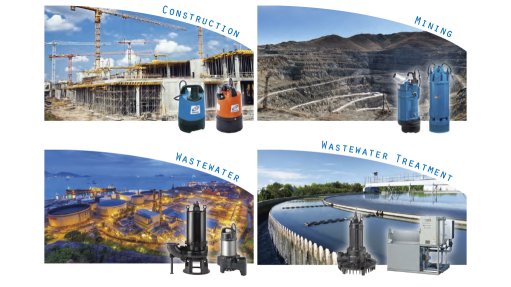
Tsurumi Pumps Africa is a specialist supplier of Japanese-engineered submersible pumping solutions, serving customers across the African continent.
VISIT SHOWROOM
We at Hawk High Pressure Pumps specialise in industrial pumps and pumping systems. Our high pressure washing equipment is locally manufactured and...
VISIT SHOWROOM
Announcements
What's On
Subscribe to improve your user experience...
Option 1 (equivalent of R125 a month):
Receive a weekly copy of Creamer Media's Engineering News & Mining Weekly magazine
(print copy for those in South Africa and e-magazine for those outside of South Africa)
Receive daily email newsletters
Access to full search results
Access archive of magazine back copies
Access to Projects in Progress
Access to ONE Research Report of your choice in PDF format
Option 2 (equivalent of R375 a month):
All benefits from Option 1
PLUS
Access to Creamer Media's Research Channel Africa for ALL Research Reports, in PDF format, on various industrial and mining sectors
including Electricity; Water; Energy Transition; Hydrogen; Roads, Rail and Ports; Coal; Gold; Platinum; Battery Metals; etc.
Already a subscriber?
Forgotten your password?
Receive weekly copy of Creamer Media's Engineering News & Mining Weekly magazine (print copy for those in South Africa and e-magazine for those outside of South Africa)
➕
Recieve daily email newsletters
➕
Access to full search results
➕
Access archive of magazine back copies
➕
Access to Projects in Progress
➕
Access to ONE Research Report of your choice in PDF format
RESEARCH CHANNEL AFRICA
R4500 (equivalent of R375 a month)
SUBSCRIBEAll benefits from Option 1
➕
Access to Creamer Media's Research Channel Africa for ALL Research Reports on various industrial and mining sectors, in PDF format, including on:
Electricity
➕
Water
➕
Energy Transition
➕
Hydrogen
➕
Roads, Rail and Ports
➕
Coal
➕
Gold
➕
Platinum
➕
Battery Metals
➕
etc.
Receive all benefits from Option 1 or Option 2 delivered to numerous people at your company
➕
Multiple User names and Passwords for simultaneous log-ins
➕
Intranet integration access to all in your organisation