

Grid and regulatory headwinds fail to dampen wind development mood





The roll-out of onshore wind power in South Africa has been so successful that the total capacity of the wind projects now under development exceeds the target figure for 2042, set by the Integrated Resources Plan (IRP) 2025. That target figure is some 43 GW (the current installed capacity is 5.1 GW), while the capacity now under development comes to more than 60 GW. This achievement comes against the background of the phasing in of the South African Wholesale Electricity Market (SAWEM).
The resource is proven, the technology to exploit it is proven and investor appetite for wind projects is proven. The obstacles facing the sector are now in the realms of supporting infrastructure, regulatory alignment, and provincial and local government awareness and capacity.
“The question is not: Is there enough opportunity? It’s: Is there enough near-term demand?” South African Wind Energy Association (SAWEA) interim CEO Titania Stefanus-Zincke tells Engineering News & Mining Weekly. “It’s amazing how the narrative has changed!”
Although there are good wind resource sites scattered across the entire country, particularly in Mpumalanga and KwaZulu-Natal, the provinces with the best wind resources are the Northern, Western and Eastern Cape provinces. The Northern Cape expected to host a wind generation capacity of 14 GW by 2034. The Western Cape already has installed wind generation capacity totalling 2.2 GW, with 7.8 GW of new capacity expected to be operational by 2035.
Unfortunately, the three Cape provinces are also the most constrained, in terms of grid capacity. There are plans in place to deal with this problem. Phase 1 is to refurbish and extend the existing grid, which started in 2024. Phase 2 is to build new transmission lines, to serve new wind and other electricity generation projects. This will start next year and run until 2033. The new-build programme for transmission infrastructure will involve both the State-owned National Transmission Company South Africa (NTCSA) and private-sector independent transmission projects (ITPs).
“Authorising ITPs is one of the functions of the Independent Power Producer (IPP) Office,” she explains. “The prequalified ITP bidders have already been selected. For me, the issue is the pace at which all this is being done.”
Ruling the Grid
But the physical infrastructure is only one aspect of the grid issue. Regulatory matters are also important. In this, the National Energy Regulator of South Africa (Nersa) has a key role to play.
“In 2025, Nersa gazetted the Grid Capacity Allocation Rules (GCAR),” points out Stefanus-Zincke. “Previously, under the Eskom interim GCAR, for grid access one had to go to only one office, Eskom Distribution. Now, with the unbundling of Eskom, you need to go to the NTCSA. But you might also need to go to Eskom Distribution – to two offices instead of one. There is still some uncertainty about how the roles of the two offices overlap, but Eskom and the NTCSA have indicated that they will clarify this.”
Another important issue concerns the rules regarding connecting with the grid. To be authorised to do that, an IPP needs to be registered with Nersa. But Nersa cannot do that unless the IPP has a consent letter, known as an NSP letter, from Eskom. Currently, to issue such letters, Eskom requires the IPP to provide it with a list of all its offtakers and their meter numbers, even offtakers who are going to be serviced via electricity traders. Certainty of access to the grid is essential for IPP investors, and it takes 24 months to build a wind farm.
“But how do you guarantee customers before a wind farm is built?” she queries. “It is not clear why Eskom needs this information so early. With SAWEM, this makes no sense. Some developers are willing to build wind farms at risk and sell their electricity to the wholesale market. So, we have to move forward and resolve this.”
She points out that Nersa has developed rules covering grid access, but these have to be implemented. Further, Nersa’s current regulations allow the system operators to write its own implementation processes and procedures. This means that there is actually a gap in the rules, which has to be filled.
There was a further regulatory issue, regarding the grid. Once a wind farm is built and commissioned, and was feeding electricity into the grid, it could not be paid for that electricity until it is certified by the Eskom Renewable Energy Technical Evaluation Committee (RETEC) as being compliant with the grid code. But Eskom RETEC’s interpretation of grid code compliance evolves over time. (RETEC compliance has to be renewed every six years.)
Also, the age of much of the national grid infrastructure is a continuous challenge. The physical condition of the grid infrastructure affects the level of compliance an IPP can achieve. For example, an IPP’s equipment could show elevated harmonic exceedances if the point where it connects to the grid already has high levels of harmonic distortion.
“There is a misalignment in interpretation of grid compliance between original-equipment manufacturers (OEMs), IPPs and RETEC,” she highlights. “We need to align more. We need an updated grid code with clear interpretations, consistently applied. If changes are applicable, the industry must be given time to adjust. Nersa’s role has to be increased in these updates. These rules need to be consistently applied and regulated. Varying applications of the rules are causing great frustration to SAWEA members.”
Sky High to Deep Down
While one would expect the wind power sector to interact with agencies such as Nersa, the NTCSA and Eskom RETEC, it also has to work with more unusual (from a power generation perspective) agencies to acquire the relevant consents for operation. A notable example is the South African Civil Aviation Authority (SACAA).
Wind farms, obviously, depend on the weather, so they require meteorological masts, which must be erected to measure the wind resources over a significant period of time, to prove bankability. And all such masts over a certain height fall under the jurisdiction of SACAA.
Consequently, all meteorological masts in the country must be approved by the SACAA. A problem is that there are only two SACAA-approved service providers to evaluate the obstacle assessments from developers (evaluating both meteorological masts and the wind farm layouts), and these currently lack capacity to cope with the great increase in demand created by the development of wind farms in the country. This is a bottleneck for the sector.
The SACAA is also involved in a separate issue. The agency, of course, requires that all wind towers mount bright warning lights to alert aircraft to their presence. Now, in the rural areas of the Northern, Western and Eastern Cape, which are the best locations for wind farms, there are also many game and ecotourist farms. And the game and ecotourism farmers do not like these warning lights nor the permanently mounted lights, as the resulting light pollution spoils stargazing and nigh-time game viewing, both of which are key attractions for their guests.
The wind industry wants to be a good neighbour. It would like to find some alternative means of warning aircraft and so maintaining aviation safety. The SACAA is open to considering alternatives, but requires the wind sector to prove that such alternatives are effective and safe. The problem for the wind industry is that there are no facilities in South Africa to test and evaluate such systems apart from live-testing of the installed system. And doing it overseas (at somewhere approved by the SACAA), or once the system is built, would be very expensive and involve the risk of it not being approved. Thus, this is an issue that is not likely to be solved soon.
From aeroplanes to birds. In the Eastern Cape, permits for wind farms are not being issued, for fear that they could threaten the vulnerable Cape Vulture (it was classified as endangered until 2021). Indeed, the Northern Cape and the Western Cape are the only provinces in which the conservation of large birds is not an issue.
“This is causing developers to just walk away from potential projects,” reports Stefanus-Zincke. “What is needed is proper research into the Cape Vulture and the other big bird species, their breeding, natural mortality rates, range, and so on, and the impact that a wind farm would have on them. And wind operators should set aside money, as with their rehabilitation trust funds, to deal with any negative financial impacts caused by mitigation measures.”
From the sky, to under the ground. Yet another issue for the industry comes as a result of Section 53 of the Mineral and Petroleum Resources Development Act. In South Africa, the owner of a piece of land, and the owner of the mineral rights beneath that land, can be two different people or juridical persons. So, to create a wind farm on a piece of land which has mineral rights underneath, the developer must get the consent of both the landowner and the mineral rights holder. Some mineral rights owners demand payment for the use of the land, whether or not mineral exploration ever occurs.
“Sometimes their demands verge on the extortionate,” she laments. “This just drives up development costs and so electricity costs. You can’t reach financial close without Section 53 consent.”
Local Concerns
There are also issues at the provincial and municipal levels. Wind farms also need permitting by a range of different provincial and municipal departments. But many provincial and municipal authorities have little or no awareness of wind power and limited capacity to process the permits wind farms require. Thus, while the Northern Cape is very wind power-aware at both provincial and municipal levels, Limpopo is not, while KwaZulu-Natal sits somewhere in between.
A major example is that, while there is a national ‘Energy One-Stop-Shop’ for wind farm approvals at national level, most of the provinces have no such system (although Mpumalanga is going to create one) and the various departments have to be approached separately, delaying and complicating the process. On top of that, different provinces have different processes that must be followed.
Meanwhile, the rapid growth of wind generation (and renewables as a whole) in the country has resulted in an unexpected excess in electricity supply. This has required the imposition of curtailment – power plants having to reduce their output to prevent imbalancing of the grid. The generating companies get paid anyway, but it is obviously not a good situation for the country.
When the power purchase agreements for wind power were first signed, there had been no expectation of frequent ongoing curtailment. The IRP 2025 did foresee curtailment, but only until 2030. What about after 2030, she queries? The sector needs transparency on what happens after 2030.
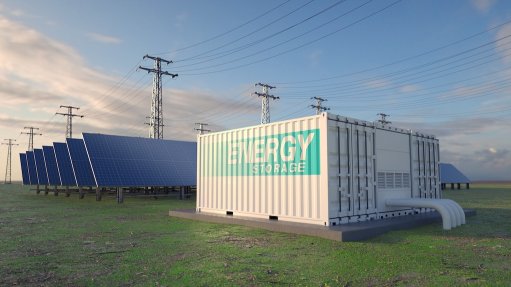
Of course, this also represents an opportunity. The development of transborder interconnectors is one of these opportunities, to allow the export of this surplus energy. Expanding the grid is another. The development of battery storage systems is a third. Using the excess electricity to power data centres is yet another opportunity, as is employing it to power new industrialisation (including increasing the localisation of onshore wind power and other clean energy technologies). And all these things can be done, in parallel.
Winds Trending Fair
“Despite the constraints, we have the right policies in place, the right rules, the right regulations,” concludes Stefanus-Zincke. “It’s a question of their implementation. It’s a lack of capacity. We need the upskilling and upscaling of all the relevant government departments and agencies. The NTCSA, for example, is eager to engage with us, to find solutions, and to adopt modern systems. What we need is transparency, consistent interpretation and to work together. I am extremely optimistic. We have the OEMs. It is going in the right direction. It’s just that it could be going faster!”
Article Enquiry
Email Article
Save Article
Feedback
To advertise email advertising@creamermedia.co.za or click here
Projects
Latest Multimedia
Latest News

Showroom


Sika South Africa is a trusted partner for the nation’s infrastructure, commercial, residential, and industrial sectors.
VISIT SHOWROOM

Press Office
Announcements
What's On
Subscribe to improve your user experience...
Option 1 (equivalent of R125 a month):
Receive a weekly copy of Creamer Media's Engineering News & Mining Weekly magazine
(print copy for those in South Africa and e-magazine for those outside of South Africa)
Receive daily email newsletters
Access to full search results
Access archive of magazine back copies
Access to Projects in Progress
Access to ONE Research Report of your choice in PDF format
Option 2 (equivalent of R375 a month):
All benefits from Option 1
PLUS
Access to Creamer Media's Research Channel Africa for ALL Research Reports, in PDF format, on various industrial and mining sectors
including Electricity; Water; Energy Transition; Hydrogen; Roads, Rail and Ports; Coal; Gold; Platinum; Battery Metals; etc.
Already a subscriber?
Forgotten your password?
Receive weekly copy of Creamer Media's Engineering News & Mining Weekly magazine (print copy for those in South Africa and e-magazine for those outside of South Africa)
➕
Recieve daily email newsletters
➕
Access to full search results
➕
Access archive of magazine back copies
➕
Access to Projects in Progress
➕
Access to ONE Research Report of your choice in PDF format
RESEARCH CHANNEL AFRICA
R4500 (equivalent of R375 a month)
SUBSCRIBEAll benefits from Option 1
➕
Access to Creamer Media's Research Channel Africa for ALL Research Reports on various industrial and mining sectors, in PDF format, including on:
Electricity
➕
Water
➕
Energy Transition
➕
Hydrogen
➕
Roads, Rail and Ports
➕
Coal
➕
Gold
➕
Platinum
➕
Battery Metals
➕
etc.
Receive all benefits from Option 1 or Option 2 delivered to numerous people at your company
➕
Multiple User names and Passwords for simultaneous log-ins
➕
Intranet integration access to all in your organisation