How Short- To Medium-term Power-system Planning Is Strengthening South Africa’s Energy Security


This article has been supplied.
By Professor: Sampson Mamphweli
South Africa faced a lot of issues with security of energy supply with specific reference to the supply of electricity, leading to sustained load shedding that at times reached stage six, which means up to six or more hours of selective power blackouts. This wiped billions of rands from the economy alongside job losses, and it threatened the entire economic system in a country that’s already grappling with high unemployment rates and various socio-economic challenges. The whole insecurity of energy supply matter was classified by government and the private sector as an energy crisis.
The recent improvement in system performance shows what coordinated planning, targeted maintenance, regulatory reform and disciplined implementation can achieve. This article examines the contribution of each pillar of the Energy Action Plan, the evidence of progress and the work still required to secure reliable electricity over the long term.
In July 2022, President Cyril Ramaphosa announced the Energy Action Plan, organised around five priorities:
- Fix Eskom and improve the availability of existing supply
- Enable and accelerate private investment in generation capacity
- Accelerate procurement of new capacity from renewables, gas and battery storage
- Unleash businesses and households to invest in rooftop solar
- Fundamentally transform the electricity sector to achieve long-term energy security
South Africa’s power system has improved substantially since the depth of the electricity crisis. This progress reflects the President’s political leadership, the work of the Minister of Electricity and Energy, Dr Kgosientsho Ramokgopa, and the sustained contribution of Eskom employees, universities, science councils, businesses, households and other stakeholders to implementing the Energy Action Plan. Eskom has reported that the system is delivering its strongest performance in almost a decade, including the following indicators:
- No diesel was spent between 24th and 30th July 2026.
- The daily Energy availability Factor of 82.04%, the highest ever recorded since 2017.
- Year to date reduction of diesel spend by 85.67%
- More than 85% of coal fleet operating at the Energy Availability factor of between 73% and 97% compared to three years ago.
- Energy Availability factor increased by 11.8% resulting in 5.9 GW of generation capacity to the grid.
- The Year to date Unplanned Capacity Loss Factor reduced from 22.21% to 11.74%.
- Six Provinces taken out of load reduction, with the seventh one expected to be out of it by the end of October
- 441 days of no load shedding since May 2025. These improvements can be assessed against the five priorities of the President’s Energy Action Plan announced in 2022:
- Fix Eskom and improve the availability of existing supply To respond to this part, Eskom came up with the Operations Generation Recovery plan that was based on the root cause analysis for the failures in various power stations. Research had indicated that there were six power stations that had serious challenges leading the low Energy Availability Factor of the coal fleet. The Operations Generation Recovery Plan focussed on these power stations as well as challenges in other power stations. This plan was specific in terms of what needed to be done, where and how much it would cost to undertake the work. Eskom started implementing this plan and it is now yielding positive results as indicated above.
- Enable and accelerate private investment in generation capacity
To implement this, government lifted the licensing requirements for electricity production to allow independent power producers to build and operate power plants without the need for generation license. Government also procured additional new generation capacity from Independent power Producers through the Renewable Energy Independent Power Producers Programme. In addition to the latter, the President signed the Electricity Regulation Amendment Act 38 of 2024 to transition from a state-run monopoly through Eskom to competitive market to enable an open market trading, establishing the National transmission Company of South Africa as a Transmission system operator to boost private generation investment. The ERA amendment was signed by President Ramaphosa on 16 August 2024. This process sent strong signals to the markets regarding the new electricity supply landscape in the country.
- Accelerate procurement of new capacity from renewables, gas and battery storage
The government has revised the Integrated Resource Plan 2025 that guides government when it comes to procurement of new generation capacity, after introducing bid window 7, targeting an initial 5000 MW capacity (1800 MW solar PV and 3200 MW onshore wind), preferred bidders were announced by Minister Ramokgopa, which included 8 solar PV projects, and no wind due to transmission grid constraints. The department allocated ad additional 6 preferred bidders on solar PV in July 2025 and 4 more preferred bidders in solar PV in December 2025 in space of the unallocated wind projects. In addition to this bid window there was also a parallel Battery Energy Storage bid window introduced. To deal with grid capacity constraints government introduced the first Independent Transmission Programme aimed at attracting private sector investments in the construction of the electricity grid.
- Unleash businesses and households to invest in rooftop solar
In order to unleash households and business, government introduced a tax incentive for rooftop solar Photovoltaics, which provided 25% rebate or up to R15000 for individuals and a 125% first year deduction for businesses. This programme resulted in more rooftop solar PV capacity around the country, which resulted in lower electricity demand from the grid during the day when the sun is shining. Although some people and businesses did not claim tax rebates, the programme also served as an awareness for businesses and households to install rooftop solar PV, and this helped the system greatly.
- Fundamentally transform the electricity sector to achieve long-term energy security
The government has embarked on the journey to transform the electricity sector through the amendments to the Electricity Regulations Act as well as the introduction of the new electricity market called the South African Wholesale Electricity Market. Government will also be introducing the new grid code to enable more private generators to play a role in the electricity space. President Ramaphosa recently endorsed phase 1 report on the establishment of the independent transmission system operator on 31st July 2026 from the Eskom Restructuring Task Team. The report shows that the restructuring is feasible and it also highlighted several actions that can be taken immediately to enable the restructuring of Eskom to introduce the Independent Transmission Operator.
The implementation of the President’s Energy Action Plan demonstrates that South Africa is moving in the right direction on security of electricity supply, which is essential for investment,(seven) employment and economic growth. The experience also offers a broader lesson for government: complex national challenges require a coordinated plan, clear institutional responsibilities, sustained political leadership and disciplined follow-through. These lessons can inform efforts in other sectors, but continued implementation remains essential to convert the present recovery into durable, long-term energy security.
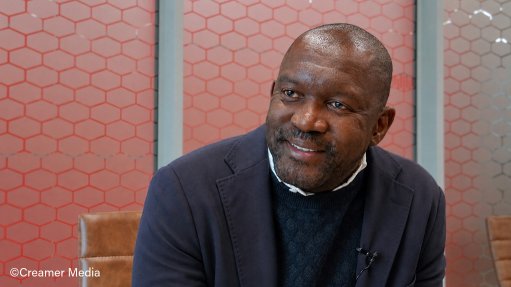
Professor Sampson Mamphweli is Head of the Department of Science technology and Innovation Energy Secretariat at the South African National Energy development institute. He served in workstream seven (7) of the President’s National Energy Crisis Committee.
Article Enquiry
Email Article
Save Article
Feedback
To advertise email advertising@creamermedia.co.za or click here
Projects
Latest Multimedia

Latest News

Showroom
For over 60 years, VEGA has provided industry-leading products for the measurement of level, density, weight and pressure. As the inventor of the...
VISIT SHOWROOM
Mitsubishi Chemical Advanced Materials South Africa (Pty) Ltd is a leading manufacturer of high-performance engineering plastics for the mining...
VISIT SHOWROOM


Press Office
Announcements
What's On
Subscribe to improve your user experience...
Option 1 (equivalent of R125 a month):
Receive a weekly copy of Creamer Media's Engineering News & Mining Weekly magazine
(print copy for those in South Africa and e-magazine for those outside of South Africa)
Receive daily email newsletters
Access to full search results
Access archive of magazine back copies
Access to Projects in Progress
Access to ONE Research Report of your choice in PDF format
Option 2 (equivalent of R375 a month):
All benefits from Option 1
PLUS
Access to Creamer Media's Research Channel Africa for ALL Research Reports, in PDF format, on various industrial and mining sectors
including Electricity; Water; Energy Transition; Hydrogen; Roads, Rail and Ports; Coal; Gold; Platinum; Battery Metals; etc.
Already a subscriber?
Forgotten your password?
Receive weekly copy of Creamer Media's Engineering News & Mining Weekly magazine (print copy for those in South Africa and e-magazine for those outside of South Africa)
➕
Recieve daily email newsletters
➕
Access to full search results
➕
Access archive of magazine back copies
➕
Access to Projects in Progress
➕
Access to ONE Research Report of your choice in PDF format
RESEARCH CHANNEL AFRICA
R4500 (equivalent of R375 a month)
SUBSCRIBEAll benefits from Option 1
➕
Access to Creamer Media's Research Channel Africa for ALL Research Reports on various industrial and mining sectors, in PDF format, including on:
Electricity
➕
Water
➕
Energy Transition
➕
Hydrogen
➕
Roads, Rail and Ports
➕
Coal
➕
Gold
➕
Platinum
➕
Battery Metals
➕
etc.
Receive all benefits from Option 1 or Option 2 delivered to numerous people at your company
➕
Multiple User names and Passwords for simultaneous log-ins
➕
Intranet integration access to all in your organisation