Opinion: Sugarcane ethanol can ease South Africa's fuel bill, but govt must work together

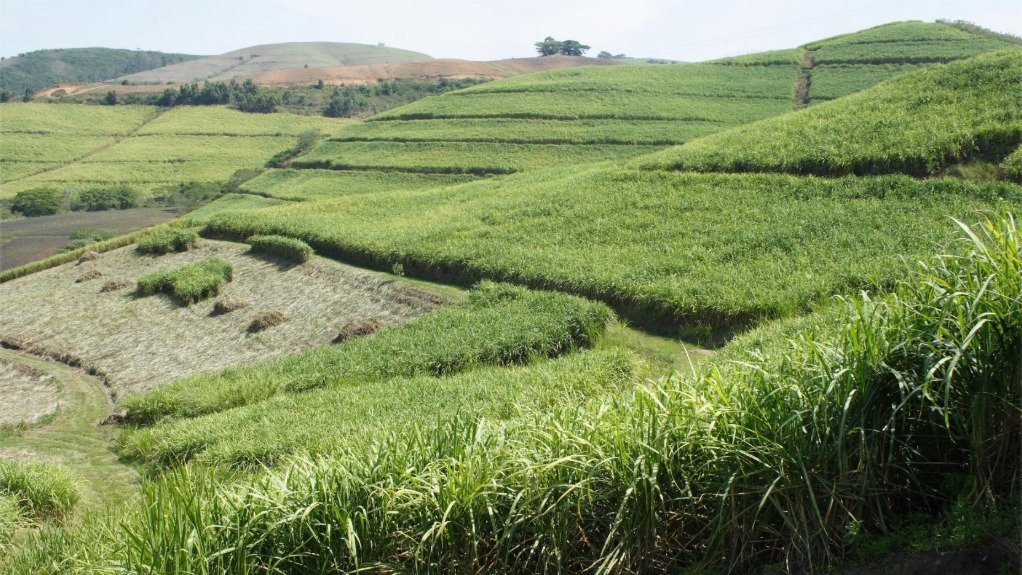



In this article, SA Canegrowers CEO Dr Thomas Funke writes that diversification into biofuels could help secure the long-term sustainability of sugarcane growers in South Africa, while lowering fuel costs, but a coordinated government programme is needed.
With petrol now costing more than R30 a litre in Gauteng and no relief in sight, South Africa's dependence on imported fuel is once again placing enormous pressure on households, businesses and the wider economy. Petrol prices have risen by almost 50% and diesel by 72% since the current surge began, with the consequences extending from transport costs to food prices and agricultural production.
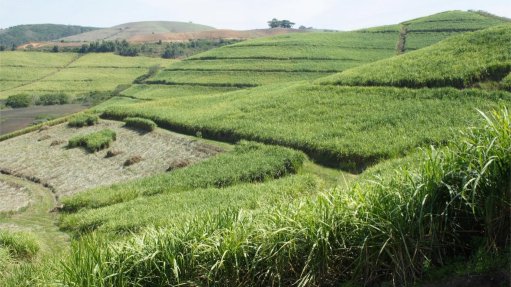
One way to reduce this dependence is already growing in the fields of KwaZulu-Natal and Mpumalanga. Sugarcane can be used to produce bioethanol, which can be blended with petrol to reduce the amount of imported fuel South Africa consumes. Developing a domestic bioethanol industry would also create an additional market for agricultural production, attract investment in processing facilities and support employment in rural communities.
The opportunity is supported by research and growing investor interest. A study commissioned by the Localisation Support Fund, which assessed six potential bioethanol feedstocks, identified grain sorghum and sugarcane as the two most viable options. It estimated that introducing a 2% ethanol blend into petrol would create a market of approximately 181-million litres annually, rising to almost one billion litres at a 10% blend.
For South Africa's sugarcane growers, this represents an important opportunity to diversify an industry under considerable strain. Rising production costs, competition from heavily subsidised imported sugar and uncertainty surrounding local milling operations are threatening the sustainability of farming communities that support thousands of jobs and livelihoods. Bioethanol offers an additional source of demand for approximately 27 000 small-scale and 1 250 large-scale growers, while creating opportunities for further investment in agricultural production and processing.
Yet despite the economic potential, South Africa has struggled to establish a commercially viable domestic biofuels industry. The problem is largely one of implementation and coordination across government.
South Africa adopted its Biofuels Industrial Strategy in 2007, followed by a regulatory framework in 2020. Regulations providing for an initial 2% biofuels penetration target were gazetted in August 2025. Biofuels and sustainable aviation fuel are also identified as opportunities for diversification in the Sugarcane Value Chain Master Plan to 2030. The policy foundations therefore exist, but commercial production for the domestic transport-fuel market has been slow to develop.
At a biofuels roundtable in earlier this year, ethanol producer Alco Group, which produces approximately 100-million litres annually in South Africa, highlighted the lack of investment in domestic biofuel production. The Fuels Industry Association of South Africa also raised regulatory difficulties, including requirements for blending facilities to register as manufacturing operations and for certain storage tanks to be dedicated exclusively to blending for tax purposes.
These are practical constraints that government has the ability to resolve. However, responsibility for developing the industry is spread across several departments, each operating under different policy and regulatory mandates.
The Department of Mineral and Petroleum Resources oversees fuel regulation and blending requirements, while National Treasury and SARS are responsible for the relevant tax arrangements. The Department of Agriculture has an interest in feedstock production, and the Department of Trade, Industry and Competition plays a central role in industrial development and implementation of the Sugarcane Value Chain Master Plan.
Without a coordinated approach, investors face uncertainty over pricing, licensing, infrastructure requirements and long-term market demand, making it difficult to commit capital to new production facilities.
Government now has an opportunity to address this through the petroleum sector development plan being prepared by the Department of Mineral and Petroleum Resources. Intended to provide a comprehensive strategy for fuel security, refining capacity and infrastructure investment, the plan comes at a time when South Africa's domestic refining capacity has fallen from more than 720 000 bl/d a decade ago to about 208 000 bl/d to 250 000 bl/d.
Restoring this capacity is important, but will require substantial investment and time. The proposed redevelopment of the Sapref refinery alone is estimated to cost between R100-billion and R117-billion. Bioethanol can complement these efforts by replacing a proportion of conventional petrol with fuel produced from domestic agricultural resources.
The petroleum development plan should therefore incorporate a clear and practical programme for expanding local biofuels production, with Agriculture, Trade, Industry and Competition, and National Treasury participating directly in its development.
An immediate priority should be a commercially viable pricing and offtake framework that gives investors and growers confidence in future demand. Government should also provide a timetable for progressing from the initial 2% biofuels target towards the proposed 4.5% second phase, while aligning tax, licensing and storage requirements to make blending commercially practical.
The urgency of developing domestic alternatives has become increasingly apparent as fuel prices continue to rise. President Cyril Ramaphosa acknowledged this pressure this week, confirming that National Treasury was considering further relief measures, but also pointing to the about R24-billion government has already committed to fuel subsidies.
Such interventions may provide temporary protection against price increases, but they place additional pressure on public finances without addressing the country's underlying exposure to international oil markets.
Bioethanol cannot eliminate that exposure or immediately reverse higher fuel prices. It can, however, reduce the volume of imported petrol required over time, retain more of South Africa's fuel expenditure within the domestic economy and create opportunities for agriculture and manufacturing.
For the sugar industry, diversification into biofuels could help secure the long-term sustainability of growers and the rural economies that depend on them. For South Africa, it offers a practical contribution to energy security and industrial development.
The agricultural capacity, investment interest and regulatory foundations are already in place. What is required now is a coordinated government programme that gives producers the certainty to invest and ensures that South Africa begins realising the economic benefits of its own biofuels resources.
Article Enquiry
Email Article
Save Article
Feedback
To advertise email advertising@creamermedia.co.za or click here

Projects

Latest Multimedia
Latest News
Showroom

SafeQuip is a leading distributor and manufacturer of fire safety solutions, offering a comprehensive range of products designed to meet all...
VISIT SHOWROOM
Design, Construction and Maintenance of Site Erected, Welded Bulk Storage Tanks for the Petrochemical, LNG, Ammonia and Sustainable fuel Sectors.
VISIT SHOWROOM


Press Office
Announcements
What's On
Subscribe to improve your user experience...
Option 1 (equivalent of R125 a month):
Receive a weekly copy of Creamer Media's Engineering News & Mining Weekly magazine
(print copy for those in South Africa and e-magazine for those outside of South Africa)
Receive daily email newsletters
Access to full search results
Access archive of magazine back copies
Access to Projects in Progress
Access to ONE Research Report of your choice in PDF format
Option 2 (equivalent of R375 a month):
All benefits from Option 1
PLUS
Access to Creamer Media's Research Channel Africa for ALL Research Reports, in PDF format, on various industrial and mining sectors
including Electricity; Water; Energy Transition; Hydrogen; Roads, Rail and Ports; Coal; Gold; Platinum; Battery Metals; etc.
Already a subscriber?
Forgotten your password?
Receive weekly copy of Creamer Media's Engineering News & Mining Weekly magazine (print copy for those in South Africa and e-magazine for those outside of South Africa)
➕
Recieve daily email newsletters
➕
Access to full search results
➕
Access archive of magazine back copies
➕
Access to Projects in Progress
➕
Access to ONE Research Report of your choice in PDF format
RESEARCH CHANNEL AFRICA
R4500 (equivalent of R375 a month)
SUBSCRIBEAll benefits from Option 1
➕
Access to Creamer Media's Research Channel Africa for ALL Research Reports on various industrial and mining sectors, in PDF format, including on:
Electricity
➕
Water
➕
Energy Transition
➕
Hydrogen
➕
Roads, Rail and Ports
➕
Coal
➕
Gold
➕
Platinum
➕
Battery Metals
➕
etc.
Receive all benefits from Option 1 or Option 2 delivered to numerous people at your company
➕
Multiple User names and Passwords for simultaneous log-ins
➕
Intranet integration access to all in your organisation