Policy uncertainty remains elevated, despite easing somewhat in the third quarter





Although still in negative territory, the North-West University Business School's Policy Uncertainty Index (PUI) for the third quarter eased to 61.3 from 81.9 in the second quarter and, while still elevated, the PUI for the third quarter was less adverse than in the second quarter.
This suggests that the economic uncertainty created by the initial global energy shock following the start of disruptions in the Strait of Hormuz, in the Middle East, to the domestic economy may have begun to dissipate for now and that business and consumer behaviour may be adapting to a ‘new normal’, the business school states.
It adds that the geo-economic outlook in the Middle East remains highly unsettled, with Brent crude having recently hovered above $100/bl.
In particular, concerns about the availability of refined fuel products have dominated supply chain agenda anxieties, the index shows.
A highly volatile and unstable Middle East situation also means that even small events have a disproportionate impact on oil price levels and price expectations in some manner, thereby elevating uncertainty.
According to the index, there is now clear evidence of a synchronised shift by several key central banks to recently raise interest rates, reflecting their global inflation anxiety and renewed inflation fears. These included the US Fed, the European Central Bank and the Bank of Japan.
Other central banks, like the Bank of England and the Bank of Canada, have taken a ‘wait-and-see’ stance for now, given the still-uncertain outlook, according to the index.
The International Monetary Fund, meanwhile, will release its update of the World Economic Outlook at its Annual Meeting on October 12.
In South Africa, the 0.2% contraction in GDP in the second quarter confirmed the serious setback the domestic economy experienced as a result of the global energy crisis.
After opening the year on a positive economic note, the second-quarter setback was subsequently felt on both the inflation and growth fronts.
The latest PUI appears to confirm that South Africa’s economic momentum earlier this year has been interrupted by global developments, but not definitively derailed, the business school states.
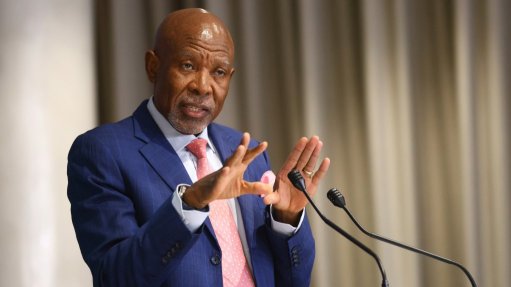
At its meeting on September 23, the South African Reserve Bank's Monetary Policy Committee (MPC) again raised interest rates by 25 basis points, seeing higher inflation trends, especially in the services sector, as a result of negative geopolitical factors and higher fuel costs, as the bigger risk.
The MPC again revised down its GDP growth forecast for this year from 1.4% to 1.2%.
The ‘higher-for-longer’ interest rate outlook is likely to be extended in the months ahead, while consumer spending is expected to remain under pressure.
The index shows that weak fixed investment also remains a key concern.
The February Budget expected gross fixed capital formation to recover this year after contracting in 2025. Instead, fixed investment levels have declined again in recent months, the business school points out.
Without much higher fixed investment, the economy will struggle to break out of its current narrow 1% to 2% growth corridor, the index warns.
Despite this, the business school highlights that structural reforms are moving in the right direction, and the Medium-Term Budget Policy Statement on October 21 should help to reinforce these.
Moving the PUI closer to positive territory, therefore, still requires expedited and irreversible domestic growth-oriented structural reforms that will help to offset negative global headwinds, the index stresses.
It points out that businesses need more certainty in the operating environment, especially at the local level.
The outcome of forthcoming municipal elections could also play a significant role in shaping business and investor sentiment in the final quarter of the year.
Article Enquiry
Email Article
Save Article
Feedback
To advertise email advertising@creamermedia.co.za or click here

Projects

Latest Multimedia


Latest News

Showroom
Established in 1933, EKATO is the world leader in agitation technology, supplying agitators for processes and applications such as chemicals and...
VISIT SHOWROOM
Stewarts & Lloyds is a leading steel, tube, and engineering product supplier in South Africa.
VISIT SHOWROOM

Announcements
What's On
Subscribe to improve your user experience...
Option 1 (equivalent of R125 a month):
Receive a weekly copy of Creamer Media's Engineering News & Mining Weekly magazine
(print copy for those in South Africa and e-magazine for those outside of South Africa)
Receive daily email newsletters
Access to full search results
Access archive of magazine back copies
Access to Projects in Progress
Access to ONE Research Report of your choice in PDF format
Option 2 (equivalent of R375 a month):
All benefits from Option 1
PLUS
Access to Creamer Media's Research Channel Africa for ALL Research Reports, in PDF format, on various industrial and mining sectors
including Electricity; Water; Energy Transition; Hydrogen; Roads, Rail and Ports; Coal; Gold; Platinum; Battery Metals; etc.
Already a subscriber?
Forgotten your password?
Receive weekly copy of Creamer Media's Engineering News & Mining Weekly magazine (print copy for those in South Africa and e-magazine for those outside of South Africa)
➕
Recieve daily email newsletters
➕
Access to full search results
➕
Access archive of magazine back copies
➕
Access to Projects in Progress
➕
Access to ONE Research Report of your choice in PDF format
RESEARCH CHANNEL AFRICA
R4500 (equivalent of R375 a month)
SUBSCRIBEAll benefits from Option 1
➕
Access to Creamer Media's Research Channel Africa for ALL Research Reports on various industrial and mining sectors, in PDF format, including on:
Electricity
➕
Water
➕
Energy Transition
➕
Hydrogen
➕
Roads, Rail and Ports
➕
Coal
➕
Gold
➕
Platinum
➕
Battery Metals
➕
etc.
Receive all benefits from Option 1 or Option 2 delivered to numerous people at your company
➕
Multiple User names and Passwords for simultaneous log-ins
➕
Intranet integration access to all in your organisation