

Sappi’s full-year earnings decline amid cost pressures, supply chain disruptions





JSE-listed woodfibre, paper and pulp manufacturing company Sappi posted earnings before interest, taxes, depreciation and amortisation (Ebitda) of $294-million for the 12 months to September 30, compared with the Ebitda of $501-million reported for the prior financial year.
The company also widened its loss, from a loss of $177-million in the 2025 financial year, to a loss of $747-million in the financial year under review.
Sappi also reported a loss a share of $0.21, compared with earnings a share of $0.08 for the prior financial year.
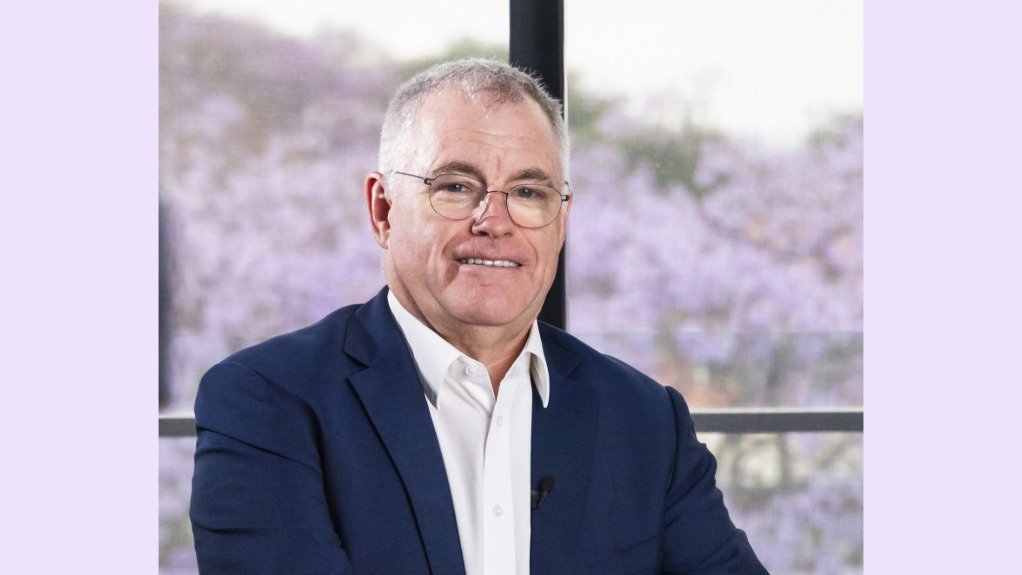
“Market conditions remained challenging across many of our paper categories while a stronger South African rand against the dollar reduced profitability in the South African region.
“Higher fuel, logistics and chemical costs as a result of the Middle East conflict added further pressure,” said Sappi CEO Steve Binnie on November 6.
For example, Sappi’s forestry fair value price adjustment for the year was a loss of $269-million, largely owing to adverse currency movements on rand-denominated hardwood timber prices and persistent fuel cost inflation.
However, demand for dissolving wood pulp (DWP) remained robust and pricing recovered in the second half of the year, he said during a presentation of the company’s results.
Following a weaker start to the year, DWP market conditions strengthened after the Chinese New Year, supported by high downstream viscose staple fibre (VSF) operating rates and low fibre inventories.
High petrochemical costs and ongoing volatility in oil markets improved the relative competitiveness of cellulosic fibres compared with polyester staple fibre, supporting favourable substitution trends across the textile value chain, he noted.
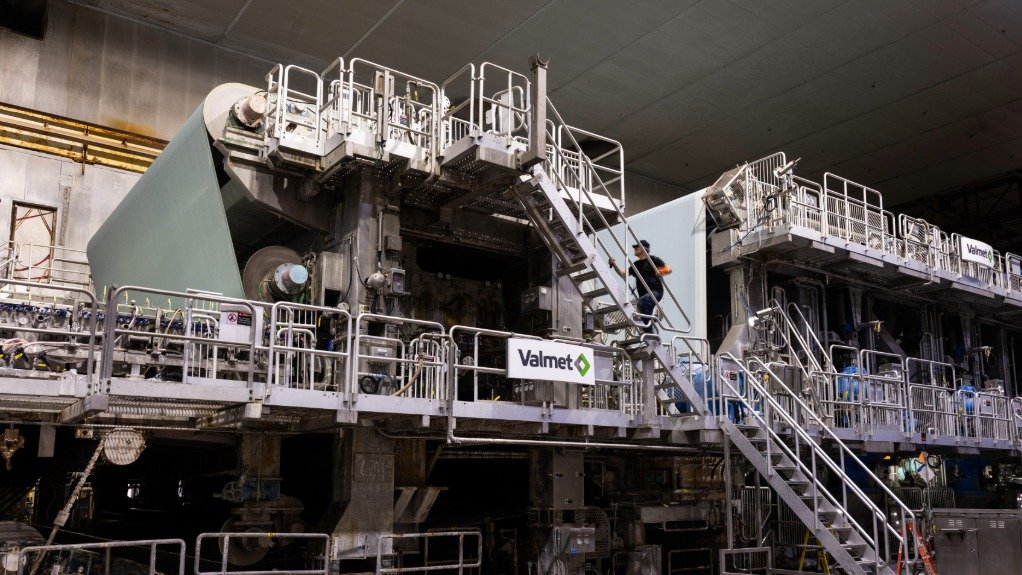
In North America, the commercial ramp-up of Somerset mill PM2 progressed more slowly than initially anticipated. However, focused operational interventions stabilised production and sales volumes lifted during the second half of the year enabling the asset to make an increasingly positive contribution.
The company’s pulp segment faced several headwinds during the financial year under review, with profitability declining year-on-year, primarily owing to lower selling prices early in the year and the adverse exchange rate impact in South Africa.
Sales volumes in the pulp segment decreased by 3% year-on-year, with DWP sales volumes down 4% year-on-year.
The lower DWP sales volumes reflected the combined impact of very low inventory levels entering the financial year under review and a spillover of about 38 000 t of DWP sales that were delayed from the fourth quarter into the first quarter of its 2027 financial year, owing to congestion at the Port of Durban, Binnie said.
Additionally, elevated production costs across the industry provided additional support for DWP market pricing. Despite this recovery, average dollar selling prices for the pulp segment remained 6% below the prior year, he said.
Profitability was further impacted by substantial cost inflation, most notably higher sulphur costs, which adversely affected the Saiccor mill, in KwaZulu-Natal, South Africa.
In North America, the pulp segment continued to optimise pulp integration across its operations by balancing external sales of DWP and high-yield pulp with internal consumption.
This included increasing the integration of Cloquet mill pulp production into graphic papers production and Matane mill high-yield pulp into paperboard production at Somerset mill, supporting the group’s broader strategy of maximising value across its assets, the company said in its results statement.
Further, net cash used during the financial year was $146-million, which reflected lower profitability, a working capital outflow of $16-million and European closure and restructuring costs of $32-million.
Capital allocation remained disciplined throughout the year with a strong focus on liquidity preservation, strengthening the balance sheet and maintaining financial flexibility.
Capital expenditure was actively controlled at $210-million, which was below the guidance of $240-million and concentrated on essential maintenance, regulatory requirements and operational reliability.
Meanwhile, Sappi’s net debt increased to $2.05-billion, up from $1.9-billion in its 2025 financial year, as a result of cash used by operations. Liquidity remained satisfactory at $707-million, comprising cash on hand of $165-million and $542-million of committed, undrawn revolving credit facilities in South Africa and Europe, which have been extended to 2031.
Sappi also reported that profitability in the packaging and speciality papers segment remained below historical levels during the financial year under review, reflecting the combined impact of the Somerset mill PM2 commercial ramp-up, subdued demand across several packaging markets and significant input cost inflation, while average selling prices remained broadly flat year-on-year.
In North America, packaging earnings were negatively impacted during the first half of the year by lower operating efficiencies and an initially slower-than-anticipated PM2 ramp-up.
However, operational performance improved significantly in the second half of the year as production stability, product quality and sales volumes strengthened, contributing positively to earnings.
As a result, segment sales volumes increased by 9% compared with the prior year, driven primarily by the higher paperboard volumes from Somerset mill.
Additionally, market conditions in the packaging and paper segment improved progressively through the year, particularly in North America, where stronger downstream demand, industry capacity reductions and a more balanced supply-demand environment supported improving pricing dynamics in the second half of the year.
In South Africa, containerboard demand was healthy, underpinned by robust agricultural activity. However, profitability was adversely affected by continued pressure from low-priced imports that were supported by the stronger South African rand.
In terms of the outlook for the 2027 financial year, the operating environment remains uncertain as ongoing geopolitical tensions, particularly the conflict in the Middle East, continue to contribute to volatility across global markets.
Elevated oil prices and disruptions to global supply chains were exerting sustained pressure on fuel, chemical and logistics costs, while broader macroeconomic uncertainty and trade tensions continued to weigh on business and consumer confidence, said Binnie.
The company is implementing strategic cost reduction programmes that target fixed-cost savings and operational efficiency improvements to mitigate ongoing inflationary pressures and enhance competitiveness.
Sappi is also maintaining a disciplined approach to capital allocation, cash generation, balance sheet management and liquidity preservation.
The benefits of the commercial ramp-up of Somerset mill PM2, continued progress in optimising asset utilisation and a relentless focus on improving its competitive cost position were expected to strengthen underlying performance and position the group to respond decisively as markets evolved, he said.
Meanwhile, Sappi estimated that capital expenditure for the 2027 financial year will be about $240-million, with the focus to be on essential maintenance activities, regulatory compliance requirements and projects that support operational reliability and business continuity.
The first quarter includes significant planned maintenance that is expected to impact earnings by about $41-million.
Additionally, the forestry fair value price adjustment is expected to remain negative as ongoing fuel cost escalation continues to increase the cost base underpinning forestry operations.
However, Sappi said conditions across several key product categories were improving, supported by firmer pricing dynamics. In the pulp segment, strong VSF market fundamentals, including high operating rates, low inventories and healthy backlog orders, continued to underpin demand for DWP, aided by favourable cellulosic fibre substitution trends.
Further, DWP pricing momentum extended into October with strong seasonal demand and ongoing industry cost pressures providing support for further price increases. The benefit to earnings is expected to be realised progressively due to the contractual lag between market price movements and customer pricing.
“Taking into account current market conditions for our products, the scheduled maintenance shutdowns and the impact of elevated oil prices on our raw materials and logistics costs, we anticipate that the Ebitda for the first quarter of the 2027 financial year will be below that of the fourth quarter of the 2026 financial year,” said Binnie.
For the three months to September 30, Sappi posted Ebitda of $99-million, down from $111-million posted in the fourth quarter of its 2025 financial year.
Article Enquiry
Email Article
Save Article
Feedback
To advertise email advertising@creamermedia.co.za or click here

Projects
Latest Multimedia

Latest News

Showroom

AirNox (Pty) Ltd is a level 1 BBBEE manufacturer of complete AdBlue® solutions for operators of SCR diesel engines and AUS40 across South Africa...
VISIT SHOWROOM



Press Office
Announcements
What's On
Subscribe to improve your user experience...
Option 1 (equivalent of R125 a month):
Receive a weekly copy of Creamer Media's Engineering News & Mining Weekly magazine
(print copy for those in South Africa and e-magazine for those outside of South Africa)
Receive daily email newsletters
Access to full search results
Access archive of magazine back copies
Access to Projects in Progress
Access to ONE Research Report of your choice in PDF format
Option 2 (equivalent of R375 a month):
All benefits from Option 1
PLUS
Access to Creamer Media's Research Channel Africa for ALL Research Reports, in PDF format, on various industrial and mining sectors
including Electricity; Water; Energy Transition; Hydrogen; Roads, Rail and Ports; Coal; Gold; Platinum; Battery Metals; etc.
Already a subscriber?
Forgotten your password?
Receive weekly copy of Creamer Media's Engineering News & Mining Weekly magazine (print copy for those in South Africa and e-magazine for those outside of South Africa)
➕
Recieve daily email newsletters
➕
Access to full search results
➕
Access archive of magazine back copies
➕
Access to Projects in Progress
➕
Access to ONE Research Report of your choice in PDF format
RESEARCH CHANNEL AFRICA
R4500 (equivalent of R375 a month)
SUBSCRIBEAll benefits from Option 1
➕
Access to Creamer Media's Research Channel Africa for ALL Research Reports on various industrial and mining sectors, in PDF format, including on:
Electricity
➕
Water
➕
Energy Transition
➕
Hydrogen
➕
Roads, Rail and Ports
➕
Coal
➕
Gold
➕
Platinum
➕
Battery Metals
➕
etc.
Receive all benefits from Option 1 or Option 2 delivered to numerous people at your company
➕
Multiple User names and Passwords for simultaneous log-ins
➕
Intranet integration access to all in your organisation