Small-scale biogas bolsters food security, circular economy goals

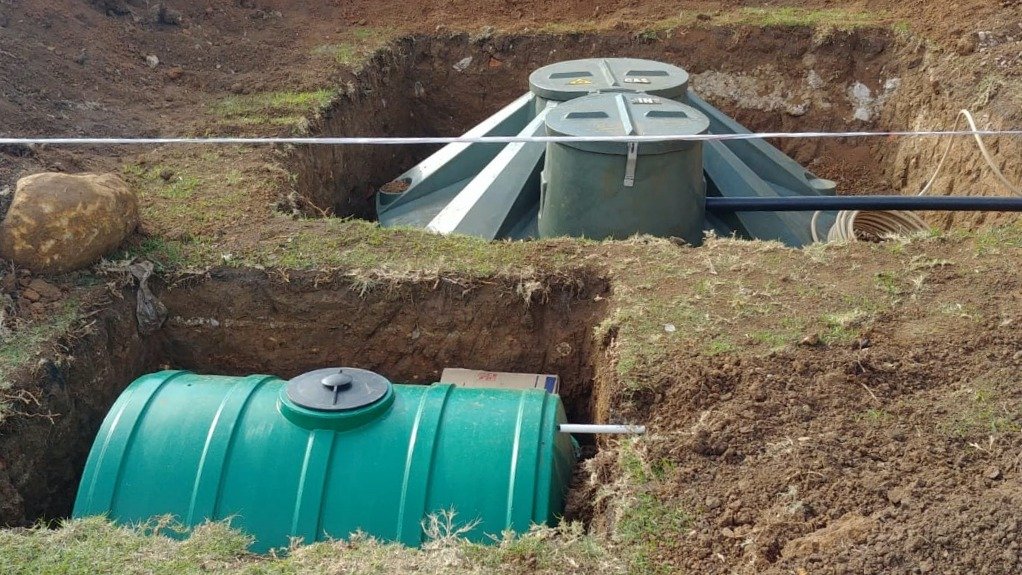
ENDURING BENEFITS The system produces clean biogas and a liquid digestate, which is used as fuel and fertiliser to produce nutritional food for students
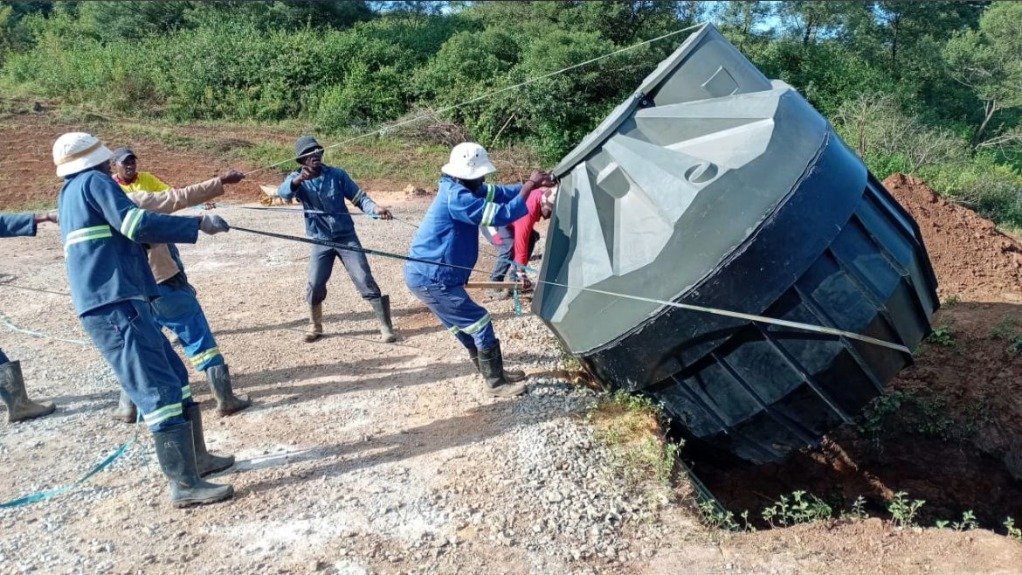
LOCAL LABOUR The project model supports local employment, hiring unskilled youth at every stage


In support of both sustainable food supply in South African schools and youth enrichment, public benefit organisation South African Youth in Arts (SAYA), through the nongovernmental organisation Citywide Forum, has partnered with biogas company AGAMA Biogas to advance an integrated programme that incorporates food gardens, biogas production and rainwater harvesting.
SAYA’s pilot will be hosted at the Skeen Primary School in Tsutsumani Village, Far East Bank, Sandton.
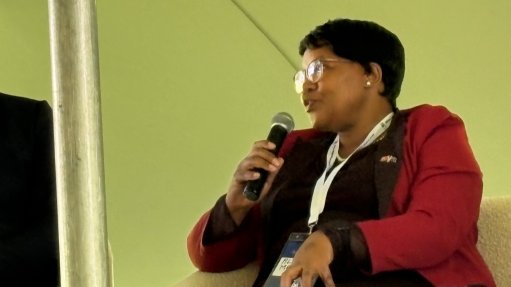
Beyond the environmental benefits, the programme creates real economic returns for schools and opens meaningful pathways for youth employment and skills development, says SAYA project director Shandy Tema.
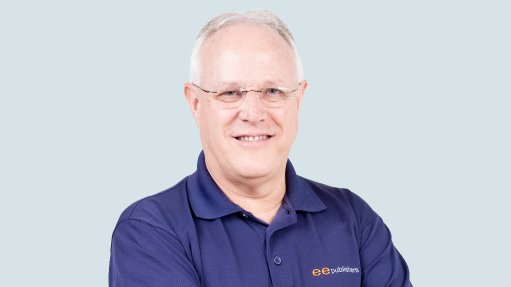
Given that schools generate large amounts of organic waste, the programme aims to recycle food waste from school feeding schemes into feedstock for a biogas digester, with the resulting gas fuelling school kitchen stoves, says AGAMA Biogas MD Gordon Ayres, whose company has been involved in similar projects.
Food and garden waste is processed through a macerator and fed into the AGAMA BiogasPro 6 (BP6) single-tank anaerobic biogas digester.
Ayres explains the digester is ideal for small-scale biogas systems owing to its high- retention design, internal pressure generation and reliability. Inside the digester, organic matter undergoes anaerobic breakdown across four bacterial stages, producing biogas and a liquid digestate.
The biogas passes through an iron oxide filter to remove hydrogen sulphide as well as a condensation drip system to remove moisture. The cleaned gas is about 60% methane and 40% CO2, odourless and clean-burning with strong thermal performance. It runs through a modified commercial stove converted from liquefied petroleum gas (LPG).
Ayres notes that upgrading to full biomethane is not cost-effective at this scale, asserting that the cleaned biogas is adequate for the application.
Meanwhile, the liquid digestate becomes organic fertiliser. It is fed into the food garden through a subsurface system placed about 30 cm underground, preventing evaporation and delivering nutrients directly at root depth, which produces stronger, more nutritious vegetables.
Every installation is fitted with a gas meter for accountability and a tester point on the digester. Science teachers also receive a kit and basic training, allowing the system to function as a working classroom, with biogas and related topics, including hydrogen, integrated into the science curriculum.
“We’ve deliberately kept this as low-tech as possible to minimise any ongoing maintenance costs for the school operators,” says Ayres, adding that the system’s design ensures it can be operated and repaired by non-engineers.
He points out that during the long holiday periods, feedstocks drop which in turn decreases gas yields.
The AGAMA BP6's high-retention design holds gas and solids effectively. As liquid fertiliser output is only 3% to 5% solids, the bulk of material remains inside the digester and continues processing.
Before holidays, schools slightly overfeed the digester with dry inputs, typically cow manure, to keep the system running at a reduced but stable rate.
When school resumes, they gradually increase the feedstock to ensure the system is not suddenly disrupted.
“Having our own gardens and our own small farm activity in the school yard, as part of broader food production, strengthens and diversifies the feedstock and community involvement plays a central role in making the system operate consistently,” Tema says.
Economic Value
With South Africa facing a gas supply crisis and rising LPG costs, a school running this system could generate the thermal equivalent of about 2 400 kg of LPG a year, amounting to about R78 000.
Its productive vegetable garden, modelled conservatively at 6.2 t of produce a year, offers cost savings of R104 000, while the fertiliser output of 15 t contributes about R6 000, valued at R400/t.
Ayres notes that the fertiliser makes a significant impact in ensuring food sustainability in schools and the broader community, because soils in townships are typically extremely nitrogen-deficient, which is largely a deliberate legacy of apartheid.
Rainwater harvesting further supports cost savings of about R10 000/y from 125 000 ℓ collected.
The programme also helps to offset a portion of a school’s energy costs, says Ayres.
“With one year of development and two years of operation, the return on investment works out to three-and-a-half years, which is firmly in line with most comparable infrastructure projects,” he says.
While biogas projects require significant upfront investment, it offers long-term returns through a system with a 20-year lifespan.
The project model is designed to be self- sustaining from the outset. Further, the system has been tested and is successfully operating at several schools, providing security and assurance for corporate social investment (CSI) partners.
“When a company comes in as a CSI partner, they are not simply funding an organisation, they are rolling out a programme that benefits schools, addresses unemployment, builds skills through [Ayers’ and Southern African Biogas Industry Association’s] training, and puts food on the plates of vulnerable children,” says Tema.
The technology has been tested across 38 installations in South Africa.
The model also supports local employment. Unskilled youth are hired at every stage, beginning with physical labour during installation. This allows them to earn an income while developing their skills with the goal of becoming proficient operators of the system.
“The programme is locally maintained, locally owned infrastructure and sustained by people trained on that very site,” says Ayres.
Article Enquiry
Email Article
Save Article
Feedback
To advertise email advertising@creamermedia.co.za or click here
Projects
Latest Multimedia
Latest News
Showroom
Occupational health services, mobile clinics, wellness campaigns, aviation.
VISIT SHOWROOM
SABAT Batteries is a renowned brand in the battery industry, manufacturing a wide range of batteries at its state-of-the-art production facility in...
VISIT SHOWROOM
Press Office
Announcements
What's On
Subscribe to improve your user experience...
Option 1 (equivalent of R125 a month):
Receive a weekly copy of Creamer Media's Engineering News & Mining Weekly magazine
(print copy for those in South Africa and e-magazine for those outside of South Africa)
Receive daily email newsletters
Access to full search results
Access archive of magazine back copies
Access to Projects in Progress
Access to ONE Research Report of your choice in PDF format
Option 2 (equivalent of R375 a month):
All benefits from Option 1
PLUS
Access to Creamer Media's Research Channel Africa for ALL Research Reports, in PDF format, on various industrial and mining sectors
including Electricity; Water; Energy Transition; Hydrogen; Roads, Rail and Ports; Coal; Gold; Platinum; Battery Metals; etc.
Already a subscriber?
Forgotten your password?
Receive weekly copy of Creamer Media's Engineering News & Mining Weekly magazine (print copy for those in South Africa and e-magazine for those outside of South Africa)
➕
Recieve daily email newsletters
➕
Access to full search results
➕
Access archive of magazine back copies
➕
Access to Projects in Progress
➕
Access to ONE Research Report of your choice in PDF format
RESEARCH CHANNEL AFRICA
R4500 (equivalent of R375 a month)
SUBSCRIBEAll benefits from Option 1
➕
Access to Creamer Media's Research Channel Africa for ALL Research Reports on various industrial and mining sectors, in PDF format, including on:
Electricity
➕
Water
➕
Energy Transition
➕
Hydrogen
➕
Roads, Rail and Ports
➕
Coal
➕
Gold
➕
Platinum
➕
Battery Metals
➕
etc.
Receive all benefits from Option 1 or Option 2 delivered to numerous people at your company
➕
Multiple User names and Passwords for simultaneous log-ins
➕
Intranet integration access to all in your organisation