SMMEs need more accessible supply chains to unlock growth

Speakers examine how more inclusive, resilient and environmentally responsible supply chains can be developed.
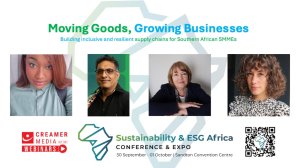


South African corporates need to rethink procurement and supply-chain practices if small, medium and micro enterprises (SMMEs) are to participate meaningfully in the economy, speakers at a Sustainability and ESG Africa webinar have said.
The “Moving Goods, Growing Businesses” webinar examined how logistics, procurement, infrastructure and environmental requirements can create barriers for SMMEs seeking to access markets, fulfil contracts and grow.
South African Supplier Diversity Council manager of special projects Ashok Deokiram said one of the biggest challenges facing smaller businesses was working capital being trapped in extended payment cycles.
SMMEs could be required to pay their suppliers within 30 days, while their customers might take 60 or 90 days to pay. Up to 90% of SMMEs are reportedly paid outside agreed terms, he said, further increasing pressure on their cash flow.
Logistics costs were another significant constraint. Smaller businesses generally lack the volumes needed to negotiate favourable freight rates and can consequently pay retail rates, making them less competitive than larger operators.
Deokiram also highlighted inventory and warehousing costs, as well as the expense of compliance and certification requirements, including environmental, social and governance (ESG) requirements.
“SMEs find it difficult to actually comply,” he said, noting that corporates increasingly expect smaller suppliers to demonstrate ESG compliance before offering them business opportunities.
B Lab Africa senior business development associate Melaney Oldenhof said procurement requirements were frequently designed with large enterprises in mind, creating unintended barriers for smaller suppliers.
Drawing on her own experience of supplying African brands to the luxury hospitality sector, she said payment terms could make it difficult for small businesses to fulfil orders because many lack the financial resources to fund production for extended periods before receiving payment.
Companies should therefore view suppliers as stakeholders rather than simply vendors, she argued, and consider how their commercial decisions affect the businesses within their supply chains.
This includes reconsidering payment terms, onboarding requirements, audits, certification and logistics, she said.
International Association for Impact Assessment South Africa National Executive Committee member Orlinda Mafika similarly cautioned against imposing environmental requirements on SMMEs that had been designed for large corporations.
“The problem was not necessarily the requirements themselves, but how they were designed and implemented,” she said. Expensive certifications, excessive documentation, repetitive requests for information and complex carbon reporting could all create unnecessary barriers.
“Requirements should then look at the size, the scale, the sector, and the actual environmental risks,” Mafika said.
She called for greater proportionality, shared responsibility and capacity building when introducing sustainability requirements into SMME supply chains. Rather than simply demanding information such as carbon footprints, larger companies should provide methodologies, guidance, reasonable timeframes and support.
The panellists also called for greater collaboration between corporates and their smaller suppliers.
Shared warehousing, transportation, cold-chain facilities and technology systems could help SMMEs reduce costs and improve efficiency. Deokiram said many smaller businesses relied on basic systems such as spreadsheets and could benefit from access to more sophisticated logistics systems and expertise.
Oldenhof suggested that buyers could also help suppliers become more resilient by funding training and compliance support, while providing more predictable and consolidated orders could allow SMMEs to plan production, transport and warehousing more efficiently.
Better access to information was particularly important in logistics, Deokiram said. For example, transport operators could potentially reduce costs by securing return loads rather than travelling back empty after delivering goods.
The discussion also highlighted the importance of ensuring that SMME development does not create long-term dependence on a single corporate customer. Businesses providing support should work with suppliers on strategies that enable them to diversify their customer bases and become increasingly independent.
The speakers further linked supply-chain resilience to environmental and climate risks. Mafika said infrastructure operated within an ecological system, meaning that businesses dependent on water, land, functioning ecosystems and predictable weather needed to understand these risks when planning projects and operations.
Environmental impact assessments and other assessments should therefore provide information that remains useful beyond regulatory approval and helps businesses build resilience into their supply chains.
Deokiram added that SMMEs needed environmental and compliance information presented in simple, accessible language so that they could make informed decisions about issues such as vehicle purchases, packaging and carbon emissions.
Ultimately, the panellists agreed that improving SMME participation would require a shift from simply “ticking the box” on supplier diversity towards deliberately creating markets in which smaller businesses can succeed.
Deokiram called for corporates to develop clear, time-bound plans to improve SMME participation, while Oldenhof said companies should ask whether their procurement processes were actually designed to allow smaller businesses to participate while remaining healthy and resilient.
Mafika said professional associations also had a role to play in building capacity and helping bridge the gap between policy, corporate expectations and practical implementation.
The message from the discussion was clear: supporting SMMEs requires more than opening procurement opportunities. It requires supply chains, systems and requirements that recognise the realities of smaller businesses and enable them to participate sustainably.
Article Enquiry
Email Article
Save Article
Feedback
To advertise email advertising@creamermedia.co.za or click here
Projects

Latest Multimedia
Latest News

Showroom
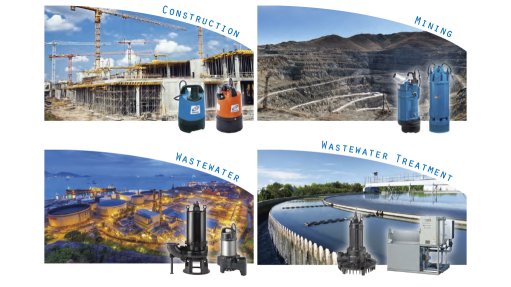
Tsurumi Pumps Africa is a specialist supplier of Japanese-engineered submersible pumping solutions, serving customers across the African continent.
VISIT SHOWROOM
We at Hawk High Pressure Pumps specialise in industrial pumps and pumping systems. Our high pressure washing equipment is locally manufactured and...
VISIT SHOWROOM

Announcements
What's On
Subscribe to improve your user experience...
Option 1 (equivalent of R125 a month):
Receive a weekly copy of Creamer Media's Engineering News & Mining Weekly magazine
(print copy for those in South Africa and e-magazine for those outside of South Africa)
Receive daily email newsletters
Access to full search results
Access archive of magazine back copies
Access to Projects in Progress
Access to ONE Research Report of your choice in PDF format
Option 2 (equivalent of R375 a month):
All benefits from Option 1
PLUS
Access to Creamer Media's Research Channel Africa for ALL Research Reports, in PDF format, on various industrial and mining sectors
including Electricity; Water; Energy Transition; Hydrogen; Roads, Rail and Ports; Coal; Gold; Platinum; Battery Metals; etc.
Already a subscriber?
Forgotten your password?
Receive weekly copy of Creamer Media's Engineering News & Mining Weekly magazine (print copy for those in South Africa and e-magazine for those outside of South Africa)
➕
Recieve daily email newsletters
➕
Access to full search results
➕
Access archive of magazine back copies
➕
Access to Projects in Progress
➕
Access to ONE Research Report of your choice in PDF format
RESEARCH CHANNEL AFRICA
R4500 (equivalent of R375 a month)
SUBSCRIBEAll benefits from Option 1
➕
Access to Creamer Media's Research Channel Africa for ALL Research Reports on various industrial and mining sectors, in PDF format, including on:
Electricity
➕
Water
➕
Energy Transition
➕
Hydrogen
➕
Roads, Rail and Ports
➕
Coal
➕
Gold
➕
Platinum
➕
Battery Metals
➕
etc.
Receive all benefits from Option 1 or Option 2 delivered to numerous people at your company
➕
Multiple User names and Passwords for simultaneous log-ins
➕
Intranet integration access to all in your organisation