South Africa in urgent need of strategic investments to increase refining capacity, CEF chair says

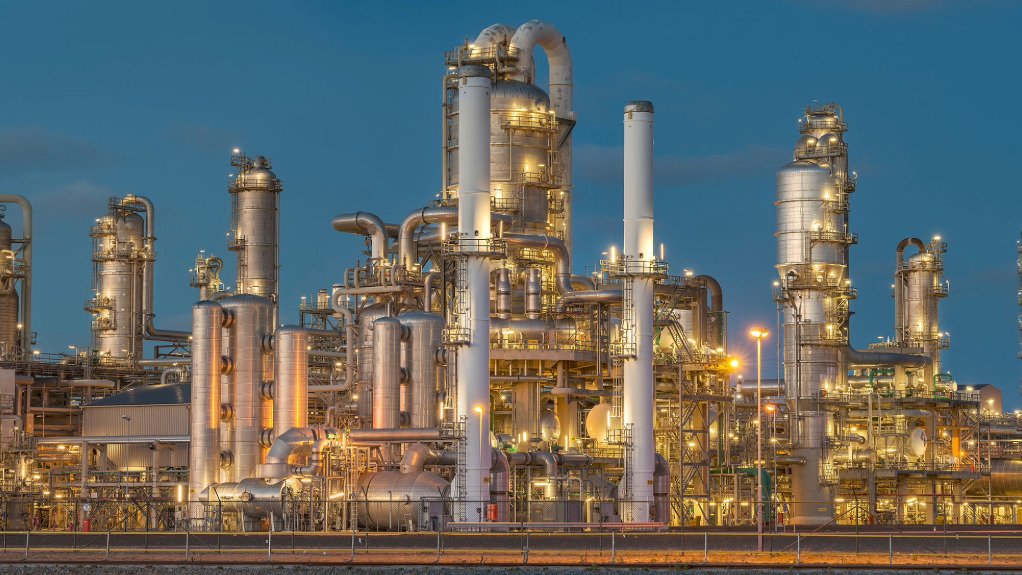


The Central Energy Fund (CEF) has called for a national conversation on the future of South Africa’s refining sector, warning that increasing dependence on imported fuel poses a strategic risk to the country’s energy security, economic resilience and industrialisation aspirations.
Speaking at an industry engagement themed ‘State and Transformation of the Energy Industry’, CEF chairperson Ayanda Noah said South Africa’s growing reliance on imported petroleum products should be interpreted as a significant economic challenge requiring urgent intervention.
“South Africa should not aspire merely to be a consumer of energy. We should aspire to remain a producer, processor, owner and developer of strategic energy infrastructure.
“Energy security is economic security and refining capacity is industrial capacity,” Noah said.
She added that maintaining strategic refining capacity should be viewed as part of a broader industrial development agenda, given the critical role refining plays in supporting mining, electricity generation, manufacturing, transport, agriculture, logistics and the broader economy.
Meanwhile, CEF COO Sifiso Msabala highlighted the energy affordability challenges facing South Africa, alongside infrastructure constraints and the exposure to global market disruptions.
He argued that strategic petroleum stocks should be treated as a critical component of the country’s economic resilience and security of supply.
“South Africa does not lack energy resources, opportunities or investor interest [and] a country is secure when it has sufficient infrastructure, strategic stocks, diversified supply routes, domestic capability and the institutional capacity to respond effectively when international markets become disrupted,” Msabala explained.
He welcomed progress on the Draft Strategic Stocks Policy but stressed that policy alone would be insufficient without corresponding investments into storage, logistics, financing and governance mechanisms.
“A country cannot claim to have strategic fuel reserves simply because storage tanks exist within its borders.
“The critical question is whether the State has the product, the access and the authority to act when the country needs it [to],” Msabala said.
Additionally, Noah pointed to a decline in South Africa’s domestic refining capacity over the past decade, with imported fuels now accounting for about 61% of domestic fuel demand compared with 22% in 2019.
Importantly, she cautions that the increased dependence on imported products exposes the country to greater geopolitical instability, supply chain disruptions and exchange rate volatility.
Noah has also called on the country’s development finance institutions (DFIs), including the Industrial Development Corporation (IDC) and the Development Bank of Southern Africa (DBSA), to play a greater role in evaluating strategic energy infrastructure as an enabler of industrialisation and economic growth.
“The investment discussion should not focus solely of the commercial return of an individual refinery. We must also consider the broader economic return generated through job creation, local manufacturing, engineering capability, skills development, small, medium-sized and microenterprise (SMME) growth and enhanced energy security,” she comments.
Notably, Noah points to the South African National Petroleum Company (SANPC) Refinery Development Programme as a significant opportunity to strengthen South Africa’s energy security while driving industrialisation.
She says the proposed 400 000 bl/d refinery project, estimated to require an investment amount of about $7-billion, has the potential to create about 12 500 construction jobs and 2 850 permanent operational jobs.
Moreover, Noah also mentioned the strategic importance of revitalising national oil company PetroSA's Mossel Bay operations, in the Western Cape, noting that the successful investment in feedstock solutions and associated infrastructure could unlock broader industrial development opportunities in petrochemicals, manufacturing, logistics and gas-to-power projects.
Additionally, she stressed that South Africa must carefully consider the long-term cost of failing to invest in domestic refining capacity.
“We spend considerable time debating the cost of investment, but we should also ask ourselves what it will cost South Africa if we do not invest [as] strategic capacity takes years to build but can disappear in months.
“This is not an ideological debate. It is a conversation about national capability, economic resilience and long-term growth,” Noah concluded.
Article Enquiry
Email Article
Save Article
Feedback
To advertise email advertising@creamermedia.co.za or click here
Projects
Latest Multimedia
Latest News

Showroom
We partner growth of our select clients through our comprehensive and competitive integrated international logistics, trade finance and information...
VISIT SHOWROOM

Press Office
Announcements
What's On
Subscribe to improve your user experience...
Option 1 (equivalent of R125 a month):
Receive a weekly copy of Creamer Media's Engineering News & Mining Weekly magazine
(print copy for those in South Africa and e-magazine for those outside of South Africa)
Receive daily email newsletters
Access to full search results
Access archive of magazine back copies
Access to Projects in Progress
Access to ONE Research Report of your choice in PDF format
Option 2 (equivalent of R375 a month):
All benefits from Option 1
PLUS
Access to Creamer Media's Research Channel Africa for ALL Research Reports, in PDF format, on various industrial and mining sectors
including Electricity; Water; Energy Transition; Hydrogen; Roads, Rail and Ports; Coal; Gold; Platinum; Battery Metals; etc.
Already a subscriber?
Forgotten your password?
Receive weekly copy of Creamer Media's Engineering News & Mining Weekly magazine (print copy for those in South Africa and e-magazine for those outside of South Africa)
➕
Recieve daily email newsletters
➕
Access to full search results
➕
Access archive of magazine back copies
➕
Access to Projects in Progress
➕
Access to ONE Research Report of your choice in PDF format
RESEARCH CHANNEL AFRICA
R4500 (equivalent of R375 a month)
SUBSCRIBEAll benefits from Option 1
➕
Access to Creamer Media's Research Channel Africa for ALL Research Reports on various industrial and mining sectors, in PDF format, including on:
Electricity
➕
Water
➕
Energy Transition
➕
Hydrogen
➕
Roads, Rail and Ports
➕
Coal
➕
Gold
➕
Platinum
➕
Battery Metals
➕
etc.
Receive all benefits from Option 1 or Option 2 delivered to numerous people at your company
➕
Multiple User names and Passwords for simultaneous log-ins
➕
Intranet integration access to all in your organisation