South Africa's Mining Sector Faces an Existential Threat from Crime





This article has been supplied.
By: Lubabalo Cengani
South Africa's mining sector is a cornerstone of the national economy. It supports hundreds of thousands of jobs and generates billions in exports. However, it continues to face a serious threat from rising crime and security risks. Illegal mining has evolved into a sophisticated form of organized crime. Criminal groups operate like shadow states, stealing billions and draining important tax revenues. Mining companies are forced to redirect hundreds of millions of rands away from growth to private security. Addressing these significant security challenges is essential for restoring investor confidence, upholding the rule of law, and securing the industry's future.
Security risks, crime, and illegal mining are significantly harming the growth and operations of South Africa's mining sector. Industry organizations like the Minerals Council South Africa and major mining companies consistently identify these issues as major operational threats. In its 2025 Integrated Annual Review Report, the Minerals Council highlighted rising theft, organized crime, cable and diesel theft, and illegal mining as serious disruptors to mining activities and supply chains.
Sibanye Stillwater’s leadership has stressed that illegal mining is no longer just petty crime. It has evolved into an organized, transnational activity that presents significant risks to operations and the future of South Africa's mining industry. Harmony Gold categorizes tackling illegal mining as one of its top sustainability and operational risks. It notes that these illegal activities lead to environmental damage, social problems, and financial impacts on the business. Meanwhile, AngloGold Ashanti has warned that illegal mining poses serious safety, security, and human rights issues.
The rise in security risks, crime, and illegal mining is causing major financial, economic, and operational challenges for South Africa’s economy and mining industry growth. Due to operational disruptions, increased security costs, and infrastructure weaknesses, mining's contribution to South Africa's nominal GDP fell to about 5.8%, which could be around R439 billion, from 6% the previous year. Key labour-intensive commodities like gold and platinum group metals (PGMs) saw declines in output despite strong global commodity prices.
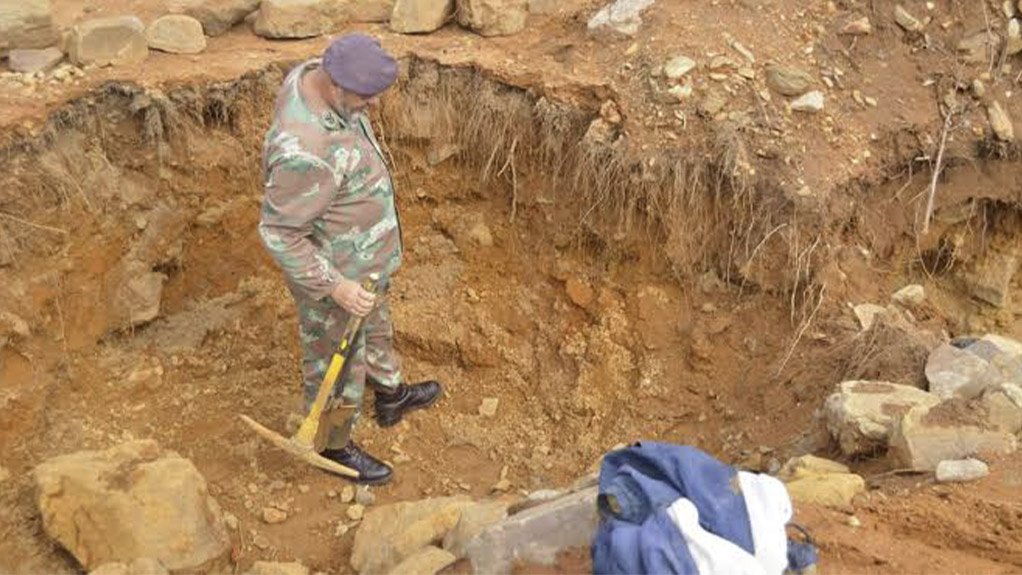
The unchecked growth of illegal operations and the withdrawal of formal mining companies from high-risk or abandoned sites, which include around 6,000 derelict mine shafts, have cost the country crucial foreign exchange earnings and thousands of legitimate jobs. Mining companies have had to redirect hundreds of millions of rands away from productive growth, exploration, and expansion toward private security measures, shaft sealing, and asset protection. For example, major companies spend hundreds of millions each year solely on security upgrades.
Illegal syndicates act like shadow states, siphoning off tens of billions each year and removing critical capital that could otherwise support public services and national development. The dangerous environment created by rampant crime, thousands of abandoned mine shafts, and poor regulatory alignment pushes capital away or demands higher risk premiums. This severely hinders new project development and exploration. Mining firms are forced to continuously shift large financial resources away from growth, expansion, and job creation to secure their assets.
Two recently notable examples of security risks, crime, and illegal mining disrupting mining operations are:
The Stilfontein Mine Underground Standoff and Siege (2024–2025):
At a closed gold mine shaft in Stilfontein, North West Province, thousands of illegal miners entrenched themselves underground. This led to a lengthy security blockade by authorities under Operation Vala Umgodi to force them to surface. The standoff disrupted local stability and ended with a court-ordered rescue operation that used specialized rigs to bring up hundreds of surviving miners and recover numerous bodies, revealing serious criminal syndication and significant security threats.
Multi-Agency Crackdowns via Operation Prosper in Gauteng and the Free State (June–July 2026):
Joint operations by the South African Police Service (SAPS) and the South African National Defence Force (SANDF) targeted major illegal mining sites, including mass raids at the Losberg Kloof Mine in Westonaria and the St Helena shaft in the Free State. These efforts led to over 1,149 arrests in one month (June 2026) and the confiscation of heavy machinery, dozens of generators, and large amounts of gold-bearing material, showing how organized crime syndicates infiltrate and exploit both active and inactive mining sites.
Mining still contributes significantly to the South African economy. The mining sector adds billions to the gross domestic product. Data from the Minerals Council South Africa indicates that mining contributed roughly R439 billion to R477 billion to the nominal GDP, accounting for about 5.8% to 6.2% of the national economy. Additionally, mineral ores and related products make up about 52% of total merchandise export value. The industry supports hundreds of thousands of formal jobs, employing around 470,000 workers and paying about R200 billion in wages annually, which is about 5.7% of total employee compensation in the country. Since mining jobs tend to pay well and are located in rural or semi-urban areas, each job has significant positive effects on surrounding communities.
Illegal mining alone deprives the government of roughly R23.5 billion in uncollected taxes, leading to a shortage of important revenue needed for public infrastructure, education, healthcare, and poverty alleviation programs. Illegal syndicates and criminal networks bypass formal regulatory systems, undermining legitimate mining operations, small-scale miners, and community empowerment projects designed to benefit historically disadvantaged South Africans. Organized crime brings violence, turf wars, extortion, human trafficking, and instability to communities. This worsens living conditions and safety for residents, undermining the social license to operate and environmental, social, and governance standards.
Addressing security threats, crime, and illegal mining is essential for unlocking the full growth potential of South Africa's mining sector. Both international and domestic investors need legal certainty, a rule of law, and protection of property rights. Reducing organized crime lowers the risk associated with South African mining, encouraging long-term investments and capital-intensive exploration. When mining companies spend hundreds of millions of rands on private security, asset protection, and emergency measures, those funds are taken away from modernization and job creation efforts. Improving security enables capital to be allocated toward productive economic growth.
Uncontrolled illegal mining, criminal networks, and rampant crime continue to weaken the rule of law, raise risk premiums, and divert vital capital from productive investments, expansion, and exploration. Tackling these security threats is crucial to rebuilding investor confidence and keeping the industry competitive globally. Addressing security risks, crime, and illegal mining is key to the growth, sustainability, and transformation of South Africa's mining sector.
Lubabalo Cengani holds a master’s in political studies from Nelson Mandela University. He writes in his personal capacity.
Article Enquiry
Email Article
Save Article
Feedback
To advertise email advertising@creamermedia.co.za or click here

Projects
Latest Multimedia

Latest News

Showroom
ZF Aftermarket is the after-sales division of the world-renowned German ZF group, a global leader in mobility technology.
VISIT SHOWROOM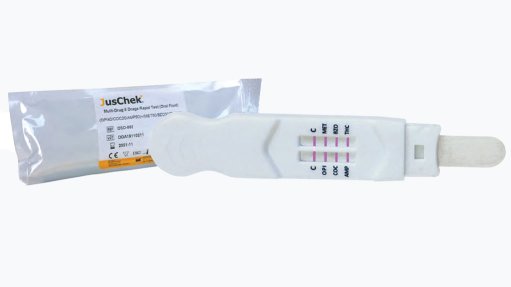
Developed to exceed the latest EN 15964 standards for police breathalysers proving that it will remain accurate and reliable for many years to come.
VISIT SHOWROOM



Press Office
Announcements
What's On
Subscribe to improve your user experience...
Option 1 (equivalent of R125 a month):
Receive a weekly copy of Creamer Media's Engineering News & Mining Weekly magazine
(print copy for those in South Africa and e-magazine for those outside of South Africa)
Receive daily email newsletters
Access to full search results
Access archive of magazine back copies
Access to Projects in Progress
Access to ONE Research Report of your choice in PDF format
Option 2 (equivalent of R375 a month):
All benefits from Option 1
PLUS
Access to Creamer Media's Research Channel Africa for ALL Research Reports, in PDF format, on various industrial and mining sectors
including Electricity; Water; Energy Transition; Hydrogen; Roads, Rail and Ports; Coal; Gold; Platinum; Battery Metals; etc.
Already a subscriber?
Forgotten your password?
Receive weekly copy of Creamer Media's Engineering News & Mining Weekly magazine (print copy for those in South Africa and e-magazine for those outside of South Africa)
➕
Recieve daily email newsletters
➕
Access to full search results
➕
Access archive of magazine back copies
➕
Access to Projects in Progress
➕
Access to ONE Research Report of your choice in PDF format
RESEARCH CHANNEL AFRICA
R4500 (equivalent of R375 a month)
SUBSCRIBEAll benefits from Option 1
➕
Access to Creamer Media's Research Channel Africa for ALL Research Reports on various industrial and mining sectors, in PDF format, including on:
Electricity
➕
Water
➕
Energy Transition
➕
Hydrogen
➕
Roads, Rail and Ports
➕
Coal
➕
Gold
➕
Platinum
➕
Battery Metals
➕
etc.
Receive all benefits from Option 1 or Option 2 delivered to numerous people at your company
➕
Multiple User names and Passwords for simultaneous log-ins
➕
Intranet integration access to all in your organisation