Study highlights significant impact of State's procurement practices on local clothing manufacturers

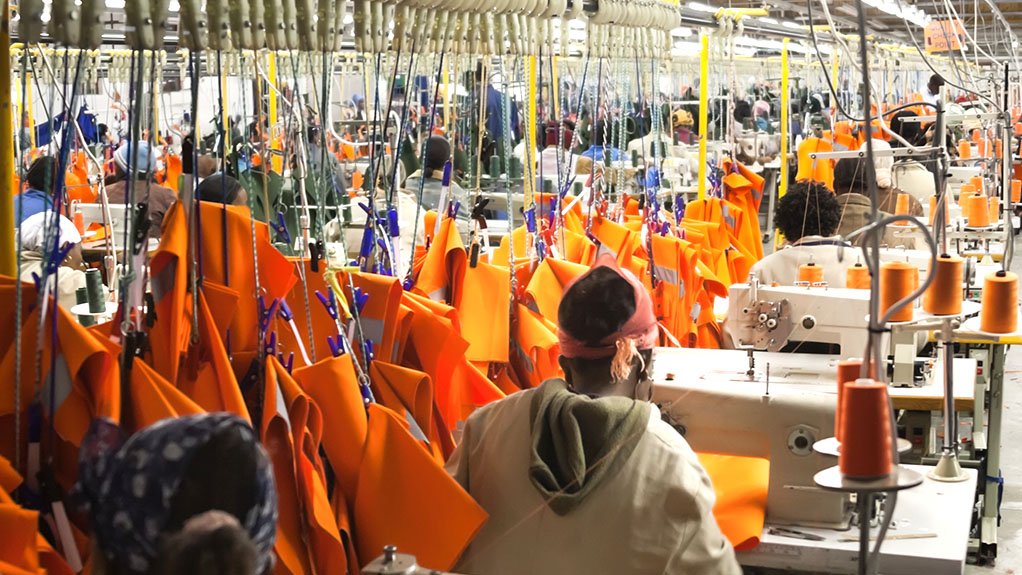



Only 32% of the R7.5-billion a year spent by State organs on clothing, textiles, footwear and leather (CTFL) can definitively be linked to purchases from local CTFL manufacturers, which also means that about R5.11-billion a year in revenue is not earned by compliant South African manufacturers.
The 68% of CTFL purchases made by the State that could not be linked to local manufacturers also means the local industry cedes about 12 600 jobs each year that could be supported in the industry, said market research firm Benchmarking and Manufacturing Analysts buyer-led value chains head Courtney Grant on September 9.
Providing details of the findings of the 'Lost Threads: The Case for Compliant CTFL Public Procurement' study, undertaken on behalf of the Localisation Support Fund (LSF), she noted that the figures indicated that about R1.3-billion a year in potential wages were not earned by local employees and that about R7.16-billion of GDP a year was not captured in the local economy.
Closing the gaps in compliance with existing local content requirement policies in CTFL procurement by the State presented a significant opportunity to grow local manufacturing and jobs through government spending, she pointed out.
The study had shown how powerful a role public procurement could play in driving economic activity in South Africa, Grant said.
Reaching the CTFL Masterplan's 60% local content target for government procurement would nearly double local CTFL manufacturing revenue and each additional R1-billion redirected to compliant local procurement was estimated to support about 2 450 direct manufacturing jobs in the industry and a further 5 050 indirect jobs across the value chain.
These gains would come from redirecting existing procurement budgets toward compliant local suppliers that were currently able to deliver without additional government spending, she noted.
The study identified variability in terms of data quality and reporting standards across different spheres of government, with the National Treasury and provincial governments providing good-quality data.
However, data quality from State-owned enterprises was mixed and poor in some cases. Local governments provided poor-quality data on price and the study identified that there were gaps, little standardisation in reporting and severe fragmentation of relevant data, said Grant.
RECOMMENDATIONS
To achieve the potential gains from more compliant government procurement, the report sets out five practical steps for turning the local content policy commitment into measurable industrial opportunities across the full tender lifecycle from bid to delivery.
At the tender stage, standardising and mandating local content thresholds, moving beyond sole reliance on self-declaration, in addition to sustained capacity building for procurement officials, would give buyers the tools and confidence to source locally with certainty.
Making verification a condition of payment, through a tiered model requiring South African Bureau of Standards (SABS) verification for large tenders and invoice-based proof for smaller ones, would allow value already committed to local content to convert reliably into local production and jobs, the report stated.
Further, after award, prioritising SABS verification for high-value and high-risk contracts, alongside clearer complaint and accountability processes, stronger private sector monitoring through regular e-tenders tracking and a public register of verified manufacturers would help sustain these gains over time.
Together, these steps offered a practical route to unlocking the additional R5-billion in local manufacturing revenue and thousands of jobs the study has identified.
The report modelled improvements in compliance with local content policies of 40%, 50% and the targeted 60%, and found that localisation gains were realisable and significant, ranging from an additional R2.4-billion captured within the local economy at 40% and up to an additional R4.5-billion in local GDP, if 60% local content could be achieved.
“The CTFL industry is an important engine of growth and job creation in South Africa. The manufacture of garments remains labour intensive and has long been a source of jobs for women across this country,” said LSF CEO Irshaad Kathrada.
“While considerable work is under way to improve the conditions for localisation across the retail and corporate workwear value chains, government procurement is one of the most powerful levers available to translate that potential into commercial outcomes. It can provide the anchor demand our manufacturers need to invest, grow and compete.”
During a panel discussion after Grant presented the report, trade union Southern African Clothing and Textile Workers Union researcher Simon Eppel said government procurement presented long-term offtake opportunities for the industry.
Long-term offtake agreements were unusual in the industry, with these being rare within the retail industry and in corporate value chains.
Under longer duration agreements, the industry could develop capacity and invest in equipment more sustainably, based on more predictable demand.
“The figures presented in the study represent a potential 10% increase in sales for the CTFL sector, and the potential 12 000 additional jobs are significant. If South Africa can get its government procurement to work better, it would change the dynamics of the market,” he said.
During the panel discussion, Department of Trade, Industry and Competition industrial procurement director Cathrine Matidza welcomed the recommendations made in the report.
Effective implementation of local content requirements was sound industrial policy, but required consistent application of verification and monitoring of compliance, as well as strong collaboration among government, industry and labour, she said.
The verification process would be reviewed, including mandating that local content requirements be specified in tender adverts, and strengthening evaluation and verification of suppliers before and after delivery.
Further, payment should be based on compliance and the two systems should be linked, she said.
The department would develop a practice note and toolkit for State organs to use to improve compliance with local content procurement requirements. This was important, given the strategic role public procurement could play in strengthening the CTFL industry, Matidza said.
Article Enquiry
Email Article
Save Article
Feedback
To advertise email advertising@creamermedia.co.za or click here

Projects

Latest Multimedia


Latest News


Showroom

Multotec, recognised industry leaders in metallurgy and process engineering help mining houses across the world process minerals more efficiently,...
VISIT SHOWROOM
The Beneficiation Academy is a certified training institution that follows all compliance legislation and is accredited with various Sector...
VISIT SHOWROOM



Press Office
Announcements
What's On
Subscribe to improve your user experience...
Option 1 (equivalent of R125 a month):
Receive a weekly copy of Creamer Media's Engineering News & Mining Weekly magazine
(print copy for those in South Africa and e-magazine for those outside of South Africa)
Receive daily email newsletters
Access to full search results
Access archive of magazine back copies
Access to Projects in Progress
Access to ONE Research Report of your choice in PDF format
Option 2 (equivalent of R375 a month):
All benefits from Option 1
PLUS
Access to Creamer Media's Research Channel Africa for ALL Research Reports, in PDF format, on various industrial and mining sectors
including Electricity; Water; Energy Transition; Hydrogen; Roads, Rail and Ports; Coal; Gold; Platinum; Battery Metals; etc.
Already a subscriber?
Forgotten your password?
Receive weekly copy of Creamer Media's Engineering News & Mining Weekly magazine (print copy for those in South Africa and e-magazine for those outside of South Africa)
➕
Recieve daily email newsletters
➕
Access to full search results
➕
Access archive of magazine back copies
➕
Access to Projects in Progress
➕
Access to ONE Research Report of your choice in PDF format
RESEARCH CHANNEL AFRICA
R4500 (equivalent of R375 a month)
SUBSCRIBEAll benefits from Option 1
➕
Access to Creamer Media's Research Channel Africa for ALL Research Reports on various industrial and mining sectors, in PDF format, including on:
Electricity
➕
Water
➕
Energy Transition
➕
Hydrogen
➕
Roads, Rail and Ports
➕
Coal
➕
Gold
➕
Platinum
➕
Battery Metals
➕
etc.
Receive all benefits from Option 1 or Option 2 delivered to numerous people at your company
➕
Multiple User names and Passwords for simultaneous log-ins
➕
Intranet integration access to all in your organisation