Systemic approach needed to tackle 44% fruit, veg waste rate

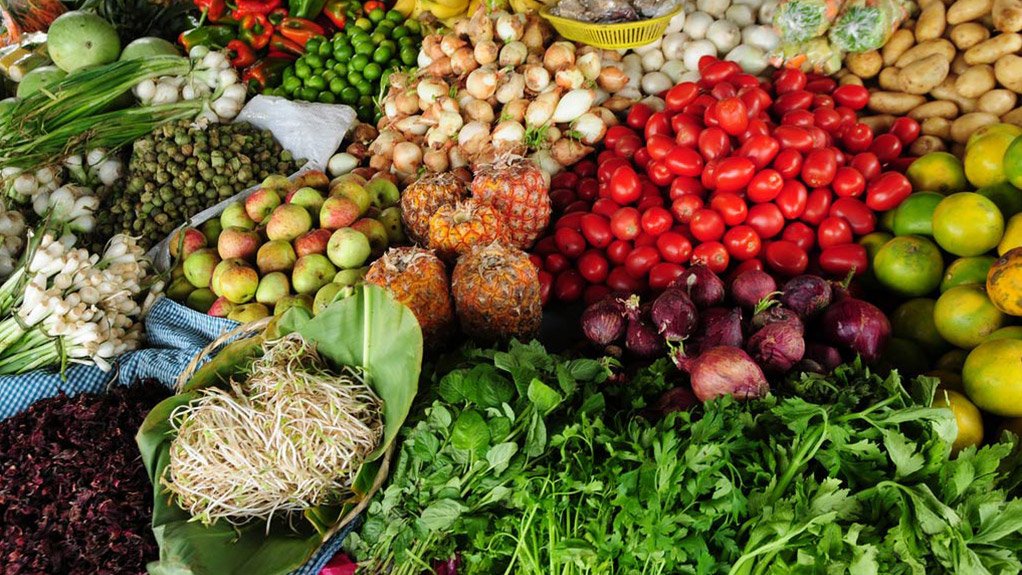


University of Johannesburg (UJ) estimates that 44% of South Africa's fruit and vegetables are lost or wasted despite food insecurity affecting millions of households.
Having researched how food waste occurs in the country, UJ finds that every day edible fruit and vegetables are discarded across Johannesburg not owing to a lack of willingness to reduce food waste, but as a result of systemic barriers leaving retailers without the infrastructure and support needed to keep edible produce out of landfill.
UJ says both informal traders and formal retailers overwhelmingly believe disposal is the only effective way to manage fruit and vegetable waste, despite there being alternatives such as food donation, composting and processing.
The issue of food waste is not only prevalent in South Africa. The United Nations estimates that 1.05-billion tonnes of food was wasted globally in 2022, which is equal to one-fifth of all food that was available to consumers. Yet, in the same year, 783-million people experienced hunger.
Additionally, discarded food accounted for between 8% and 10% of global greenhouse-gas (GHG) emissions in 2025.
UJ suggests that reducing food waste is not only a social imperative to strengthen food security, but an environmental opportunity to reduce emissions.
UJ surveyed 161 retailers, including 118 informal fruit and vegetable traders and 43 formal retailers, to better grasp why so much produce ends up in landfill instead of being redistributed, repurposed or recovered.
SYSTEMIC CHALLENGES
Lead researcher of the food waste study, Cavin Moreetsi, says the findings challenge the perception that retailers simply choose the easiest option, explaining that the issue is not primarily one of waste but of a system.
In fact, UJ's research paints a stark picture of the challenges facing informal traders. Almost 96% reported having no access to waste management infrastructure such as dedicated collection points or composting facilities, while 87% said they receive no government support for managing fruit and vegetable waste.
Nearly 70% identified financial constraints as their greatest obstacle.
Perhaps most concerning, the overwhelming majority believed disposal is the only effective way to manage fruit and vegetable waste, despite indicating that they would readily follow official guidance if practical support were available.
Formal retailers generally demonstrated stronger awareness and operated within established individual internal food waste policies and staff training programmes. Yet they shared the same fundamental misconception that disposal remains the primary solution. Most still rely on conventional waste bins, with only a small proportion donating surplus produce or diverting it for processing.
According to the UJ researchers, the findings have implications that extend far beyond waste management.
"When fruit and vegetables decompose in a landfill, they release methane, a GHG far more potent than carbon dioxide over the short term. When fruit and vegetables are produced, resources such as land, energy, water, and labour are used; thus, when these food items are wasted, the resources are similarly wasted.
"In a country where food insecurity remains a daily reality for many families, reducing food waste should be viewed as an environmental, economic, and social concern," Moreetsi states.
COORDINATED ACTION
Rather than focusing only on educating retailers, the researchers argue that meaningful progress requires coordinated action across government, municipalities and businesses.
They recommend expanding waste management infrastructure in informal trading areas, enforcing municipal waste bylaws, strengthening food donation networks, supporting partnerships with organisations that redistribute surplus food, and investing in circular economy initiatives that transform food waste into compost, animal feed, bioenergy, and other valuable products.
The study also finds that retailers are receptive to government guidance, suggesting that stronger collaboration between municipalities and retailers could substantially reduce food waste.
Moreetsi believes the findings provide an opportunity for retailers and municipalities to rethink their approaches to fruit and vegetable waste management.
"Every crate of edible produce diverted from landfill represents an opportunity to reduce emissions, strengthen food security, support livelihoods, and build a more resilient urban food system. The solutions already exist. What is needed now is coordinated action to put them into practice,” he says.
Article Enquiry
Email Article
Save Article
Feedback
To advertise email advertising@creamermedia.co.za or click here

Projects



Latest News


Showroom

Iritron delivers advanced automation, control, and optimisation solutions to the Mining, Minerals & Metals, Consumer Package Goods and...
VISIT SHOWROOM
Tsurumi Pumps Africa is a specialist supplier of Japanese-engineered submersible pumping solutions, serving customers across the African continent.
VISIT SHOWROOM


Press Office
Announcements
What's On
Subscribe to improve your user experience...
Option 1 (equivalent of R125 a month):
Receive a weekly copy of Creamer Media's Engineering News & Mining Weekly magazine
(print copy for those in South Africa and e-magazine for those outside of South Africa)
Receive daily email newsletters
Access to full search results
Access archive of magazine back copies
Access to Projects in Progress
Access to ONE Research Report of your choice in PDF format
Option 2 (equivalent of R375 a month):
All benefits from Option 1
PLUS
Access to Creamer Media's Research Channel Africa for ALL Research Reports, in PDF format, on various industrial and mining sectors
including Electricity; Water; Energy Transition; Hydrogen; Roads, Rail and Ports; Coal; Gold; Platinum; Battery Metals; etc.
Already a subscriber?
Forgotten your password?
Receive weekly copy of Creamer Media's Engineering News & Mining Weekly magazine (print copy for those in South Africa and e-magazine for those outside of South Africa)
➕
Recieve daily email newsletters
➕
Access to full search results
➕
Access archive of magazine back copies
➕
Access to Projects in Progress
➕
Access to ONE Research Report of your choice in PDF format
RESEARCH CHANNEL AFRICA
R4500 (equivalent of R375 a month)
SUBSCRIBEAll benefits from Option 1
➕
Access to Creamer Media's Research Channel Africa for ALL Research Reports on various industrial and mining sectors, in PDF format, including on:
Electricity
➕
Water
➕
Energy Transition
➕
Hydrogen
➕
Roads, Rail and Ports
➕
Coal
➕
Gold
➕
Platinum
➕
Battery Metals
➕
etc.
Receive all benefits from Option 1 or Option 2 delivered to numerous people at your company
➕
Multiple User names and Passwords for simultaneous log-ins
➕
Intranet integration access to all in your organisation