Years of delay in trade investigations deepening South Africa’s industrial malaise – study


The duration of tariff investigations undertaken by the International Trade Administration Commission of South Africa (Itac) has increased since 2019 to an average of 40 months, and with some taking up to 76 months to complete, a study by trade consulting firm XA Global Trade Advisors shows.
This is a significant increase from an average of six months in 2019 and is beyond Itac’s own publicly stated objective of completing investigations within six months, XA Global Trade Advisors CEO Donald MacKay noted during an October 21 webinar to present the findings of the study.
For most of Itac’s existence since 2003, it wrapped up most investigations within six to eight months.
With the long delays since 2019 in concluding investigations, the information that an application to Itac was based on would be dated by the time a decision was made; leading to irrational or incorrect decisions, or the withdrawal of the application, the consulting firm said.
“The implications are severe, as any decision made on a case that is based on information that is 76 months old would be irrational and create a situation in which some companies would not be happy with a decision and challenge it in court,” Mackay stated.
He added that Itac had acknowledged this problem, with it submitting court documents that stated that it had not made a decision on an application owing to the age of the information. This meant the problem was understood, but had not been addressed.
“While it is sometimes not possible to complete an investigation within six months, owing to the complexity or scope of the work, there is no scenario in which investigations should take six years to complete. But, this is the position we find ourselves in.”
Tariffs provided only 3.5% of total government revenue in South Africa, but had a much more significant impact on the functioning of its industries.
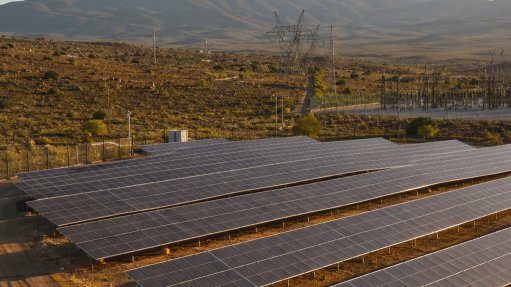
One example was the tariff on solar panels. While South Africa wanted to develop its solar panel manufacturing sector, it could not meet the scale of current demand from renewable energy project developers, which meant that tariffs on solar panels only added costs and impeded the country’s energy transition.
Further, the delays had meant that an institution that should form a key part of South Africa’s industrial development strategy had lost the faith of businesses, with applications to Itac having decreased to only two private sector applications made in the six months to end-June, and one application made in the six months to end-December 2025, MacKay said.
There had been a significant drop-off in the number of applications made for tariff increases or reductions. This indicated a loss of faith in the process and that the predictability of processes was important, he pointed out.
For example, if a company wanted to expand production and sought protection, and a decision took four years, it was often the case that the company would then not proceed with the investment.
“There is a case of a groundnuts producer that applied for a duty increase, but, after 15 months without a decision, the company closed down its plant.
“We are not arguing that tariffs must be increased or decreased, but we are calling for decision-makers – in Itac and the relevant departments – to do their work, as these delays are unacceptable.
“Political oversight is also needed, and Parliament’s Portfolio Committee on Trade, Industry and Competition should investigate and determine what can be done to fix this dire situation.
“If South Africa considers trade policy to be important, if we value our industrial policy, then the tools we use to make our industrial policy come to life have to work. Tariffs as a tool only works if businesses trust the process,” he said.
Companies were withdrawing from this process and the unpredictability of the process made investment decisions difficult.
Another significant issue was that of reciprocal agreements that were secret agreements between applicants and Itac, in which the companies typically committed to reducing prices, capping price increases, making investments, growing exports or increasing employment, Mackay said.
While the fact that these reciprocal agreements were signed years before a decision on the application was made by Itac was a significant problem for the applicants, the other challenge was that the secrecy meant that only Itac and the applicant knew what the economic rationale for a decision was.
Additionally, the secrecy meant that there was no way to measure the impact of a decision, determine whether a decision would likely yield good outcomes or whether these measures were being consistently applied across all applications, he explained.
“A company could apply to Itac for a change in a tariff and make commitments under a reciprocal agreement. Another company in the same industry that opens a factory one month later would not be subject to these commitments,” he illustrated.
Further, South Africa’s fixed investments-to-GDP ratio was 13.9%, which was well below the 25% level that was considered necessary to stimulate growth.
If South Africa sought to use tariffs as an incentive to stimulate local investment, then it would appear that it had achieved the opposite effect, he said.
“For example, if a local producer seeks protection while ramping up production, or if a local industry wants to lower tariffs on imported inputs, the applicant must make commitments.
“However, how can companies keep to these commitments when the business environment has moved on for years after they made the commitments? We will never achieve the objectives we want to use our trade policy for when the number of companies interacting with Itac is so small.”
Even if Itac compelled companies under reciprocal agreements to make investment or employment commitments, with only one or two companies making applications every six months, even if they were large companies, this would not change the economic or industrial landscape.
A better solution would be an effective tariff process, MacKay said.
Meanwhile, the regulations for trade investigations must be updated. Currently, while there was a four-week deadline, with a possible two-week extension, for companies to make submissions on a new investigation, there was no legal timeframe in which decisions had to be made, nor was there even a legal requirement to complete an investigation, he pointed out.
The new rules should set firm deadlines for completing tariff investigations, after which the investigation must cease and a decision must be made.
Further, another significant challenge in South Africa’s trade policy and strategy was that tariffs that were implemented were ever-green. Even though each published decision indicated a timeframe after which a tariff had to be reviewed, this had rarely happened, MacKay said.
US economist Professor Dani Rodrik, in his book Industrial Policy for the 21st Century, recommended that any increase in duties must be temporary, that the timeframe in which the duties applied must be communicated and then the duties must be removed after this period ends, said MacKay.
If companies knew that any protection they received, whether higher or lower import duties, was temporary, then they would work to make the most of the protection while it lasted, and not treat it as ever-green rent, he said.
Of the about 3 500 tariff codes that attract a duty, only 9% have been reviewed in the past 20 years.
“We are giving our companies ever-green protection, and any tariffs only increase costs and then we wonder why they are unable to compete and why our economy is not competitive.”
A better approach would be for Itac to publicly publish nonbinding guidelines that reflect what it sought to achieve from the changes in tariffs instead of as commitments under reciprocal agreements.
When companies knew that the protection was temporary, the instrument would be effective.
Itac could set the targets and the sunset clauses, and companies that did not comply with the requirements could lose their protection or, if the tariff was proving effective at driving the desired outcomes, Itac could extend the timeframe in which the tariff would apply, MacKay said.
“Itac’s annual reports state that its investigations should be completed in six months. Itac had originally petitioned the Minister of Trade, Industry and Competition to shorten the timeframe for investigations from 12 months to six. Even if we got back to 12 months, it would be a massive improvement.”
To resolve the challenge, MacKay suggested that Itac make decisions on unopposed investigations that had exceeded six months and then accept the consequences. In this way, while the decisions would likely be challenged and would cause some embarrassment, it could then start to restore trust in the institution.
Article Enquiry
Email Article
Save Article
Feedback
To advertise email advertising@creamermedia.co.za or click here

Projects

Latest Multimedia
Latest News


Showroom

FLANDERS Southern Africa provides integrated solutions for mining and industrial operations, covering field services, automation, electrification,...
VISIT SHOWROOM
For over 30 years, Werner South Africa Pumps & Equipment (PTY) LTD has been designing, manufacturing, supplying and maintaining specialist...
VISIT SHOWROOM
Press Office
Announcements
What's On
Subscribe to improve your user experience...
Option 1 (equivalent of R125 a month):
Receive a weekly copy of Creamer Media's Engineering News & Mining Weekly magazine
(print copy for those in South Africa and e-magazine for those outside of South Africa)
Receive daily email newsletters
Access to full search results
Access archive of magazine back copies
Access to Projects in Progress
Access to ONE Research Report of your choice in PDF format
Option 2 (equivalent of R375 a month):
All benefits from Option 1
PLUS
Access to Creamer Media's Research Channel Africa for ALL Research Reports, in PDF format, on various industrial and mining sectors
including Electricity; Water; Energy Transition; Hydrogen; Roads, Rail and Ports; Coal; Gold; Platinum; Battery Metals; etc.
Already a subscriber?
Forgotten your password?
Receive weekly copy of Creamer Media's Engineering News & Mining Weekly magazine (print copy for those in South Africa and e-magazine for those outside of South Africa)
➕
Recieve daily email newsletters
➕
Access to full search results
➕
Access archive of magazine back copies
➕
Access to Projects in Progress
➕
Access to ONE Research Report of your choice in PDF format
RESEARCH CHANNEL AFRICA
R4500 (equivalent of R375 a month)
SUBSCRIBEAll benefits from Option 1
➕
Access to Creamer Media's Research Channel Africa for ALL Research Reports on various industrial and mining sectors, in PDF format, including on:
Electricity
➕
Water
➕
Energy Transition
➕
Hydrogen
➕
Roads, Rail and Ports
➕
Coal
➕
Gold
➕
Platinum
➕
Battery Metals
➕
etc.
Receive all benefits from Option 1 or Option 2 delivered to numerous people at your company
➕
Multiple User names and Passwords for simultaneous log-ins
➕
Intranet integration access to all in your organisation