AMIE begs explanation on restricted Argentine oxtail imports when prices are spiking

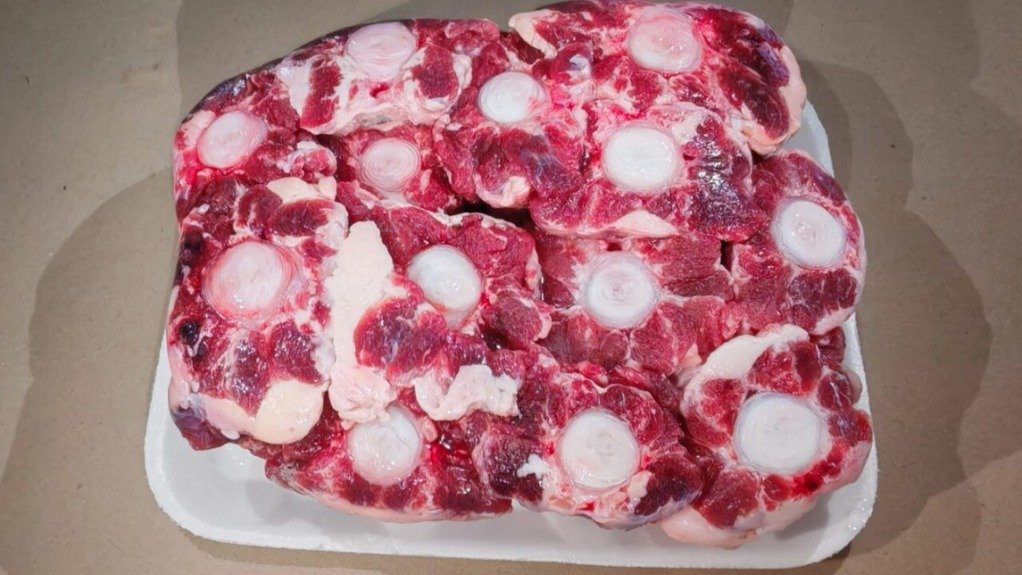


Industry body the Association of Meat Importers and Exporters (AMIE) has raised concerns about the sharp increase in oxtail prices as restrictions on Argentine imports continue to constrain supply.
According to AMIE, oxtail that was typically retailing at about R79 to R99/kg between January and May this year is now selling for double that, at about R169 to R199/kg.
South Africa cannot produce enough oxtail to meet domestic demand and relies heavily on imports to make up the shortfall. Around 70% of the oxtail imported into South Africa comes from Argentina, making it a critical source of supply for the local market.
“Our concern is for South African consumers. When a major source of imported supply is effectively removed from the market, the result is scarcity and higher prices. If there is a legitimate food safety or animal-health risk associated with Argentine oxtail, we support the Department of Agriculture (DoA) taking appropriate measures. But we need to understand what that risk is and the science behind it," says AMIE CEO Paul Matthew.
AMIE has formally written to the DoA requesting the scientific evidence and risk assessments underpinning the revised requirements and asking for them to be urgently reconsidered.
The issue arose after Argentina detected scrapie in sheep earlier this year. The South African veterinary certificate used for Argentine beef contained a declaration that Argentina was free of scrapie, even though scrapie is a disease of sheep and goats, not cattle.
Argentina asked for the inapplicable declaration to be removed, and the DoA subsequently did so, acknowledging that its inclusion had been a “technical error”.
However, in revising the certificate, the DoA also introduced additional requirements relating to Foot-and-Mouth Disease (FMD), Bovine Spongiform Encephalopathy and Vesicular Stomatitis.
AMIE explains the practical effect is that Argentine establishments currently approved to export to South Africa, which are situated in an FMD-free zone where vaccination is practised, are unable to supply oxtail and certain other bone-in beef products under the revised requirements.
AMIE notes that these restrictions appear to go beyond international animal-health guidelines.
The World Organisation for Animal Health (WOAH) standards allow trade in meat from recognised FMD-free zones where vaccination is practised, subject to appropriate safeguards. Argentina’s last FMD outbreaks occurred in February 2006, with no outbreaks reported since, and the country has FMD-free zones recognised by WOAH, including zones where vaccination is practised.
AMIE is therefore asking government to explain why these internationally recognised safeguards are considered insufficient for Argentine oxtail and to provide the scientific basis for the additional FMD and other disease requirements.
“What began as a relatively simple correction to a certificate has resulted in a much broader set of restrictions that continue to prevent trade, with a significant impact on cash-strapped South African consumers. We are asking the department to explain the scientific basis for those additional requirements and, specifically, what risk properly inspected Argentine oxtail poses," Matthew explains.
For AMIE, this question is particularly relevant given the existing cooperation between South Africa and Argentina on FMD.
South Africa has procured FMD vaccines from Argentina and the two countries have entered into a technical cooperation programme on animal health. This makes it even more important, AMIE says, that there is a clear and consistent explanation for why Argentina’s recognised animal-health status and international standards are considered insufficient for oxtail imports.
“We are not asking for South Africa’s biosecurity standards to be weakened. We are asking for measures to be transparent, proportionate to the actual risk and supported by recognised science.”
AMIE has asked the DoA to urgently reconsider the revised certification requirements and, while the broader technical issues are reviewed, to consider an interim arrangement based on the previously accepted certificate with the inapplicable scrapie declaration removed.
“Consumers should not be paying significantly higher prices because of restrictions that have not been clearly explained,” Matthew says. “If there is a sound scientific basis for them, industry needs to understand it. If there is not, we should find a practical way to restore safe trade and ease the pressure on supply," Matthew concludes.
Article Enquiry
Email Article
Save Article
Feedback
To advertise email advertising@creamermedia.co.za or click here

Projects

Latest Multimedia

Latest News
Showroom
Supplier & Distributor of the Widest Range of Accurate & Easy-to-Use Alcohol Breathalysers
VISIT SHOWROOM
Rio Carb is an OEM (Original Equipment Manufacturer) of R-C700 Chromium Carbide (CrC) alloy clad wear plates and pipes used for heavy materials...
VISIT SHOWROOM


Press Office
Announcements
What's On
Subscribe to improve your user experience...
Option 1 (equivalent of R125 a month):
Receive a weekly copy of Creamer Media's Engineering News & Mining Weekly magazine
(print copy for those in South Africa and e-magazine for those outside of South Africa)
Receive daily email newsletters
Access to full search results
Access archive of magazine back copies
Access to Projects in Progress
Access to ONE Research Report of your choice in PDF format
Option 2 (equivalent of R375 a month):
All benefits from Option 1
PLUS
Access to Creamer Media's Research Channel Africa for ALL Research Reports, in PDF format, on various industrial and mining sectors
including Electricity; Water; Energy Transition; Hydrogen; Roads, Rail and Ports; Coal; Gold; Platinum; Battery Metals; etc.
Already a subscriber?
Forgotten your password?
Receive weekly copy of Creamer Media's Engineering News & Mining Weekly magazine (print copy for those in South Africa and e-magazine for those outside of South Africa)
➕
Recieve daily email newsletters
➕
Access to full search results
➕
Access archive of magazine back copies
➕
Access to Projects in Progress
➕
Access to ONE Research Report of your choice in PDF format
RESEARCH CHANNEL AFRICA
R4500 (equivalent of R375 a month)
SUBSCRIBEAll benefits from Option 1
➕
Access to Creamer Media's Research Channel Africa for ALL Research Reports on various industrial and mining sectors, in PDF format, including on:
Electricity
➕
Water
➕
Energy Transition
➕
Hydrogen
➕
Roads, Rail and Ports
➕
Coal
➕
Gold
➕
Platinum
➕
Battery Metals
➕
etc.
Receive all benefits from Option 1 or Option 2 delivered to numerous people at your company
➕
Multiple User names and Passwords for simultaneous log-ins
➕
Intranet integration access to all in your organisation