China Investment To Support South Africa's Irp 2025 Implementationchina Investment To Support South Africa's Irp 2025 Implementation


This article has been supplied.
By: Jason Smit - Partner & Iman Damons, Associate at Pinsent Masons Johannesburg
Less than a year after gazetting the Integrated Resource Plan 2025 (IRP 2025), South Africa's Department of Electricity and Energy is turning its focus to implementation. A key part of that effort is the pursuit of strategic partnerships and investment, reflected in Energy Minister Dr Kgosientsho Ramokgopa's participation in the South Africa-China Electricity and Energy Investment Conference in Beijing earlier this month.
The IRP 2025 sets out South Africa's plan to meet electricity demand sustainably and cost effectively, while improving energy security and supporting the transition to lower carbon energy sources. It is anchored by a projected R2.23 trillion investment programme influencing the country's generation mix and supporting approximately 14,500km of new transmission infrastructure.
The plan forms part of a broader transition under which South Africa aims to retire 8GW of coal capacity while adding 6GW of gas and 15GW of renewable energy by 2030, expanding renewable capacity from 17GW to more than 45GW by 2030.
Renewables opportunity across Africa
Sub-Saharan Africa is expected to increase installed solar, wind and battery capacity from 13GW in 2025 to 29GW by 2030. This momentum is already evident in record growth in solar exports during the first quarter of 2026, driven by demand from the South African, Nigerian and Kenyan markets.
A BloombergNEF study records that South Africa had 67GW of installed energy capacity in 2025, with coal accounting for more than 65% of that capacity. The same study indicates Sub-Saharan Africa accounted for 10% of China's solar exports. Growing demand is being driven, in part, by geopolitical disruption, including the US-Iran conflict, unreliable grids and rising energy tariffs.
China partnership prospects
South Africa's renewable energy resources hold significant potential to support low-cost generation at scale. Public-private investment is needed to accelerate this potential, given China's strategic role in global manufacturing.
China's speed, agility and cost advantages in delivering renewable energy projects are well established. Chinese OEMs are facing overcapacity, presenting an opportunity for South Africa to position itself as a strategic partner, support domestic industrialisation and draw on local skills, rather than rely solely on imported expertise.
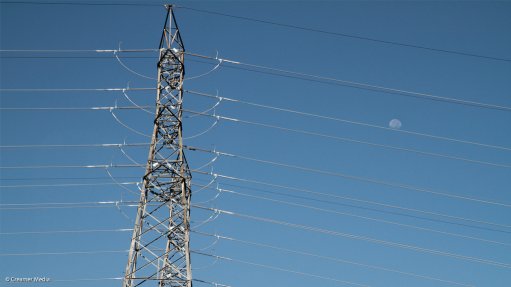
Three Chinese OEMs have confirmed they would be building transformer, wire and pylon manufacturing facilities in South Africa as part of the transmission infrastructure rollout required to support new generation envisioned in the IRP. This indicates progress in strengthening alliances between Chinese entities and the South African market. Access to liquidity and support packages from the Development Bank of Southern Africa, the Industrial Development Corporation and commercial banks further strengthens the country's appeal as a destination for Chinese investment.
Building the case for investment
South Africa's pitch to Chinese investors has been structured around multiple entry points. Eskom Group CE Dan Marokane said investors could expect regulatory certainty, a diversified energy mix, a guaranteed procurement pipeline for generation, storage and transmission, and a local manufacturing opportunity.
The National Transmission Company South Africa highlighted a strategic participation opportunity spanning the value chain, including equity and project investment, EPC and project delivery, technology supply with localisation, manufacturing, and financing partnerships.
Special Economic Zones form part of the incentive architecture. Trade, Industry and Competition Minister Parks Tau highlighted the competitive advantages of South Africa's SEZs, including customs control, proximity to ports and streamlined compliance, alongside cross border SEZs and scalable blended finance.
The IRP 2025 identifies green hydrogen and power to X as areas of comparative advantage, emerging as a tool to decarbonise sectors that cannot be directly electrified. South Africa's energy policy identifies it as essential to the country's low carbon transition, supported by its resources and geopolitical stability.
Legislation has advanced in support of South Africa's ambitions to diversify its energy portfolio. The Minister of Electricity and Energy recently introduced to the National Assembly the long-awaited Gas Bill, establishing a modernised framework reflecting advancements in gas transportation and storage. The Bill arrives ahead of South Africa's Gas to Power Programme, intended to bridge the gap between coal fired generation and non-dispatchable renewable energy, while strengthening support for green hydrogen as a fuel source.
Agreements taking shape
Two significant agreements have been signed as part of this drive. Sasol entered into an agreement with Chinese company Envision to undertake engineering design work for its e methanol project at Sasolburg, integrating renewable energy, battery storage and electrolyser technology to produce green hydrogen with potential to support e methanol production.
Separately, the National Radioactive Waste Disposal Institute signed a memorandum of understanding with China National Nuclear Corporation, China National Nuclear Corporation Overseas and China Energy Conservation and Environmental Protection Group on radioactive waste management, focusing on disposal of low-level radioactive waste and drawing on Chinese research relating to underground deep geological repository facilities. This comes as South Africa has emphasised that nuclear waste management is critical to its broader nuclear programme.
Many of these deals had been under discussion for several months, and six OEMs had already expressed interest in investing in South Africa before firm commitments began to materialise.
The road ahead
South Africa's engagement with Chinese investors signals its move from energy planning to implementation under the IRP 2025. By connecting generation, transmission, localisation and financing opportunities, government aims to ease capacity constraints while building a more secure, diversified, and lower carbon electricity system supporting security of supply and its long-term commitment to net zero by 2050.
The commitments already announced, including planned manufacturing facilities, legislative reform and agreements in green hydrogen and nuclear waste management, suggest the South Africa China partnership may be an important route for mobilising investment and industrial capability.
The extent of its impact will depend on whether these commitments translate into delivery across the procurement pipeline and transmission infrastructure needed to support new generation capacity.
Article Enquiry
Email Article
Save Article
Feedback
To advertise email advertising@creamermedia.co.za or click here
Projects
Latest Multimedia
Latest News
Showroom
We supply customers with practical affordable solutions for their testing needs. Our products include benchtop, portable, in-line process control...
VISIT SHOWROOM
SafeQuip is a leading distributor and manufacturer of fire safety solutions, offering a comprehensive range of products designed to meet all...
VISIT SHOWROOM
Press Office
Announcements
What's On
Subscribe to improve your user experience...
Option 1 (equivalent of R125 a month):
Receive a weekly copy of Creamer Media's Engineering News & Mining Weekly magazine
(print copy for those in South Africa and e-magazine for those outside of South Africa)
Receive daily email newsletters
Access to full search results
Access archive of magazine back copies
Access to Projects in Progress
Access to ONE Research Report of your choice in PDF format
Option 2 (equivalent of R375 a month):
All benefits from Option 1
PLUS
Access to Creamer Media's Research Channel Africa for ALL Research Reports, in PDF format, on various industrial and mining sectors
including Electricity; Water; Energy Transition; Hydrogen; Roads, Rail and Ports; Coal; Gold; Platinum; Battery Metals; etc.
Already a subscriber?
Forgotten your password?
Receive weekly copy of Creamer Media's Engineering News & Mining Weekly magazine (print copy for those in South Africa and e-magazine for those outside of South Africa)
➕
Recieve daily email newsletters
➕
Access to full search results
➕
Access archive of magazine back copies
➕
Access to Projects in Progress
➕
Access to ONE Research Report of your choice in PDF format
RESEARCH CHANNEL AFRICA
R4500 (equivalent of R375 a month)
SUBSCRIBEAll benefits from Option 1
➕
Access to Creamer Media's Research Channel Africa for ALL Research Reports on various industrial and mining sectors, in PDF format, including on:
Electricity
➕
Water
➕
Energy Transition
➕
Hydrogen
➕
Roads, Rail and Ports
➕
Coal
➕
Gold
➕
Platinum
➕
Battery Metals
➕
etc.
Receive all benefits from Option 1 or Option 2 delivered to numerous people at your company
➕
Multiple User names and Passwords for simultaneous log-ins
➕
Intranet integration access to all in your organisation