Ford South Africa calls for level playing field against importers

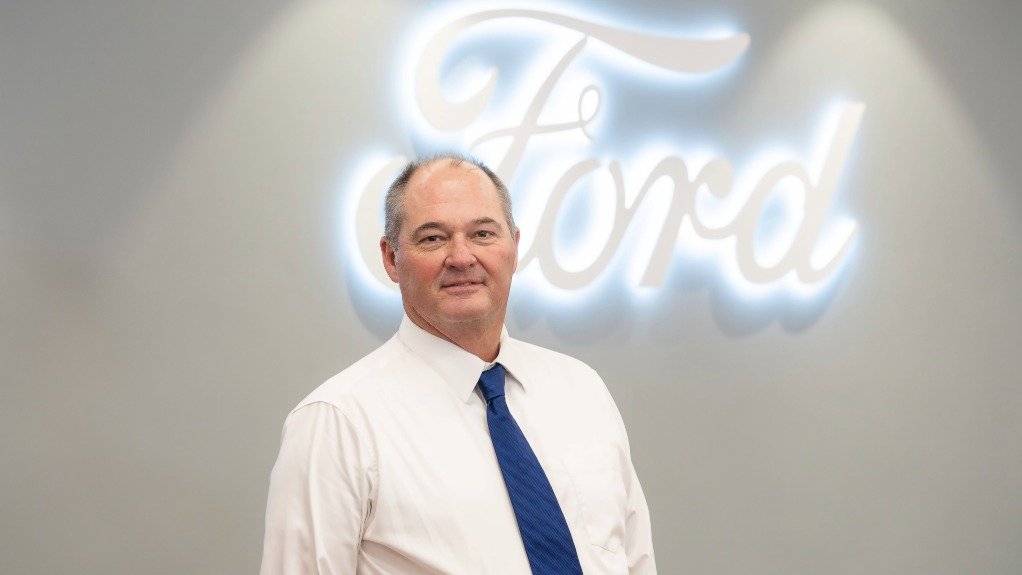



The South African automotive manufacturing industry requires policies and regulations that will allow local manufacturers to compete on equal footing with importers, says Ford Motor Company Africa Operations president Neale Hill.
He says the ongoing refinement of support programmes such as the second phase of government’s Automotive Production and Development Programme (APDP2) must ensure that the companies investing capital in local manufacturing are not placed at a structural disadvantage to importers.
“Local manufacturers build skills and create jobs, so we must get this balance right.
“This is not about protectionism. It is about ensuring that the enormous investments already made in this country, and the investments that are still to come, are not undermined by uneven operating realities.”
Hill says Ford is advocating for a regulatory framework that supports local industrialisation, protects existing investment, and creates the conditions for continued growth.
“For example, look at the current iteration of the APDP. In order to qualify for APDP2 incentives you have to be at level 4 in terms of broad-based black economic empowerment.
“That demands a certain level of investment. When you are an importer, however, you don’t have that hurdle. You need an import licence, and nothing more.”
Hill adds that the APDP requires vehicle manufacturers to hold a particular level of employment throughout a model’s lifecycle.
“This means that you can’t explore efficiencies when you are forced to adapt, for example – not that we are looking to reduce our workforce.
“We also have to ask if the 25% import tariff South Africa has in place on vehicles is actually a true hurdle – especially when you look at Chinese importers, for example.
“Some of these manufacturers are heavily subsidised by their national and/or provincial governments.”
The current APDP also allows for the trading of production credits, with manufacturers able to use their credits to import the models they do not produce here at a lower cost.
With demand for their vehicles falling in the face of stiff competition from the Chinese and Indian brands, however, some manufacturers are trading these credits to vehicle importers.
“There need to be measures put in place that will control the trading of production credits,” says Hill.
“It should be utilised in such a way that it is beneficial to South Africa’s vehicle manufacturers.”
Hill says Ford is also advocating that there should be no benefits attached to semi-knockdown assembly in South Africa, as this manufacturing set-up uses very little local parts content.
“South Africa needs completely knockdown assembly, nothing less.”
Another aspect where Hill believes local manufacturers are losing out is that they are not receiving any benefits for investing in the assembly of new-energy vehicles (NEVs).
“This is true for our plug-in hybrid Ranger, for Toyota, for Mercedes-Benz and for BMW and the NEV models we all produce here,” says Hill.
“There is no local stimulus under the APDP that will return some part of that investment. We have been talking about it since 2024, with no progress.
“The reality is that we have to start becoming very obsessed about the speed with which we are not moving.”
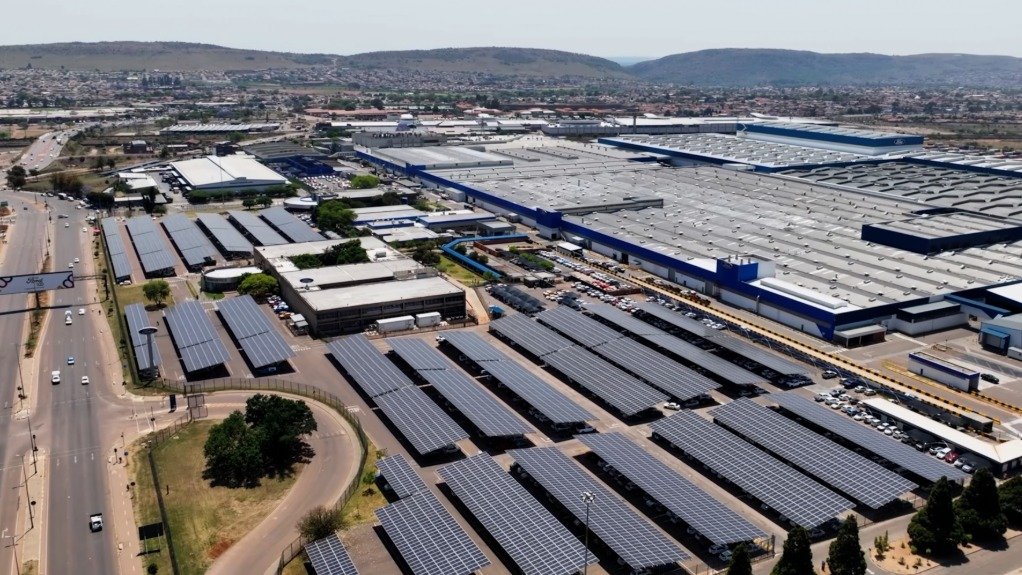
Hill says Ford, which has been in South Africa for 103 years, has invested nearly R33-billion in its local manufacturing operations over the past 14 years.
The company’s Silverton assembly plant in Pretoria was recently recognised as the best-quality Ranger bakkie production plant in Ford’s global manufacturing system.
Ford directly employs around 5 000 people across its Silverton and Struandale engine plant manufacturing operations.
Government and the local auto sector are in talks about APDP2 2.0, with industry hopeful of an announcement that will boost the local manufacturing sector before the end of the year.
The domestic sales of locally made vehicles have been declining steadily in favour of rapidly increasing imports, especially over the last two years. Export sales from the local industry have also been shrinking as South Africa’s traditional export-market-strongholds in Europe are increasingly turning to NEVs and imports from China.
Article Enquiry
Email Article
Save Article
Feedback
To advertise email advertising@creamermedia.co.za or click here
Projects
Latest Multimedia
Latest News

Showroom
The Aluminium Federation of South Africa (AFSA), is the voice of the South African aluminium industry.
VISIT SHOWROOM
TEBA is a trusted workforce solutions partner to the mining and industrial sectors, providing end-to-end SLP compliant recruitment, candidate...
VISIT SHOWROOM


Press Office
Announcements
What's On
Subscribe to improve your user experience...
Option 1 (equivalent of R125 a month):
Receive a weekly copy of Creamer Media's Engineering News & Mining Weekly magazine
(print copy for those in South Africa and e-magazine for those outside of South Africa)
Receive daily email newsletters
Access to full search results
Access archive of magazine back copies
Access to Projects in Progress
Access to ONE Research Report of your choice in PDF format
Option 2 (equivalent of R375 a month):
All benefits from Option 1
PLUS
Access to Creamer Media's Research Channel Africa for ALL Research Reports, in PDF format, on various industrial and mining sectors
including Electricity; Water; Energy Transition; Hydrogen; Roads, Rail and Ports; Coal; Gold; Platinum; Battery Metals; etc.
Already a subscriber?
Forgotten your password?
Receive weekly copy of Creamer Media's Engineering News & Mining Weekly magazine (print copy for those in South Africa and e-magazine for those outside of South Africa)
➕
Recieve daily email newsletters
➕
Access to full search results
➕
Access archive of magazine back copies
➕
Access to Projects in Progress
➕
Access to ONE Research Report of your choice in PDF format
RESEARCH CHANNEL AFRICA
R4500 (equivalent of R375 a month)
SUBSCRIBEAll benefits from Option 1
➕
Access to Creamer Media's Research Channel Africa for ALL Research Reports on various industrial and mining sectors, in PDF format, including on:
Electricity
➕
Water
➕
Energy Transition
➕
Hydrogen
➕
Roads, Rail and Ports
➕
Coal
➕
Gold
➕
Platinum
➕
Battery Metals
➕
etc.
Receive all benefits from Option 1 or Option 2 delivered to numerous people at your company
➕
Multiple User names and Passwords for simultaneous log-ins
➕
Intranet integration access to all in your organisation