Mandela Foundation wants voters to demand action on GBVF ahead of elections

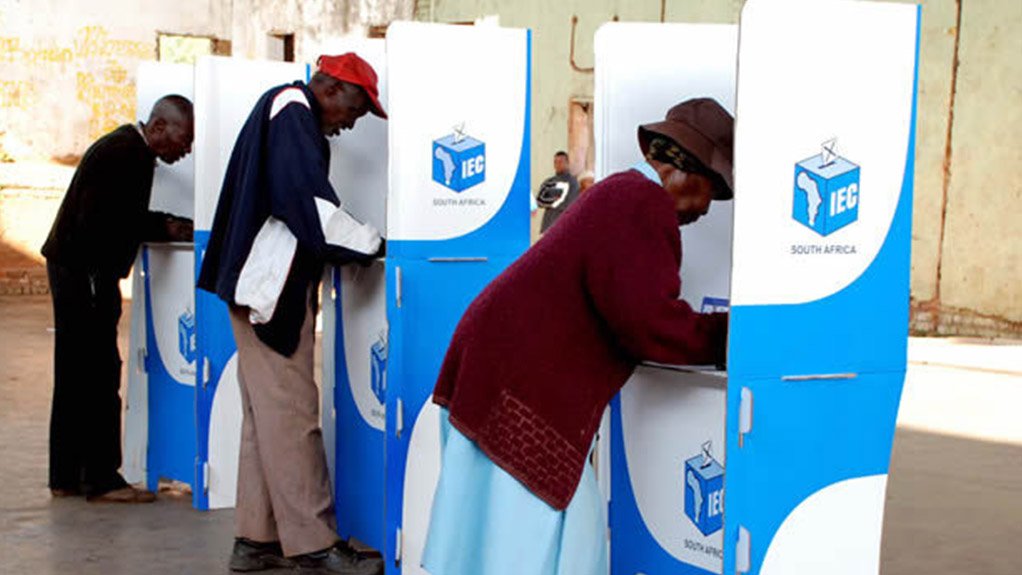


As South Africa approaches the upcoming local government elections, citizens are being urged to leverage their vote as a tool for “profound social change”.
The Nelson Mandela Foundation has issued a call to action, reminding the electorate that the ballot box is not the end of democratic duty, but rather the beginning of sustained, active citizenship.
With public office seekers hitting the campaign trail, the foundation emphasised that voters have a “vital opportunity” to interrogate candidates on how they plan to build safer communities, restore functioning institutions and protect core constitutional rights.
"Our responsibility, however, does not begin and end at the ballot box," the Foundation stated. "Democracy requires active citizenship: holding institutions accountable, challenging injustice in our communities and recognising our own role in building a society in which constitutional rights can be lived."
At the heart of the foundation’s call for accountability is the ongoing crisis of gender-based violence and femicide (GBVF). Nearly a year after the government classified GBVF as a national disaster, serious questions remain regarding the efficacy and funding of the State's intervention.
The foundation noted that the initial classification was the acknowledgment that violence against women and children in South Africa is both persistent and systemic, demanding a coordinated response across all sectors of society. By law, this status mandates affected organs of State to report on their progress and places the responsibility of coordination on the national executive.
However, the foundation noted that public declarations have not yet translated into change.
"Serious questions remain about whether the response has been adequately resourced. Concerns about funding have persisted since the classification, including questions about what additional resources have been made available to give practical effect to it," it explained.
South Africans have a right to know what has materially changed, where implementation is falling short, and what corrective measures are being deployed to bridge the gaps, the foundation stressed.
While the establishment of the National Council on Gender-Based Violence and Femicide and recent emergency measures in Ekurhuleni are recognised as important milestones, institutional setups are no longer enough, it added.
The foundation warned against a reactive system that only intensifies when “horrific” cases dominate the news cycle.
Nelson Mandela Foundation chief executive Dr Mbongiseni Buthelezi stressed that the impact must be felt on the ground.
"South African women cannot be expected to measure progress in the fight against GBVF only by the establishment of councils and the issuing of declarations. They have to be able to feel that something is changing in their homes, communities, police stations, courts, workplaces and places of learning," he said.
The scale of the crisis is illustrated by recent data. According to figures from the South African Police Service, a staggering 50 511 GBVF cases were reported during the 2025/26 financial year.
Solving this crisis requires moving beyond policing after the fact, the foundation said, adding that it demands a sustained, multi-pronged approach that targets prevention, justice, survivor support, education, and deep-seated cultural attitudes.
Buthelezi noted that government or foundational work cannot solve this alone; it requires a collective societal shift.
"It requires men to challenge other men," Buthelezi said. "It requires all of us to stop protecting perpetrators because they are our relatives, friends, colleagues or community leaders, and to listen to and support survivors."
As the country heads to the polls, South Africa cannot afford to be a society that only expresses outrage when a tragedy captures national attention, he said.
“True democracy requires voters to demand transparency, resource allocation, and a tangible shift toward safety before casting their ballots,” Buthelezi stated.
Article Enquiry
Email Article
Save Article
Feedback
To advertise email advertising@creamermedia.co.za or click here

Projects

Latest Multimedia

Latest News


Showroom
Supplier & Distributor of the Widest Range of Accurate & Easy-to-Use Alcohol Breathalysers
VISIT SHOWROOM
Established in 1933, EKATO is the world leader in agitation technology, supplying agitators for processes and applications such as chemicals and...
VISIT SHOWROOM


Press Office
Announcements
What's On
Subscribe to improve your user experience...
Option 1 (equivalent of R125 a month):
Receive a weekly copy of Creamer Media's Engineering News & Mining Weekly magazine
(print copy for those in South Africa and e-magazine for those outside of South Africa)
Receive daily email newsletters
Access to full search results
Access archive of magazine back copies
Access to Projects in Progress
Access to ONE Research Report of your choice in PDF format
Option 2 (equivalent of R375 a month):
All benefits from Option 1
PLUS
Access to Creamer Media's Research Channel Africa for ALL Research Reports, in PDF format, on various industrial and mining sectors
including Electricity; Water; Energy Transition; Hydrogen; Roads, Rail and Ports; Coal; Gold; Platinum; Battery Metals; etc.
Already a subscriber?
Forgotten your password?
Receive weekly copy of Creamer Media's Engineering News & Mining Weekly magazine (print copy for those in South Africa and e-magazine for those outside of South Africa)
➕
Recieve daily email newsletters
➕
Access to full search results
➕
Access archive of magazine back copies
➕
Access to Projects in Progress
➕
Access to ONE Research Report of your choice in PDF format
RESEARCH CHANNEL AFRICA
R4500 (equivalent of R375 a month)
SUBSCRIBEAll benefits from Option 1
➕
Access to Creamer Media's Research Channel Africa for ALL Research Reports on various industrial and mining sectors, in PDF format, including on:
Electricity
➕
Water
➕
Energy Transition
➕
Hydrogen
➕
Roads, Rail and Ports
➕
Coal
➕
Gold
➕
Platinum
➕
Battery Metals
➕
etc.
Receive all benefits from Option 1 or Option 2 delivered to numerous people at your company
➕
Multiple User names and Passwords for simultaneous log-ins
➕
Intranet integration access to all in your organisation