SAHRC releases inquiry report into the state of water sector in Gauteng

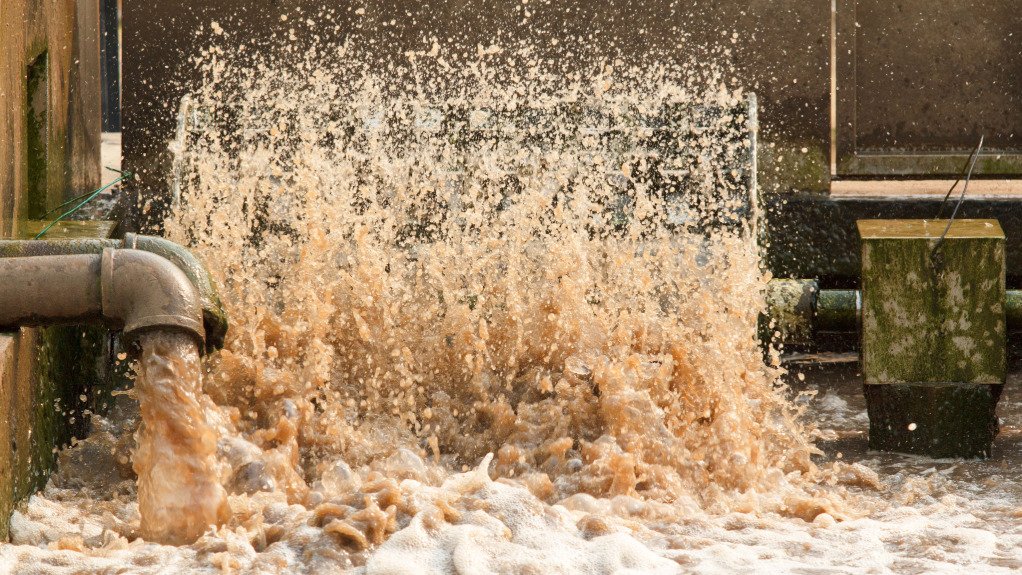


The South African Human Rights Commission’s (SAHRC’s) Gauteng provincial office on Monday released its 'Inquiry Report into the State of Water and Sanitation Service Delivery in Gauteng', outlining its findings into the province’s water challenges.
The commission held the investigative inquiry from May 19 to 21 to probe the sustained and deepening water crisis characterised by persistent shortages, intermittent supply, infrastructure failures, ageing and poorly maintained systems, contamination risks, governance failures and inadequate emergency response mechanisms.
This followed persistent and recurring complaints concerning water and sanitation service delivery across Gauteng.
The inquiry found that Gauteng currently has sufficient water resources available to meet demand, and that its water supply challenges relate to interconnected failures across the water-services value chain.
These include ageing and deteriorating infrastructure, high water losses, inadequate maintenance, insufficient storage and pumping capacity, electricity interruptions, wastewater treatment failures, bulk-water failures and weaknesses within municipal distribution systems. technical skills shortages and financial constraints.
SAHRC commissioner Dr Henk Boshoff said that amid these failures, responsibility must be assessed across the water-services value chain.
“Municipalities, bulk-water providers, electricity providers and national and provincial departments must exercise their respective mandates. Effective accountability requires responsibility to be identified at the point where the relevant failure, decision or omission occurred.”
The inquiry identified significant governance and institutional constraints affecting the sustainable provision of water and sanitation services.
“Several municipalities experience critical shortages of engineers, scientists, process controllers, artisans and other technical personnel required to operate and maintain water and wastewater infrastructure. Financial-management weaknesses are similarly significant, including unresolved unauthorised, irregular and fruitless and wasteful expenditure and, in some municipalities, financial distress affecting their ability to maintain basic services.”
The report indicated that accountability is further complicated by the fragmented nature of the water-services value chain, with municipalities remaining responsible for providing water and sanitation services to communities, yet the causes of service failures potentially arising within bulk-water infrastructure, electricity supply, water-resource management or other functions performed by different institutions.
In addition, the SAHRC identified the emergence of what it called a “road-based water distribution network” in parts of Gauteng, a trend that has become a recurring component of ordinary water provision.
“Road-based water distribution network refers to the recurring delivery of potable water by vehicle, either directly to communities or to static communal tanks, as part of the municipality's ongoing system for providing access to water.”
Water tankers and static communal tanks are meant to be temporary emergency measures used during interruptions to ordinary piped supply.
The commission cautioned against the normalisation of tankers for water provision or the entrenchment of an inferior permanent level of service and stated that municipalities should progressively plan for conventional water-services infrastructure where reasonably feasible.
RECOMMENDATIONS
To remedy the situation, the SAHRC made eight overarching recommendations, supported by specific implementation measures, institutional responsibilities and reporting timeframes, involving 19 State and sector institutions, including all nine Gauteng water services authorities.
The recommendations include the development of a prioritised programme for the recovery of failing and at-risk wastewater treatment systems, based on the severity and urgency of the risks posed to human health, water resources and downstream users.
“The commission also recommends that Gauteng municipalities, Rand Water and other water services providers work with the South African Police Service (SAPS) to protect water and sanitation infrastructure against theft, vandalism and deliberate damage.”
This includes identifying vulnerable infrastructure and high-risk areas, sharing relevant information with SAPS, and implementing appropriate security measures.
Other recommendations include measures to strengthen the resilience of Gauteng's bulk-water supply system, including the identification of critical vulnerabilities, improved preventative and predictive maintenance, appropriate redundancy and municipal assessment of whether reservoir storage provides an adequate buffer against foreseeable bulk-water interruptions.
In addition, the commission calls on the national Department of Water and Sanitation, the Gauteng Department of Cooperative Governance and Traditional Affairs and the three metropolitan municipalities to consider developing guidelines for the safe, reliable, accessible and cost-effective operation of road-based water distribution networks while ensuring progressive movement towards sustainable longer-term services.
The commission will monitor the implementation of the recommendations in the report and will communicate publicly on progress made in the implementation of the recommendations.
“The commission calls on all municipalities to move beyond identifying problems and coordinating responses towards implementing measures that result in safer, more reliable and sustainable water and sanitation services for the people of Gauteng.”
Article Enquiry
Email Article
Save Article
Feedback
To advertise email advertising@creamermedia.co.za or click here

Projects
Latest Multimedia

Latest News
Showroom

We supply customers with practical affordable solutions for their testing needs. Our products include benchtop, portable, in-line process control...
VISIT SHOWROOM
North Ridge Pumps is an independent manufacturer of pumps. We have a proven track record for product support and customer service throughout the...
VISIT SHOWROOM

Press Office
Announcements
What's On
Subscribe to improve your user experience...
Option 1 (equivalent of R125 a month):
Receive a weekly copy of Creamer Media's Engineering News & Mining Weekly magazine
(print copy for those in South Africa and e-magazine for those outside of South Africa)
Receive daily email newsletters
Access to full search results
Access archive of magazine back copies
Access to Projects in Progress
Access to ONE Research Report of your choice in PDF format
Option 2 (equivalent of R375 a month):
All benefits from Option 1
PLUS
Access to Creamer Media's Research Channel Africa for ALL Research Reports, in PDF format, on various industrial and mining sectors
including Electricity; Water; Energy Transition; Hydrogen; Roads, Rail and Ports; Coal; Gold; Platinum; Battery Metals; etc.
Already a subscriber?
Forgotten your password?
Receive weekly copy of Creamer Media's Engineering News & Mining Weekly magazine (print copy for those in South Africa and e-magazine for those outside of South Africa)
➕
Recieve daily email newsletters
➕
Access to full search results
➕
Access archive of magazine back copies
➕
Access to Projects in Progress
➕
Access to ONE Research Report of your choice in PDF format
RESEARCH CHANNEL AFRICA
R4500 (equivalent of R375 a month)
SUBSCRIBEAll benefits from Option 1
➕
Access to Creamer Media's Research Channel Africa for ALL Research Reports on various industrial and mining sectors, in PDF format, including on:
Electricity
➕
Water
➕
Energy Transition
➕
Hydrogen
➕
Roads, Rail and Ports
➕
Coal
➕
Gold
➕
Platinum
➕
Battery Metals
➕
etc.
Receive all benefits from Option 1 or Option 2 delivered to numerous people at your company
➕
Multiple User names and Passwords for simultaneous log-ins
➕
Intranet integration access to all in your organisation