SAISC confirms fabricating members being negatively affected by structural steel shortages





The Southern African Institute of Steel Construction (SAISC) has confirmed that its fabricating members have experienced supply constraints following the closure of ArcelorMittal South Africa's Newcastle long-steel operations and is calling for temporary tariff relief as a bridging measure while alternative local supply is developed.
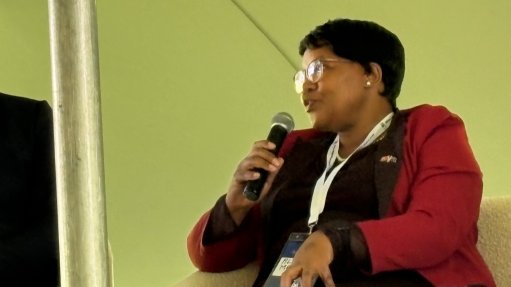
CEO Amanuel Gebremeskel tells Engineering News that the consequences of the closure for the downstream sector have been significant, with shortages of structural steel products having affected the ability of fabricators to price, programme and execute projects with certainty.
“In some cases, members have lost thousands of tonnes of potential fabrication work because of the risk associated with material availability,” he reports.
Project designs have also had to be reconsidered or changed to accommodate available steel, introducing additional engineering, procurement and fabrication costs.
“This is particularly concerning in sectors such as infrastructure, mining, energy, logistics and commercial construction, where certainty of material supply is critical to project planning and delivery.”
A key concern for the downstream industry, Gebremeskel explains, relates largely to timing (see also Call made for extended long-steel rebate coverage amid reports of shortages).
“The loss of Newcastle production capacity coincided with the introduction of additional tariff protection on a range of long structural steel products, at a point when alternative domestic production had not yet developed sufficiently to compensate fully for the resulting market gap.”
Following the first phase of a steel tariff review by the International Trade Administration Commission of South Africa (Itac), general tariffs on several long-steel imports were increased to 10% as from May.
In addition, following a separate anti-dumping investigation, imports of structural steel and steel sections from China and Thailand have, since March, been exposed to antidumping duties of 74.98% and 20.32% respectively.
New tariff rebates have been proposed but have, to date, been implemented on a limited number of tariff subheadings, and Itac has indicated that further rebates may be created only following the completion of the second phase of the tariff review.
Preliminary determinations in relation to new protection measures and new rebates arising from the second phase were Gazetted on September 18, with four weeks set aside for public comment.
For its part, SAISC has called for temporary tariff relief on affected long products as a bridging measure until alternative local supply emerges to adequately service the market.
“We support the development of sustainable domestic steelmaking capacity, but trade protection and localisation objectives need to be balanced against the practical requirements of the downstream industry,” Gebremeskel argues.
“Where particular structural products cannot currently be supplied locally in the required quantities, within commercially reasonable lead times and at the appropriate quality, there needs to be an effective mechanism through which the downstream market can access the material required.”
Gebremeskel believes the availability of steel should be considered using a three-pronged assessment mechanism that considers whether the required product is manufactured in South Africa, whether it is available in the required quantity within a reasonable timeframe, and whether the material meets the required quality, compliance and traceability standards.
“A product being theoretically manufactured domestically does not necessarily mean that it is practically available to a fabricator facing a project delivery deadline.”
Gebremeskel insist that SAISC does not believe that localisation and downstream competitiveness should be viewed as opposing objectives.
“A strong and sustainable domestic steelmaking industry is strategically important to South Africa and to the constructional steel sector.
“At the same time, protection measures need to recognise periods where domestic capacity cannot yet meet the full requirements of the downstream market.
“If fabricators cannot obtain the correct steel, at the required quality and within the timeframe demanded by projects, South Africa risks losing fabrication work and industrial value further downstream.”
He insists that SAISC's objective is a balanced and sustainable steel ecosystem. “One that supports competitive domestic production while ensuring that downstream fabricators have reliable access to the material they need to execute South African and export projects.”
Article Enquiry
Email Article
Save Article
Feedback
To advertise email advertising@creamermedia.co.za or click here
Projects

Latest Multimedia
Latest News
Showroom

Design, Construction and Maintenance of Site Erected, Welded Bulk Storage Tanks for the Petrochemical, LNG, Ammonia and Sustainable fuel Sectors.
VISIT SHOWROOM
Sulzer South Africa, established in 1922, partners with critical industries like power, oil & gas, water, mining, and chemicals to boost...
VISIT SHOWROOM
Press Office
Announcements
What's On
Subscribe to improve your user experience...
Option 1 (equivalent of R125 a month):
Receive a weekly copy of Creamer Media's Engineering News & Mining Weekly magazine
(print copy for those in South Africa and e-magazine for those outside of South Africa)
Receive daily email newsletters
Access to full search results
Access archive of magazine back copies
Access to Projects in Progress
Access to ONE Research Report of your choice in PDF format
Option 2 (equivalent of R375 a month):
All benefits from Option 1
PLUS
Access to Creamer Media's Research Channel Africa for ALL Research Reports, in PDF format, on various industrial and mining sectors
including Electricity; Water; Energy Transition; Hydrogen; Roads, Rail and Ports; Coal; Gold; Platinum; Battery Metals; etc.
Already a subscriber?
Forgotten your password?
Receive weekly copy of Creamer Media's Engineering News & Mining Weekly magazine (print copy for those in South Africa and e-magazine for those outside of South Africa)
➕
Recieve daily email newsletters
➕
Access to full search results
➕
Access archive of magazine back copies
➕
Access to Projects in Progress
➕
Access to ONE Research Report of your choice in PDF format
RESEARCH CHANNEL AFRICA
R4500 (equivalent of R375 a month)
SUBSCRIBEAll benefits from Option 1
➕
Access to Creamer Media's Research Channel Africa for ALL Research Reports on various industrial and mining sectors, in PDF format, including on:
Electricity
➕
Water
➕
Energy Transition
➕
Hydrogen
➕
Roads, Rail and Ports
➕
Coal
➕
Gold
➕
Platinum
➕
Battery Metals
➕
etc.
Receive all benefits from Option 1 or Option 2 delivered to numerous people at your company
➕
Multiple User names and Passwords for simultaneous log-ins
➕
Intranet integration access to all in your organisation