South Africa bets on renewables, but its power grid is not ready

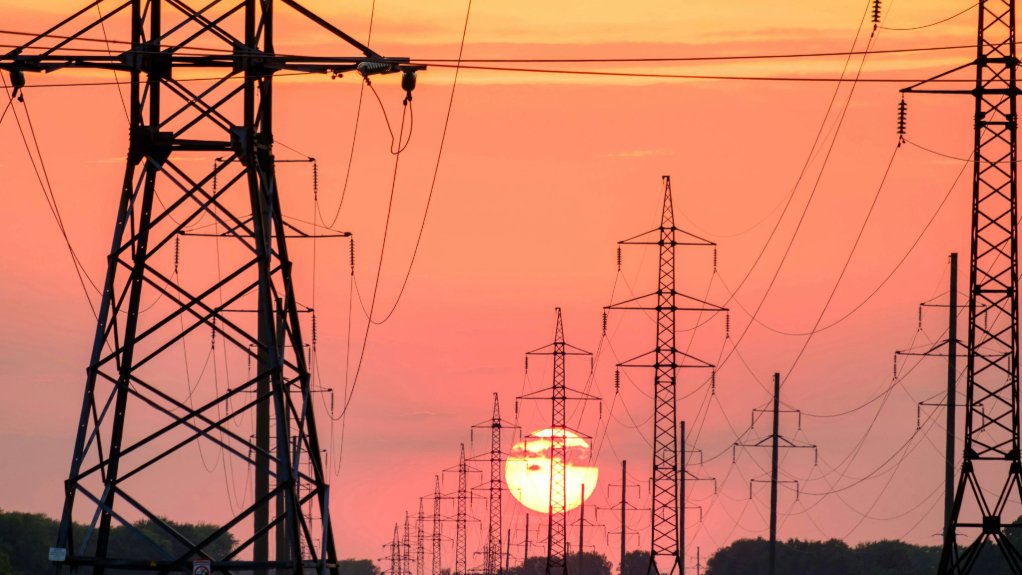


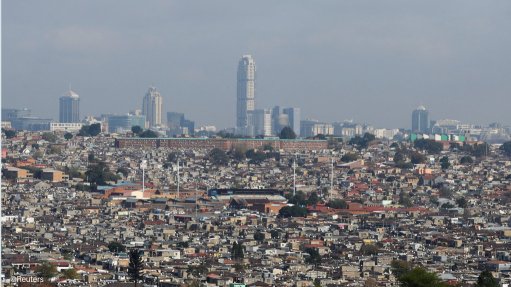
Faced with spiralling energy costs and growing demand, South Africa is investing heavily in green energy, but without enough cables to transmit the power, it faces a 'gridlock' that could stop it reaching its full renewable potential.
President Cyril Ramaphosa opened the latest green energy project last month, a 155 MW wind farm in Mpumalanga province, calling it part of a "clean energy revolution".
"Electricity that is affordable, reliable and increasingly clean is the lifeblood of a growing economy," he said.
South Africa is planning to add 105 gigawatts of generating capacity to the grid by 2039, including through nuclear, wind and solar power - more than doubling its current capacity.
But experts say there is one big impediment; a lack of transmission lines to carry all that energy. Thousands of green energy projects are currently unable to connect to the national grid at all.
"This 'gridlock' is the single biggest hurdle to unleashing the country's renewable potential, creating a significant risk of stalling the green transition and even triggering further electricity and economic crises," Wayne Cowie, CEO at Energy Exchange South Africa, a private sector energy trader, wrote on the company's website in June.
"Grid capacity in most high-resource green energy generation areas has reached saturation, making it difficult to deliver renewable power to those who need it," he said.
To fix this, the government says thousands of kilometres of power lines need to be added to the grid in the next ten years at an estimated cost of R400-billion.
EXTENDING THE GRID
"We need 14 500 km of transmission lines, and we have built on average 200 km a year," Electricity and Energy Minister Kgosientsho Ramokgopa admitted last week.
Asked why it is taking so long, Kevin Mileham, energy spokesperson for South Africa's second-biggest political party, the Democratic Alliance, said part of the delay was due to red tape.
"There's a partnership model that they're looking at to build this part of the grid. They've got to go through a process of appointing these private contractors, so there's a tender process that has to roll out," he said.
Another hurdle is that the components needed are not manufactured locally.
"Many of these things are on back order," he said. "We are going to have to wait two, three years to get some of it."
Ramokgopa was in Beijing last week courting investment and said six Chinese companies had agreed to set up factories in South Africa to manufacture the transformers and pylons needed to support grid expansion.
China, the world's top renewable energy producer, is already a major investor in South Africa's green energy sector. The turbines at the new Mpumalanga wind farm were supplied by a Chinese company.
But in the regions that are best for renewable energy, the sunny northern Cape for solar and the Eastern and Western Cape for wind, there is next to no capacity left on the grid, Mileham said.
"In other areas, for example in Mpumalanga, as we shut down coal plants, grid capacity becomes available," he added. "But it's not the optimal place to add new renewable energy."
UNBUNDLING ESKOM
South Africa has long battled with power shortages due to aging and damaged infrastructure, while the State power utility Eskom has been plagued by mismanagement, financial losses and was for a long time unable to meet demand.
As a result, in 2023 the government introduced daily power cuts known as "load shedding" to conserve electricity, a huge blow to the economy.
That is now largely a thing of the past, partly thanks to homes and businesses installing their own solar, Mileham said.
"The amount of renewable energy we've added to the grid in the last five years or so has offset what we were load shedding," he explained, noting that rooftop solar does not require a grid connection.
Mileham also pointed out that if a mining company built a solar power plant next to a coal mine, "you don't need to transmit that over the transmission infrastructure".
In an effort to fix South Africa's power issues, Ramaphosa this year announced plans to break up Eskom and create a standalone company to run the transmission grid.
Mileham says this is desperately needed, because as it currently stands Eskom is "both player and referee", in the competition against independent power producers for grid access.
But Eskom is pushing back. Last week board chair Mteto Nyati urged the government to delay the transfer of power line assets, warning that otherwise there were major financial risks to the utility.
However, Ramaphosa told industrialists this week that "a competitive electricity market also requires a transmission system that is independent, efficient and capable of providing fair access to all market participants."
Article Enquiry
Email Article
Save Article
Feedback
To advertise email advertising@creamermedia.co.za or click here
Projects
Latest Multimedia
Latest News
Showroom
Supplier & Distributor of the Widest Range of Accurate & Easy-to-Use Alcohol Breathalysers
VISIT SHOWROOM
Established in 1933, EKATO is the world leader in agitation technology, supplying agitators for processes and applications such as chemicals and...
VISIT SHOWROOM
Press Office
Announcements
What's On
Subscribe to improve your user experience...
Option 1 (equivalent of R125 a month):
Receive a weekly copy of Creamer Media's Engineering News & Mining Weekly magazine
(print copy for those in South Africa and e-magazine for those outside of South Africa)
Receive daily email newsletters
Access to full search results
Access archive of magazine back copies
Access to Projects in Progress
Access to ONE Research Report of your choice in PDF format
Option 2 (equivalent of R375 a month):
All benefits from Option 1
PLUS
Access to Creamer Media's Research Channel Africa for ALL Research Reports, in PDF format, on various industrial and mining sectors
including Electricity; Water; Energy Transition; Hydrogen; Roads, Rail and Ports; Coal; Gold; Platinum; Battery Metals; etc.
Already a subscriber?
Forgotten your password?
Receive weekly copy of Creamer Media's Engineering News & Mining Weekly magazine (print copy for those in South Africa and e-magazine for those outside of South Africa)
➕
Recieve daily email newsletters
➕
Access to full search results
➕
Access archive of magazine back copies
➕
Access to Projects in Progress
➕
Access to ONE Research Report of your choice in PDF format
RESEARCH CHANNEL AFRICA
R4500 (equivalent of R375 a month)
SUBSCRIBEAll benefits from Option 1
➕
Access to Creamer Media's Research Channel Africa for ALL Research Reports on various industrial and mining sectors, in PDF format, including on:
Electricity
➕
Water
➕
Energy Transition
➕
Hydrogen
➕
Roads, Rail and Ports
➕
Coal
➕
Gold
➕
Platinum
➕
Battery Metals
➕
etc.
Receive all benefits from Option 1 or Option 2 delivered to numerous people at your company
➕
Multiple User names and Passwords for simultaneous log-ins
➕
Intranet integration access to all in your organisation