World Bank Group reports record mobilisation of private capital for developing countries

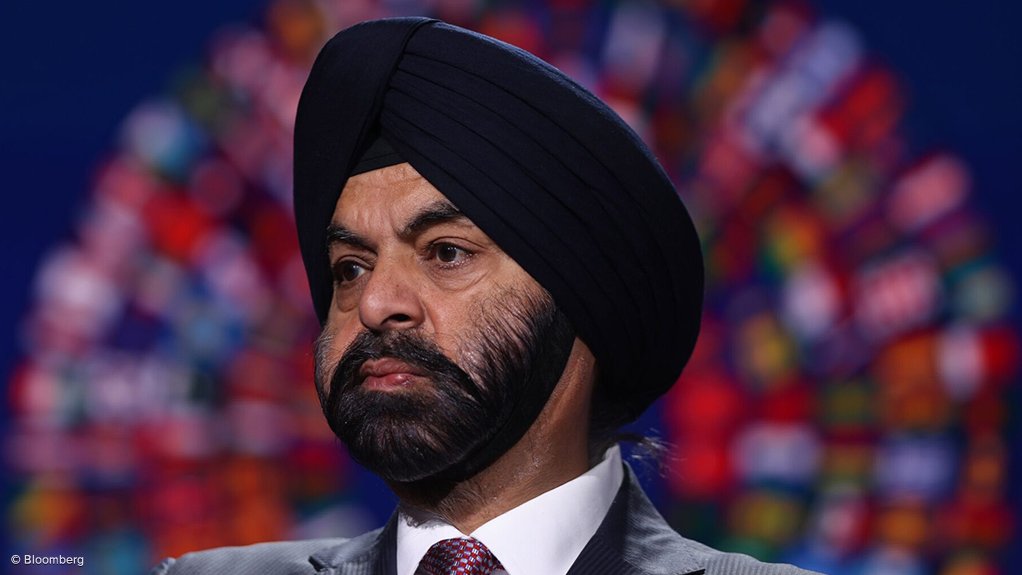



The World Bank Group has announced that, during fiscal year (FY) 2026, it mobilised a greater amount of private capital than it had done in any year since it was set up in 1944. The private capital that it mobilised for financing in developing countries in FY2026 was $112-billion, which was more than 200% greater than the figure for FY2022, which had been $35-billion. Adding direct financing by the World Bank Group itself, and the total funding released to developing countries in FY2026 came to “well over” $200-billion.
The Group also issued a record number of guarantees, totalling $25-billion. This meant that it surpassed its target of issuing guarantees worth $20-billion in a year, by 2030, four years early. This was the achievement of the World Bank Group Guarantee Platform, created in 2024.
“Three years ago, our shareholders and clients were clear: utilise World Bank Group financing and knowledge to mobilise more private capital and become a better partner to the private sector,” highlighted World Bank Group president Ajay Banga. “We changed how we work to do that – faster, simpler, and as one World Bank Group. The result is $112-billion mobilised this year, more than three times where we started. But the number only matters if the capital goes where it can create opportunity and jobs. That is the work ahead: keep removing barriers, keep expanding the pool of investors, and keep driving more capital into developing countries.”
The growth in private capital mobilisation (PCM) to upper-middle-income developing countries went from $12-billion in FY2022 to $50-billion in FY2026, and, in lower-middle-income countries, from $14-billion to $37-billion. The most difficult category, regarding PCM, low-income countries, did not see growth but did not see decline either, with a figure of some $3-billion in both FY2022 and FY2026.
Regarding Africa, the continent saw an almost 150% increase in PCM, from $9-billion to $22-billion.
To achieve this, the World Bank Group brought its public and private sides together, creating single points of contact in each country for the entire group. It started developing strategies for each individual country, based on its development priorities and needs.
The group’s Private Sector Investment Lab assisted in identifying the obstacles slowing private investment in developing countries and developing work plans to deal with them, such as improving the regulatory and business environment, increasing guarantees as well as local-currency financing, dealing with foreign-exchange issues, increasing equity tools, and putting forward new means to allow institutional investors to take part, “at scale”.
The Group’s top priority was job creation. To this end, it focused on five sectors that were job-rich – agribusiness, healthcare, infrastructure and energy, tourism, and value-added manufacturing. During FY2026, 55% of total financing – direct World Bank and PCM – went to these sectors. This finance also reached lower-income economies. The Group’s approach had three pillars, namely to invest in human and physical infrastructure, to create regulatory environments that were business ready, and to assist the private sector to scale.
“The World Bank Group is now working to build on that progress by expanding the range of investors able to participate,” it reported. “The ambition is straightforward: mobilise more capital, from more sources, and put more of it to work creating jobs and economic opportunity.”
Article Enquiry
Email Article
Save Article
Feedback
To advertise email advertising@creamermedia.co.za or click here
Projects

Latest Multimedia

Latest News
Showroom

Iritron delivers advanced automation, control, and optimisation solutions to the Mining, Minerals & Metals, Consumer Package Goods and...
VISIT SHOWROOM

Announcements
What's On
Subscribe to improve your user experience...
Option 1 (equivalent of R125 a month):
Receive a weekly copy of Creamer Media's Engineering News & Mining Weekly magazine
(print copy for those in South Africa and e-magazine for those outside of South Africa)
Receive daily email newsletters
Access to full search results
Access archive of magazine back copies
Access to Projects in Progress
Access to ONE Research Report of your choice in PDF format
Option 2 (equivalent of R375 a month):
All benefits from Option 1
PLUS
Access to Creamer Media's Research Channel Africa for ALL Research Reports, in PDF format, on various industrial and mining sectors
including Electricity; Water; Energy Transition; Hydrogen; Roads, Rail and Ports; Coal; Gold; Platinum; Battery Metals; etc.
Already a subscriber?
Forgotten your password?
Receive weekly copy of Creamer Media's Engineering News & Mining Weekly magazine (print copy for those in South Africa and e-magazine for those outside of South Africa)
➕
Recieve daily email newsletters
➕
Access to full search results
➕
Access archive of magazine back copies
➕
Access to Projects in Progress
➕
Access to ONE Research Report of your choice in PDF format
RESEARCH CHANNEL AFRICA
R4500 (equivalent of R375 a month)
SUBSCRIBEAll benefits from Option 1
➕
Access to Creamer Media's Research Channel Africa for ALL Research Reports on various industrial and mining sectors, in PDF format, including on:
Electricity
➕
Water
➕
Energy Transition
➕
Hydrogen
➕
Roads, Rail and Ports
➕
Coal
➕
Gold
➕
Platinum
➕
Battery Metals
➕
etc.
Receive all benefits from Option 1 or Option 2 delivered to numerous people at your company
➕
Multiple User names and Passwords for simultaneous log-ins
➕
Intranet integration access to all in your organisation