Africa’s growing open access energy markets spark investment opportunities


This article has been supplied and will be available for a limited time only on this website.
By: Alexandra Clüver and Alexandra Felekis - co-heads of the Projects, Energy and Infrastructure Practice, and Busisiwe Nhlapo, partner at African law firm Bowmans
Energy access is essential for economic growth, yet around 560 million people in Africa still live without electricity. Closing this gap comes at a cost of USD 15 billion in annual investments until 2030, according to the International Energy Agency. As energy challenges persist, there is a growing focus on energy infrastructure development, open access regulatory reform and cross-border energy integration, all of which are creating exciting entry points for Africa’s energy sector investors.
Open access frameworks
Open access frameworks are being implemented across Africa, including in South Africa, Kenya, Zambia and Namibia. These frameworks assist in dismantling traditional state-utility monopolies and encourage greater private participation in generation, transmission access, wheeling and energy trading.
As these regulatory markets mature, investment opportunities are opening up, with institutional and infrastructure capital focusing heavily on acquiring de-risked, contracted assets backed by corporate Power Purchase Agreements.
Spotlight on South Africa’s SAWEM transition
In South Africa, Independent Power Producers (IPPs) and private market participants are preparing for the South African Wholesale Electricity Market (SAWEM), the competitive wholesale market contemplated by the Electricity Regulation Amendment Act. SAWEM will operate in a manner analogous to a trading platform and is expected to be active for Eskom trade by early 2027.
The transition is already influencing contracting and operating models, including through increased use of bilateral trading, wheeling arrangements and balance-responsible-party structures.
Administered by the National Transmission Company South Africa, SAWEM is intended to combine bilateral contracting with centrally administered short-term markets, including day-ahead, intra-day and balancing arrangements, as well as regulated procurements (for example, those determined through section 34 of ERA).
The framework introduces rigorous rules where balance responsibility is a prerequisite for grid participation. Market participants must accurately forecast their energy generation and consumption intervals, with penalties imposed for any imbalances between scheduled positions and actual delivery.
The open access framework does not involve an immediate replacement of all existing single-buyer arrangements. Rather, South Africa is moving towards a hybrid, multi-market structure in which legacy and transitional arrangements will coexist with bilateral contracts and competitive wholesale trading.
For investors and market participants, this creates opportunities in generation, trading, aggregation, flexibility and balancing services, but it also introduces new forecasting, credit, settlement and compliance risks that will need to be managed carefully.
Beyond national borders, cross border integration is evolving in a similar way.
Regional integration
Alongside national open access frameworks, the recent energy integration arrangements introduced as part of the Southern African Power Pool (SAPP) have been assisting national energy utilities across the region to coordinate operations and balance local supply and demand.
In late 2025, the World Bank approved the USD 12 million RETRADE SAPP project to expand the regional electricity market and attract private capital for infrastructure development. According to the World Bank's project outline,the initiative aims to increase cross-border renewable energy trade, improve grid reliability and advance the creation of the Africa Single Electricity Market.
The SAPP comprises 12 member countries of the SADC - Angola, Botswana, Democratic Republic of Congo, Eswatini, Lesotho, Malawi, Mozambique, Namibia, South Africa, Tanzania, Zambia and Zimbabwe. It operates a group of competitive regional power markets, ranging from long-term energy trading to short-term markets.
The integrated SAPP system means markets in an energy deficit can import energy during periods of high demand, and those with a surplus of energy can sell it via the integrated grid.
Countries like Zambia and Mozambique, for example, can tap into their successful hydropower generation projects by selling their surplus energy to support their neighbours, ensuring regional energy stability in the process.
However, cross-border trading through the SAPP has struggled with transmission bottlenecks, payment default risks from state-owned utilities and complicated inter-governmental wheeling agreements.
For investors, capitalising on regional integration therefore requires robust credit enhancements, political risk insurance and sophisticated multi-jurisdictional legal structuring to protect capital. They must also navigate different wheeling frameworks, secure complex power purchase agreements, and comply with different regulatory frameworks across national and regional markets.
Further, aging infrastructure, high transmission and distribution losses, and lengthy environmental approval processes all have the potential to stifle the integration of new generation capacity. Massive investment is therefore needed to build transmission networks, transport corridors and supporting infrastructure. Technology infrastructure, including smart grid digitalisation and AI-driven energy supply and demand forecasting tools, for example, is also being implemented to optimise load balancing across regional power pools.
Capital and expertise
Sponsors, lenders, development finance institutions and infrastructure funds are responding by deploying substantial capital into renewable energy, gas-to-power, and energy-transition projects across the continent. This has led to portfolio consolidation, M&A activity and secondary sales of operational renewable projects, which has provided essential liquidity to early-stage sponsors.
Evolving regional power flows are driving new financing, infrastructure and commercial contracting mandates. Building Africa’s energy security requires investment, innovative deal structuring, and specialised legal expertise spanning regulatory compliance, market structuring, project finance, risk mitigation, corporate M&A, commercial contracting, and dispute resolution.
As open-access markets mature and cross-border energy integration deepens across the continent, success will belong to those who are able to master its complex regulatory and structural landscape and ignite Africa’s energy potential.
Article Enquiry
Email Article
Save Article
Feedback
To advertise email advertising@creamermedia.co.za or click here

Projects
Latest Multimedia
Latest News

Showroom
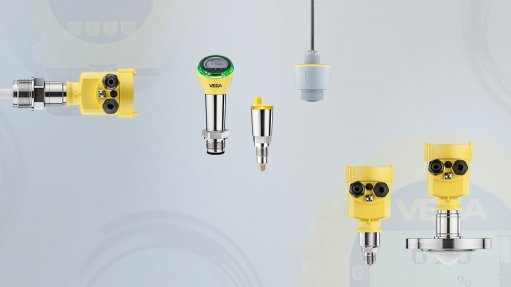
For over 60 years, VEGA has provided industry-leading products for the measurement of level, density, weight and pressure. As the inventor of the...
VISIT SHOWROOM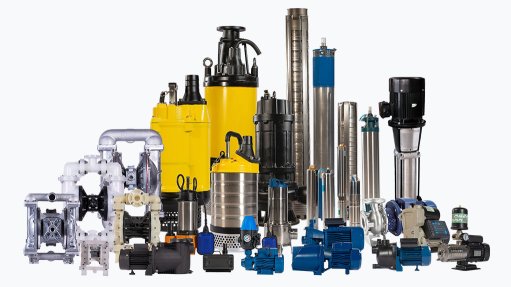
AxFlow AQS Liquid Transfer (Pty) Ltd is an Importer and Distributor of Pumps in Southern Africa
VISIT SHOWROOM
Press Office
Announcements
What's On
Subscribe to improve your user experience...
Option 1 (equivalent of R125 a month):
Receive a weekly copy of Creamer Media's Engineering News & Mining Weekly magazine
(print copy for those in South Africa and e-magazine for those outside of South Africa)
Receive daily email newsletters
Access to full search results
Access archive of magazine back copies
Access to Projects in Progress
Access to ONE Research Report of your choice in PDF format
Option 2 (equivalent of R375 a month):
All benefits from Option 1
PLUS
Access to Creamer Media's Research Channel Africa for ALL Research Reports, in PDF format, on various industrial and mining sectors
including Electricity; Water; Energy Transition; Hydrogen; Roads, Rail and Ports; Coal; Gold; Platinum; Battery Metals; etc.
Already a subscriber?
Forgotten your password?
Receive weekly copy of Creamer Media's Engineering News & Mining Weekly magazine (print copy for those in South Africa and e-magazine for those outside of South Africa)
➕
Recieve daily email newsletters
➕
Access to full search results
➕
Access archive of magazine back copies
➕
Access to Projects in Progress
➕
Access to ONE Research Report of your choice in PDF format
RESEARCH CHANNEL AFRICA
R4500 (equivalent of R375 a month)
SUBSCRIBEAll benefits from Option 1
➕
Access to Creamer Media's Research Channel Africa for ALL Research Reports on various industrial and mining sectors, in PDF format, including on:
Electricity
➕
Water
➕
Energy Transition
➕
Hydrogen
➕
Roads, Rail and Ports
➕
Coal
➕
Gold
➕
Platinum
➕
Battery Metals
➕
etc.
Receive all benefits from Option 1 or Option 2 delivered to numerous people at your company
➕
Multiple User names and Passwords for simultaneous log-ins
➕
Intranet integration access to all in your organisation