ARC Ride launches electric Panther motorbike with battery swapping tech in SA

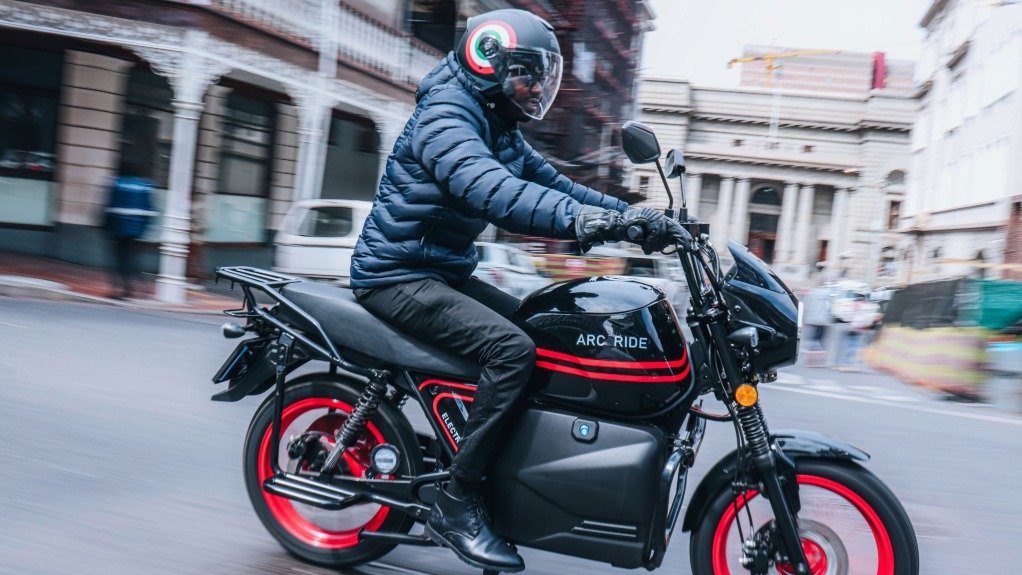
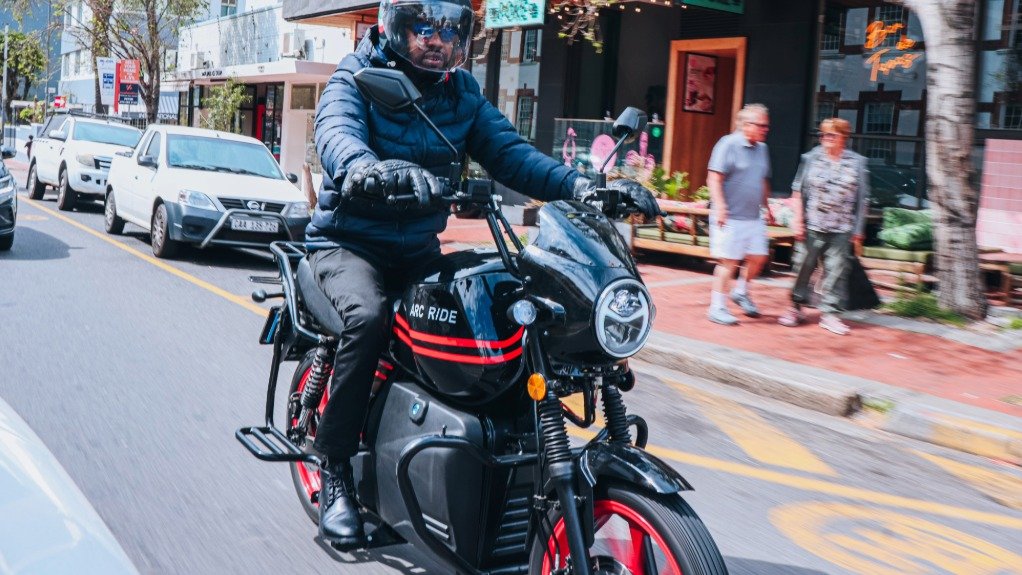
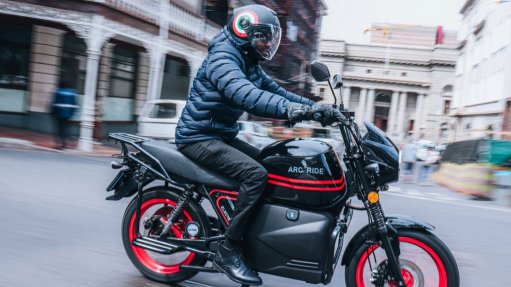
The Panther electric motorcycle
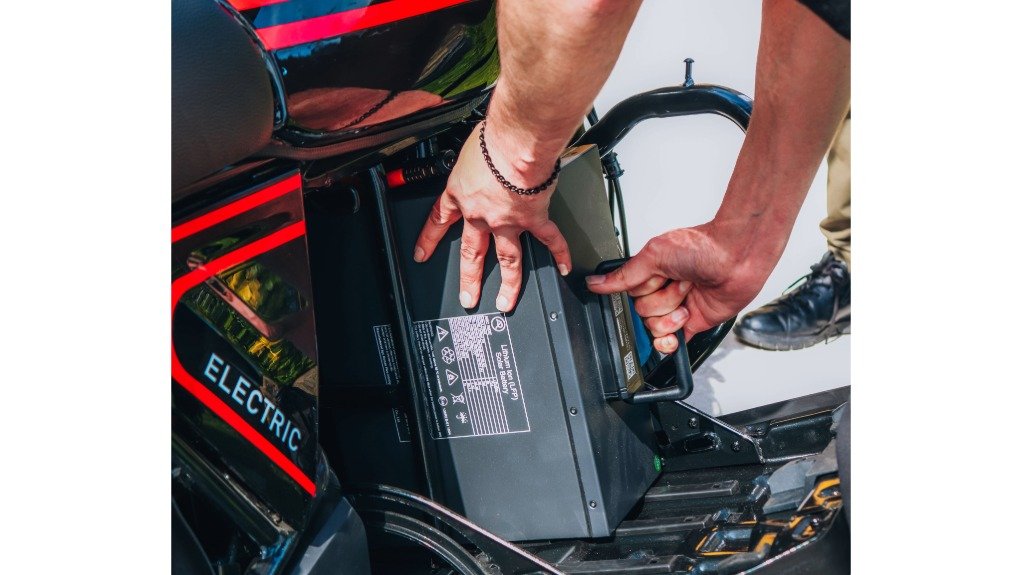
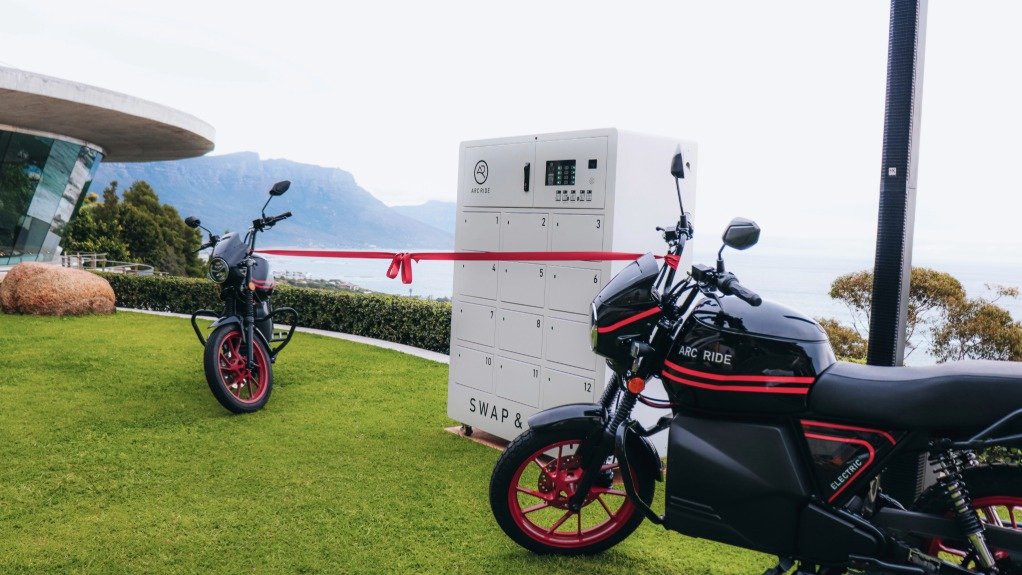
The motorbike comes with battery swapping technology


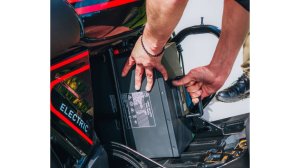
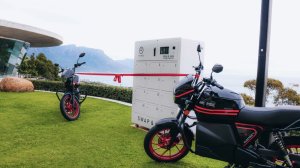


ARC Ride has launched its Panther electric motorcycle in South Africa, with the roll-out starting in Gauteng and the Western Cape.
The Kenya-based company believes the purpose-built vehicle and its associated battery-swapping network will boost the take-home earnings of commercial last-mile riders – hit by high fuel prices and maintenance costs – by up to 20%.
ARC Ride is confident that it can achieve this through its battery-as-a-service (BaaS) model.
Rather than purchasing batteries or charging them at home, drivers exchange depleted batteries for fully charged units at dedicated swap stations and ARC hubs.
With petrol at roughly R27 a litre (September’s price), the costs for a conventional 125 cc commercial motorcycle to travel 100 km comes to more than R59 in fuel alone.
Within the ARC ecosystem, a fully depleted battery costs R50 to swap for up to 110 km of range, working out to roughly R45.45 per 100 km, which is about 23% less, says ARC Ride South Africa (SA).
Partially depleted batteries are also only charged on a pro-rata basis according to the energy used, much like filling up a partially empty fuel tank.
ARC Ride SA’s internal fleet operating data puts the combined effect of fuel savings, combined with an up to 40% reduction in maintenance expenses, at up to 20% of a rider’s total weekly operational expenses.
“There is a human on that bike doing a tough job every day,” says ARC Ride SA MD Mikael Cloete.
“We engineered the Panther specifically for durability, safety and operational efficiency, ensuring the unit-economics allow riders to increase their net weekly earnings.”
The Panther is priced from R22 500 (including VAT), and, with rental and lease options available from ARC Ride fleet partners in Gauteng and the Western Cape, ARC Ride SA believes acquiring an electric Panther will cost no more than a conventional petrol motorcycle.
Equipped with a 5 kW continuous-output motor that delivers up to 10 kW of peak power when required, ARC Ride SA also believes that the Panther can handle both the steep urban inclines and heavy loads often seen in South Africa.
The bike’s heavy-duty chassis is built to support a payload of up to 292 kg, while standard safety features include hydraulic disc brakes, a combined braking system and full LED lighting.
Beyond rider profits, the Panther also addresses the environmental impact of traditional delivery fleets.
Conventional petrol delivery motorcycles emit roughly 50.5 g of CO2 per kilometre, while electric motorcycles produce zero tailpipe emissions.
Electric motorcycles also operate almost silently, eliminating the noise of traditional 125 cc engines.
From Kenya to SA
“ARC Ride was established in Kenya, which remains our most mature market,” Cloete tells Engineering News.
“South Africa represents the expansion of the ARC Ride model into a new market, alongside our broader growth across Africa.”
Cloete adds that the Panther was designed and developed by ARC Ride specifically to integrate with its battery-technology and swapping ecosystem.
“We source components through established global suppliers, predominantly in China, and consolidate production through our manufacturing partner before the motorcycles are shipped to South Africa for final assembly at our Cape Town facility at Paarden Eiland.
“While China forms an important part of our supply chain, the Panther is not an off-the-shelf Chinese motorcycle that we import, assemble and rebrand.”
“The easiest way to understand the ARC Ride ecosystem is through three interconnected elements: the vehicle platform, currently the Panther (with additional vehicle types to follow), the energy infrastructure, and the technology platform,” adds Cloete.
“We sell the Panther without transferring ownership of the batteries to the customer.
“ARC retains ownership of the batteries and riders access energy through our battery-swapping network.”
Cloete adds that the Western Cape government supported ARC Ride in navigating local regulatory approvals, completing vehicle registration, the homologation process and compliance requirements within months.
“Africa is coming into its own, and we love to see businesses invest here with a clear African strategy,” said Western Cape Premier Alan Winde at the launch event in September.
“Moving commuting and delivery fleets onto electric two-wheelers helps reduce our carbon footprint and ease congestion in one of the world’s most congested cities, while also creating vital local jobs.”
ARC Ride SA employs 30 people, including nine at its assembly facility.
“We procure locally wherever practical,” says Cloete.
“This currently includes South African manufactured steel brackets used to mount our delivery boxes, as well as the plastic delivery boxes themselves, which are manufactured and sourced locally.”
12-Month Target
ARC Ride SA officially launched in Cape Town on September 10.
Since then, the company has deployed around 200 motorcycles, with this number increasing in controlled phases, with the company closely monitoring the performance of the broader ecosystem as it scales, says Cloete.
“Our 12-month target is 5 000 motorcycles on the road in South Africa.”
South Africa is a very different motorcycle market to Kenya and many other African countries, notes Cloete.
“Motorcycle adoption relative to our population remains low. Culturally, we simply haven’t grown up with a motorcycle-dominated transport market.
“Across many African markets, however, the motorcycle effectively replaces the car as an everyday mode of transport.
“It is used for personal mobility, commercial transport and, very commonly, as a motorcycle taxi – often referred to as a boda boda. In these more mature motorcycle markets, volumes are consequently significantly higher.
“ARC Ride continues to sustain strong growth in Kenya, which remains our most mature market,” notes Cloete.
“Our next major milestone there is reaching 10 000 active vehicles on the road, supported by the continued expansion of our battery-swapping network and energy infrastructure.”
South Africa’s current use-case is more concentrated around last-mile delivery, which means the immediate addressable market is smaller.
“There is no fundamental reason why motorcycles cannot play a much larger role in South African mobility over time, as they already do elsewhere on the continent. We have simply started that journey later,” says Cloete.
That said, ARC Ride’s current primary target market in South Africa is fleet owners, operators and enterprise-level fleets that can help it achieve scale and accelerate the adoption of electric mobility.
“That is not to say the individual rider does not matter to ARC Ride – they absolutely do,” says Cloete.
“However, if we want to make a meaningful impact and genuinely lead the charge, we need the support of established players already operating at scale.
“Many of these partners offer rental and rent-to-own models to riders, which creates an accessible pathway into electric mobility without requiring the rider to carry the full upfront cost of purchasing a vehicle.”
The Next Five Years
“Over the next five years, our ambition is broader – to build a leading market position and an interoperable vehicle ecosystem where other motorcycle manufacturers can integrate with ARC Ride and use our BaaS platform in their own products, something we are already piloting elsewhere in Africa,” says Cloete.
“Importantly, growth is not only measured in vehicles.
“The ecosystem creates an entirely new employment pipeline across battery repair, servicing and maintenance, infrastructure, technology and operations.
“Building sustainable employment alongside sustainable mobility is a key part of our long-term vision.”
Article Enquiry
Email Article
Save Article
Feedback
To advertise email advertising@creamermedia.co.za or click here
Projects

Latest Multimedia
Latest News
Showroom
The Beneficiation Academy is a certified training institution that follows all compliance legislation and is accredited with various Sector...
VISIT SHOWROOM
Industrial Nozzles & Systems (Pty) Ltd (Est. 2000) exclusive representative in Southern Africa for LECHLER GmbH (Est. 1879) - Europe's leading...
VISIT SHOWROOM

Press Office
Announcements
What's On
Subscribe to improve your user experience...
Option 1 (equivalent of R125 a month):
Receive a weekly copy of Creamer Media's Engineering News & Mining Weekly magazine
(print copy for those in South Africa and e-magazine for those outside of South Africa)
Receive daily email newsletters
Access to full search results
Access archive of magazine back copies
Access to Projects in Progress
Access to ONE Research Report of your choice in PDF format
Option 2 (equivalent of R375 a month):
All benefits from Option 1
PLUS
Access to Creamer Media's Research Channel Africa for ALL Research Reports, in PDF format, on various industrial and mining sectors
including Electricity; Water; Energy Transition; Hydrogen; Roads, Rail and Ports; Coal; Gold; Platinum; Battery Metals; etc.
Already a subscriber?
Forgotten your password?
Receive weekly copy of Creamer Media's Engineering News & Mining Weekly magazine (print copy for those in South Africa and e-magazine for those outside of South Africa)
➕
Recieve daily email newsletters
➕
Access to full search results
➕
Access archive of magazine back copies
➕
Access to Projects in Progress
➕
Access to ONE Research Report of your choice in PDF format
RESEARCH CHANNEL AFRICA
R4500 (equivalent of R375 a month)
SUBSCRIBEAll benefits from Option 1
➕
Access to Creamer Media's Research Channel Africa for ALL Research Reports on various industrial and mining sectors, in PDF format, including on:
Electricity
➕
Water
➕
Energy Transition
➕
Hydrogen
➕
Roads, Rail and Ports
➕
Coal
➕
Gold
➕
Platinum
➕
Battery Metals
➕
etc.
Receive all benefits from Option 1 or Option 2 delivered to numerous people at your company
➕
Multiple User names and Passwords for simultaneous log-ins
➕
Intranet integration access to all in your organisation