Eskom to outline case for coal life extensions before year-end following fleet and system reviews

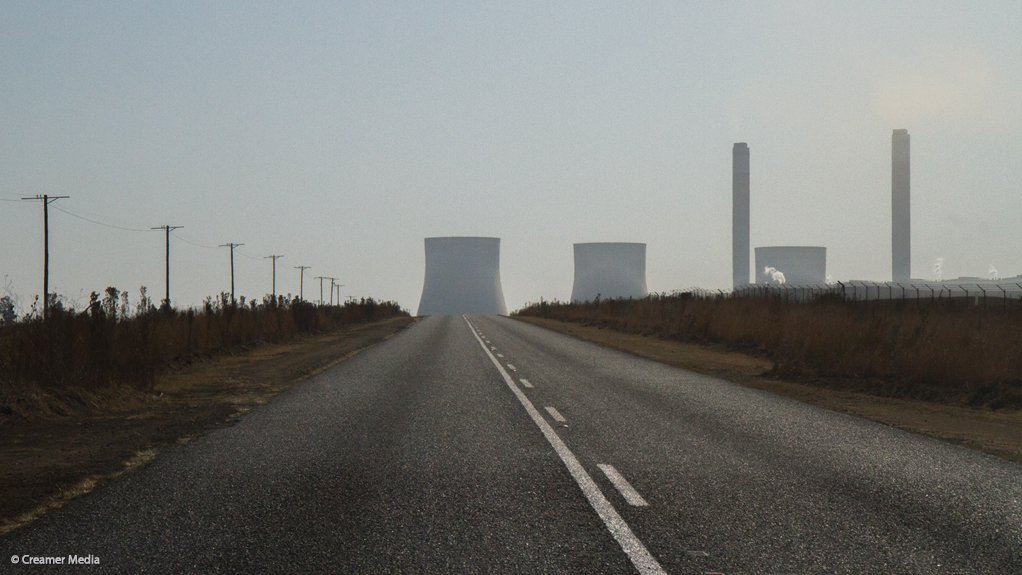


Electricity and Energy Minister Kgosientsho Ramokgopa has confirmed that a review of the country’s coal fleet had been undertaken by Eskom and his department to assess which of the power stations currently slated for retirement in 2030 should be operated for longer to sustain system stability.
Engineering News & Mining Weekly has learned that Eskom, which initially signalled that the outcome of the review would be published in September, will release the findings of the assessment before year-end.
The review outcome follows the recent publication of the Medium-Term System Adequacy Outlook 2027–2036 by the National Transmission Company South Africa (NTCSA), which says adequacy over the period is conditional on fleet performance and the timely delivery of generation, storage, flexibility and grid upgrades. It also notes that the risks increase in the absence of progress on gas-to-power and storage.
In a conference address this week, the Minister said: “The department, working with Eskom, is reviewing the coal fleet on its merits. On its own merits, some stations may have a case for longer operation, and others will retire.”
Any decision to extend the life of certain coal plants “would reflect plant condition, costs, and the applicable environmental requirements” and would be taken in the national interest and to preserve system adequacy.
Much of Eskom’s coal fleet is currently operating with exemptions to South Africa’s legally prescribed minimum emission standards, while five stations (Grootvlei, Arnot, Camden, Hendrina and Kriel) were granted a suspension decision in 2024 on the expectation that the plants would cease to operate beyond March 31, 2030.
At power stations with exemption decisions (Kendal, Duvha, Matla, Matimba, Medupi, Lethabo, Majuba and Tutuka), Eskom was expected to undertake projects to enable the facilities to comply with their atmospheric emission licence conditions.
In his speech, Ramokgopa underline the importance of coal to the South African economy and stated that it would be irresponsible to allow the country to return to supply instability “when we have such an endowment”.
“There should not be just an obsession of closing down the coal-fired power stations – we accept that responsibility, and the pace and scale we will announce to the country.”
This view was reinforced by Eskom chairperson Mteto Nyati who told the same conference that the 2030 timeline for the retirement of certain coal stations posed a risk to security of supply.
“We have just come back from a situation where we had a problem around energy security. We cannot just make those decisions of retiring power stations that still have maybe another ten years of life,” Nyati said.
Speaking to Engineering News & Mining Weekly on the sidelines of the conference Eskom CEO Dan Marokane said the review was currently being progressed through governance processes and would be released before the end of the year.
He said delays to gas-to-power and battery storage procurement processes pointed to there being a system-adequacy gap in the 2030s should the coal stations be decommissioned as scheduled.
The publication of the review findings, Marokane added, would trigger engagements with various stakeholders, including the Department of Forestry, Fisheries and the Environment.
On whether the life-extended coal fleet could be configured to respond to the current problem of inflexibility in the South African electricity system, which was manifesting in higher levels of curtailment of the renewables generators, Marokane said Eskom was assessing options.
He said a key aim was to increase demand, particularly during midday-surplus periods, while also assessing, with an international utility partner, the feasibility of operating the coal plants more flexibly.
“There's a level to which you can push for flexibility, especially at some of the older stations. I think the biggest issue that we want to confront is how do we create demand to take up the excess capacity that is available and which is driving us to this curtailment situation.”
The NTCSA has reported a strong rise in curtailment compensation claims and moved to revise its internal processes earlier this year after outstanding claims rose to above R2-billion. Total claims for the current financial year are expected to rise to R4-billion.
Article Enquiry
Email Article
Save Article
Feedback
To advertise email advertising@creamermedia.co.za or click here
Projects
Latest Multimedia

Latest News
Showroom
Mitsubishi Chemical Advanced Materials South Africa (Pty) Ltd is a leading manufacturer of high-performance engineering plastics for the mining...
VISIT SHOWROOM
SmartMine IoT has been developed with the mining industry in mind, to provides our customers with powerful business intelligence and data modelling...
VISIT SHOWROOM
Press Office
Announcements
What's On
Subscribe to improve your user experience...
Option 1 (equivalent of R125 a month):
Receive a weekly copy of Creamer Media's Engineering News & Mining Weekly magazine
(print copy for those in South Africa and e-magazine for those outside of South Africa)
Receive daily email newsletters
Access to full search results
Access archive of magazine back copies
Access to Projects in Progress
Access to ONE Research Report of your choice in PDF format
Option 2 (equivalent of R375 a month):
All benefits from Option 1
PLUS
Access to Creamer Media's Research Channel Africa for ALL Research Reports, in PDF format, on various industrial and mining sectors
including Electricity; Water; Energy Transition; Hydrogen; Roads, Rail and Ports; Coal; Gold; Platinum; Battery Metals; etc.
Already a subscriber?
Forgotten your password?
Receive weekly copy of Creamer Media's Engineering News & Mining Weekly magazine (print copy for those in South Africa and e-magazine for those outside of South Africa)
➕
Recieve daily email newsletters
➕
Access to full search results
➕
Access archive of magazine back copies
➕
Access to Projects in Progress
➕
Access to ONE Research Report of your choice in PDF format
RESEARCH CHANNEL AFRICA
R4500 (equivalent of R375 a month)
SUBSCRIBEAll benefits from Option 1
➕
Access to Creamer Media's Research Channel Africa for ALL Research Reports on various industrial and mining sectors, in PDF format, including on:
Electricity
➕
Water
➕
Energy Transition
➕
Hydrogen
➕
Roads, Rail and Ports
➕
Coal
➕
Gold
➕
Platinum
➕
Battery Metals
➕
etc.
Receive all benefits from Option 1 or Option 2 delivered to numerous people at your company
➕
Multiple User names and Passwords for simultaneous log-ins
➕
Intranet integration access to all in your organisation